Russia's Fuel Crisis Spreads: Gasoline Problems in 16 Regions
Following new Ukrainian strikes on Russian refineries, authorities across the country are imposing restrictions, closing gas stations, and urging citizens to use their cars less.
Following new Ukrainian strikes on Russian refineries, authorities across the country are imposing restrictions, closing gas stations, and urging citizens to use their cars less.
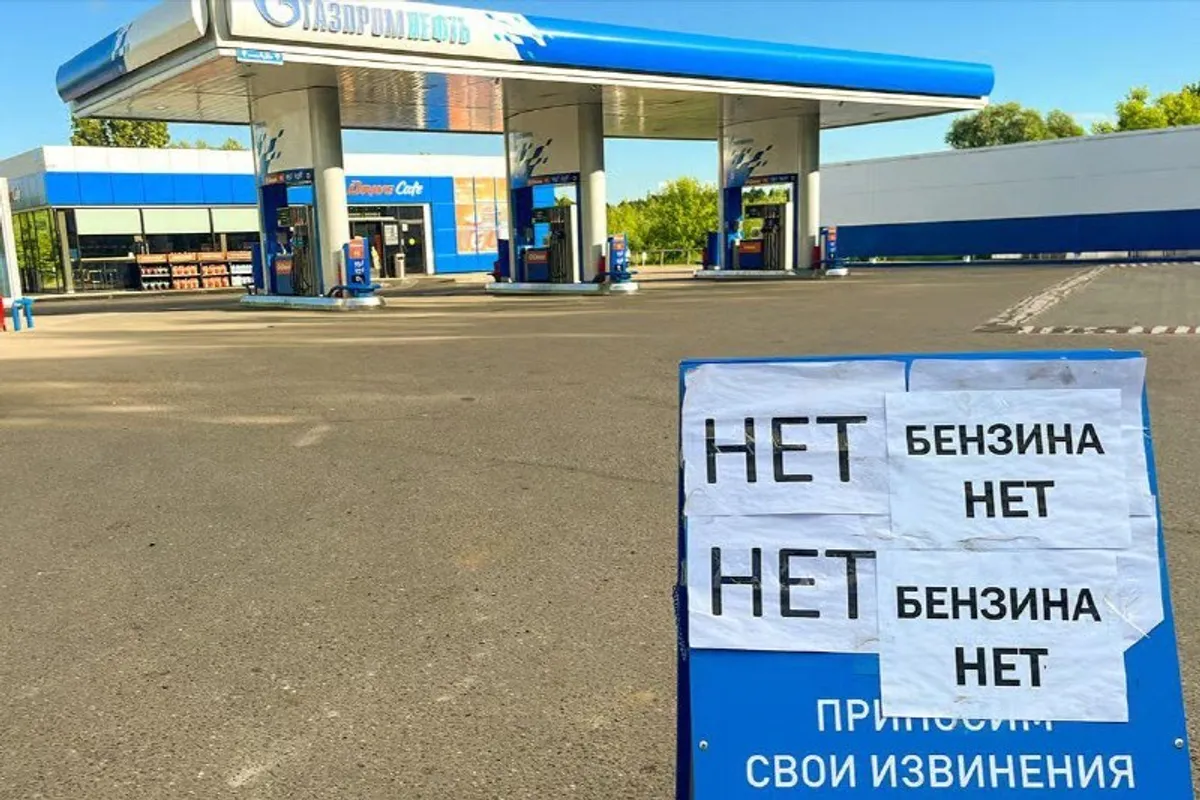
Fuel supply problems at Russian gas stations, triggered by new strikes by Ukrainian forces on oil refineries, have spread to at least 16 regions of the Russian Federation. On August 10, 2026 alone, restrictions on gasoline sales were introduced in three more regions, deepening the crisis that has been ongoing since June.
In the Achinsk district of Krasnoyarsk Krai, home to more than 110,000 people, 13 of 47 gas stations are out of service, said Natalia Grigorieva, deputy head of the district. Only a few types of gasoline can be purchased at just 16 stations. Meanwhile, local agricultural producers are facing a shortage of 294 tons of diesel fuel and 16.6 tons of AI-92 gasoline.
In Bashkortostan, whose petrochemical complex in Ufa was repeatedly targeted by drone attacks in August, a temporary ban on selling gasoline in canisters has been introduced. The head of the republic, Radiy Khabirov, has faced complaints from citizens who cannot fuel their lawnmowers. Local authorities confirmed that three districts are in the "red zone," and in the city of Sterlitamak, 7 of 26 gas stations are not working.
Igor Artamonov, governor of the Lipetsk region, openly acknowledged the seriousness of the situation. "I won't sugarcoat the bitter pill: in the next week or two, we should not expect any significant improvement," he said. He called on residents to show "mutual assistance" and urged them, as much as possible, to "reduce travel."
A similar appeal was made by the administration of Sochi, recommending that residents and tourists use public transport. According to city authorities, gasoline is available at only two-thirds of gas stations in this Black Sea resort.
In the Saratov region, Stanislav Denisenko, a deputy from the LDPR party, warned that some stations have introduced separate lines for emergency services, but private drivers "close to the authorities" have begun to use them. His colleague from the CPRF, Vladimir Yesipov, complained that he could not refuel at a Lukoil station because the gasoline had simply run out.
The crisis escalated in June 2026, when regular Ukrainian drone attacks on Russian refineries caused a gasoline deficit in most regions. By June 23, restrictions had been introduced in at least 15 regions. At the end of that month, Russian leader Vladimir Putin publicly acknowledged the problems with automotive fuel for the first time.
Since the beginning of August, restrictions have been recorded in Krasnodar and Primorsky Krais, as well as in the Kaluga, Rostov, Tambov, Tula, Saratov, Penza, Voronezh, Ryazan, Ulyanovsk, and Smolensk regions. To mitigate the crisis, Russia imported nearly 30,000 tons of refined fuel from South Korea at the end of July, and has also begun importing gasoline from Africa, including a shipment of about 30,000 tons of A-92 gasoline from Morocco. The government has also extended the ban on gasoline exports until January 31, 2027, and on diesel until August 31, 2026.