US Sanctions ICC President, Court Responds
The American administration has frozen the assets of Tomoko Akane, and the International Criminal Court says it will continue its work impartially and independently.
The American administration has frozen the assets of Tomoko Akane, and the International Criminal Court says it will continue its work impartially and independently.
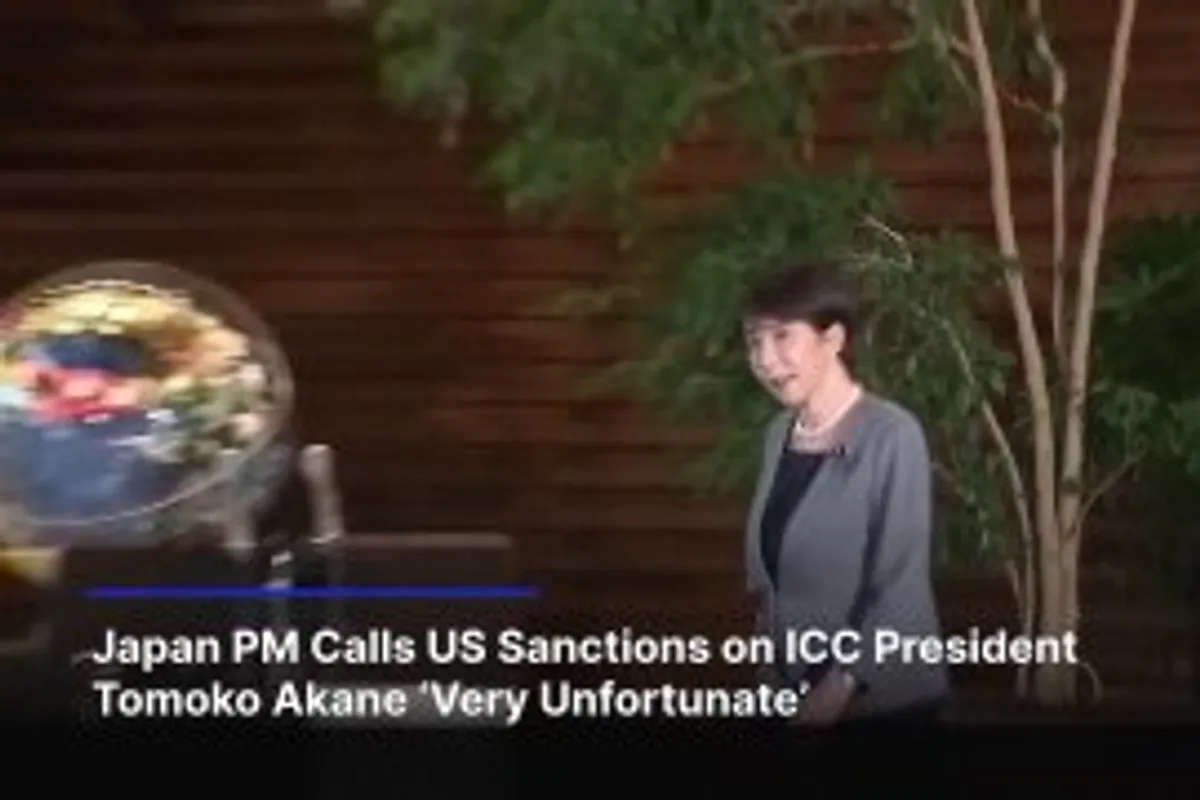
The US State Department imposed sanctions on Wednesday, August 19, 2026, against the President of the International Criminal Court (ICC), Tomoko Akane, sparking a sharp reaction from the judicial institution. The sanctions freeze any assets Akane may hold under US jurisdiction or that come into contact with the US financial system, Klix.ba reported.
In addition to Akane, the US government intends to impose sanctions on senior Senegalese lawyer Abdoulaye Seye, who is one of the lead prosecutors in the investigation against Israeli Prime Minister Benjamin Netanyahu over alleged war crimes in the Gaza Strip. In its response, the Court noted that the Trump administration has so far imposed sanctions on nine of the ICC's 18 judges, both deputy prosecutors, the former chief prosecutor, and one other member of the prosecution. In their reaction, they emphasized that this is a blatant attack on the Court's independence.
"When judicial actors are threatened for applying the law, the very international legal order is put at risk. The Court will continue to fully carry out its mandate independently and impartially," the ICC stated in response to the sanctions.
The Court also stressed that it will "continue to fully fulfill its obligation independently and impartially, in full compliance with the Rome Statute and in the interest of victims of international crimes." Washington claims the Court is overstepping its authority by conducting investigations and attempting to prosecute high-ranking military and political officials from countries that are not ICC members, including Israel and the United States.
US Secretary of State Marco Rubio has previously called the ICC a corrupt and fatally politicized supranational court that has maliciously abused its powers and exceeded its mandate. Several weeks earlier, he also announced a comprehensive campaign aimed at eliminating the threat the International Criminal Court poses to US sovereignty.
That campaign includes pressuring the 125 member states to leave the Court, imposing sanctions on organizations that cooperate with it, and banning travel to the US for its employees. Rubio, without citing specific examples, stated that the sanctioned individuals "directly participated in the ICC's efforts to investigate, arrest, detain, or prosecute officials whose government has not consented to the ICC's jurisdiction."
The consequences of the sanctions are already affecting the daily lives of Court officials. "Your entire world is restricted," said Canadian judge Kimberly Prost, who was sanctioned the previous year. After the sanctions, she lost the ability to use credit cards, and her Amazon Alexa system also stopped functioning.
Japan also reacted to Washington's decision. Toshihiro Kitamura, a spokesperson for the country's foreign ministry, said the announced measures are deeply regrettable and stressed that Tokyo remains committed to strengthening the rule of law in the international community. Japan is the ICC's largest financial donor and a close US ally, which is not a party to the international treaty that established the Court.
The European Union also expressed support for Akane. European Commission President Ursula von der Leyen and European Council President Antonio Costa stated that they "firmly stand" with the ICC President and her senior officials, and that the Court "must be able to act independently and without external pressure." Germany echoed that stance, calling the Court's independence "of central importance," while the Netherlands, which hosts the Court in The Hague, also voiced its displeasure over the sanctions.
Human Rights Watch called the sanctions an attempt to shield US and Israeli officials from justice. The organization, along with three other groups, filed a lawsuit against the Trump administration in a New York court last week.
Israeli Prime Minister Benjamin Netanyahu welcomed the US sanctions, calling the ICC a "kangaroo court that disguises its abuse of power in the language of international law." The ICC issued an arrest warrant for him in 2024 over the Gaza war.