Washington is preparing an ultimatum for its partners that leaves little room for ambiguity. According to a draft State Department letter reported by Reuters, the US will ask friendly countries to choose between the American and Chinese artificial intelligence ecosystems, as belonging to both is no longer an acceptable option.
Pax Silica as a Pressure Mechanism
The letter is addressed to the 35 countries that signed the "AI Opportunity Statement" in June, and its language is unusually direct for diplomatic communication. "Being part of everything means being part of nothing," the draft reads. "Signing the Pax Silica declaration is not just a subscription to membership, but a commitment."
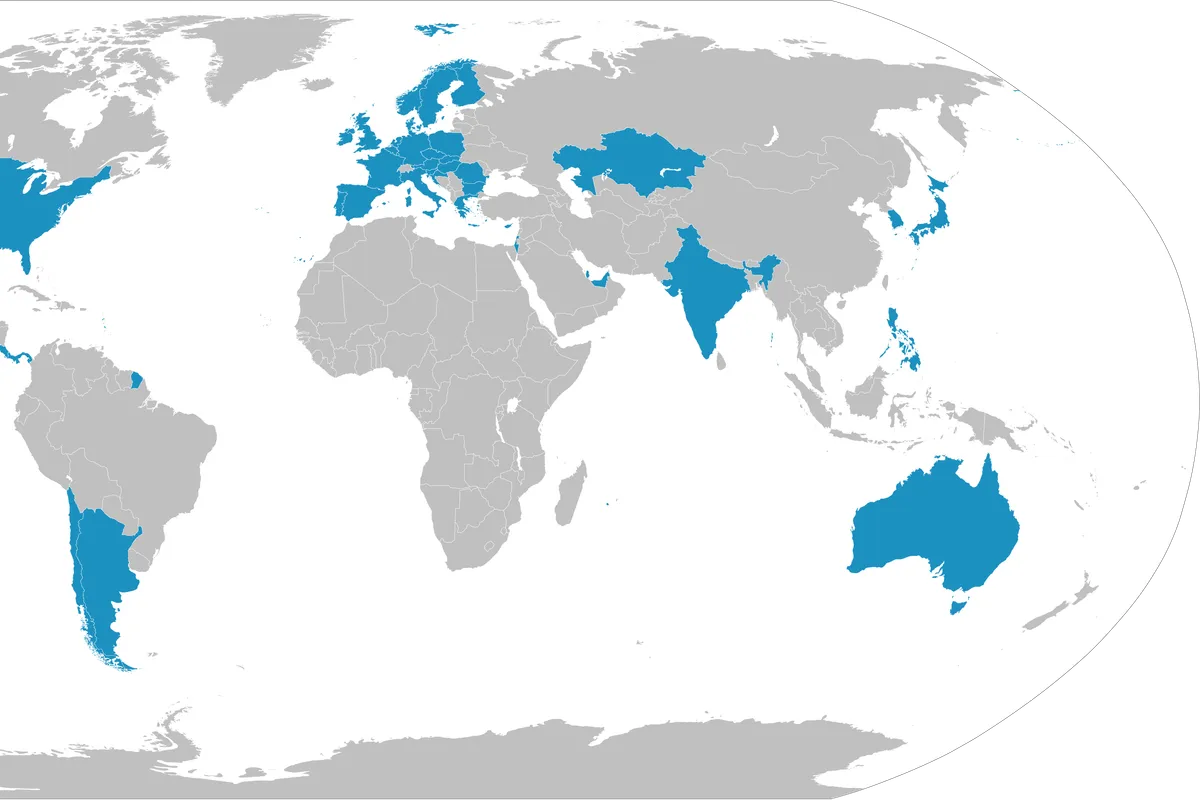
Pax Silica is an initiative launched last year with the goal of locking down supply chains for AI models, semiconductors, and critical minerals. The carrot is access to joint AI investment opportunities reserved for members, while the stick is exclusion for any country that also joins China's competing framework.
Kazakhstan in an Unenviable Position
So far, about twenty countries have joined Pax Silica, including Japan, Australia, and South Korea. Only one country, Kazakhstan, currently finds itself in both coalitions, which is less surprising given that it is a significant source of critical minerals that everyone wants. It is precisely this uncomfortable overlapping position that the letter aims to end, and Astana may soon discover that its balancing act is becoming unsustainable.
One US official clearly explained the thinking behind the letter. "It's hard to see how a country can credibly position itself as a reliable partner in one technology ecosystem while simultaneously signing an initiative that China has designed to advance a competing vision of artificial intelligence," he said. The subtext is that neutrality is now seen in Washington as a form of defection.
China Goes on the Offensive
The timing is no coincidence. Cheap Chinese open-weight models are gradually taking over a market once dominated by proprietary American systems, and they are now approaching the price and capabilities of offerings from US companies Anthropic and OpenAI. As the commercial advantage narrows, geopolitics becomes a practical substitute.
China, for its part, has stopped playing defense. In July, Chinese leader Xi Jinping launched a rival "World Artificial Intelligence Cooperation Organization," built explicitly around open-weight technology and open to anyone who wants to join. It is a mirror image of Pax Silica, and openness is its entire selling point. Beijing is even considering restrictions on overseas access to its best models, showing how much leverage it now believes it holds.
Europe Caught in the Middle
Europe, predictably, is caught in the middle. The bloc has for years insisted on "strategic autonomy," a polite European term for not having to choose between Washington and Beijing. Getting a signature line and a sentence saying it must commit is exactly the corner Europe wanted to avoid, and the draft letter leaves no obvious room for maneuvering.
Not everyone in Silicon Valley agrees with the blockade approach. Meta founder Mark Zuckerberg has argued that the US should not block Chinese AI models at all, as bans usually have a counterproductive effect.
The State Department, for the record, declined to comment on what it called "allegedly leaked internal documents," which is diplomatic code for confirming very little while denying nothing. The letter could still be softened before it is actually sent, but the direction of travel is clear: the AI cold war has quietly gained a loyalty test, and for American partners, the comfortable era of balancing is coming to an end.