SDP Councilwoman: Water from Grabovica Reaches Ombla in 5 Days
Anita Bonačić Obradović warns of the hydrological link between the landfill and the drinking water source, demanding public answers on PFAS analyses, drawing parallels with Gospić.
Anita Bonačić Obradović warns of the hydrological link between the landfill and the drinking water source, demanding public answers on PFAS analyses, drawing parallels with Gospić.
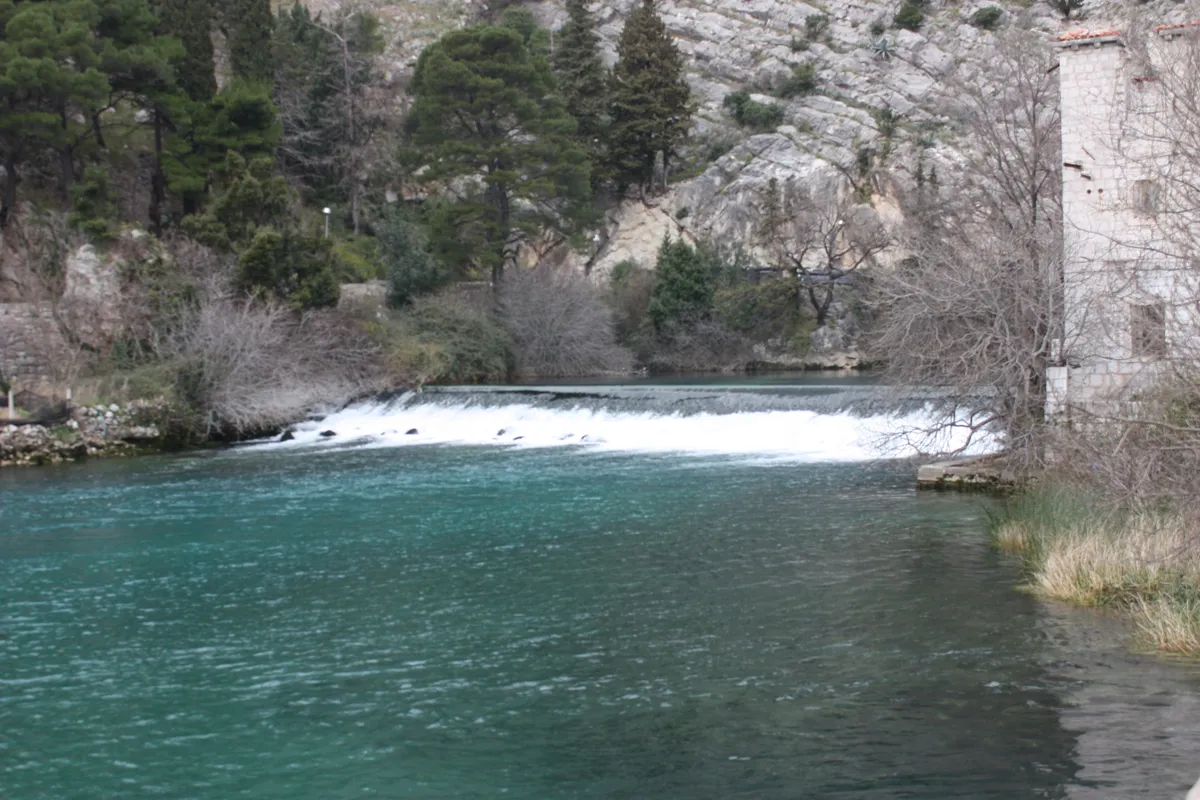
City councilwoman and president of SDP Dubrovnik, Anita Bonačić Obradović, issued a statement following the environmental disaster in Gospić, raising questions about the safety of Dubrovnik's drinking water source, Ombla. She warns that tracing has proven a direct hydrological connection between the Grabovica waste landfill and the spring from which Dubrovnik draws its water.
"After everything we've witnessed in Gospić these past days, we have an obligation to ask a simple question: Have we done everything in our power to ensure that our water source, Ombla, is not contaminated?" Bonačić Obradović stated in a press release issued on Monday.
Bonačić Obradović attributes responsibility for the situation at Grabovica to Mayor Mato Franković and the HDZ, emphasizing that the ruling party holds all levels of governance. "And let it be clear who is responsible for answering: Mato Franković and HDZ. Nine years in power in the City. Power in the County. Power in the state. The entire chain of responsibility in the same hands, with city budgets through which more than a billion euros have passed in those nine years," she asserts.
The key evidence she cites is the tracing conducted back in 2017. "Tracing has proven that water from Grabovica reaches the Ombla spring. The dye injected at the landfill site appeared at Ombla within five days," Bonačić Obradović notes, adding that this was confirmed at the City Council by then-Deputy Mayor Orlanda Tokić.
She places particular emphasis on the technology of the Ombla water treatment plant, opened in 2019. The existing facility relies on ultrafiltration, which, as she explains, is effective for turbidity, suspended particles, and microorganisms, but not for reliably removing dissolved PFAS compounds, the so-called "forever chemicals."
"Technologies such as activated carbon, ion exchange, and reverse osmosis are used to remove PFAS," Bonačić Obradović clarifies, noting that the installation of activated carbon filters was publicly announced as the next phase of the treatment plant. "When the plant was opened in 2019, the then-president of the Waterworks Management Board spoke about a second phase involving the installation of activated carbon filters. Activated carbon was also specified in the facility's project documentation."
However, according to her review of publicly available documentation, there is no evidence that this phase was ever implemented. She demands a clear answer from the Waterworks: "If it was done, let the Waterworks publicly state when it was installed, what exactly was installed, and since when it has been operational. If not, I want to know why not, given that it was announced at the plant's opening."
Bonačić Obradović calls for the public release of targeted PFAS testing results, listing six specific demands: whether leachate from Grabovica has been analyzed for PFAS, whether water in the Grabovica area has been specifically tested, whether raw water from Ombla before the treatment plant has been tested, whether water after the treatment plant has been tested, which individual compounds were analyzed with their concentrations, and whether the activated carbon phase was ever implemented.
"I am not claiming that the water from Ombla is contaminated with PFAS today, but if a proven hydrological connection exists between Grabovica and Ombla, citizens have the right to know whether we have ever specifically looked for these compounds," she states. She adds that after Gospić, "no one has the right to be satisfied with the answer 'Everything is within legal limits' if we don't first know what was actually measured."
Bonačić Obradović recalls the timeline of promises regarding the closure of Grabovica. The city's 2017 report stated that waste disposal was expected to cease by the end of 2018. In May 2019, Franković announced complete closure by the end of 2020, only to move the deadline to 2021 in November of the same year. In July 2021, there was talk of 2022, then the end of 2025, and later closure by the end of 2025, announced in October of that year.
None of these deadlines have been met. "And in May 2026, the mayor no longer talks about 2018, 2020, 2021, 2022, or 2025. Now he says we might get 'maybe another year, if that,' and only then will the closure of Grabovica follow," Bonačić Obradović notes.
"We are not talking about a delayed fountain, road, or garage here. We are talking about a waste landfill that we have known for years is hydrologically connected to our drinking water source," she concludes, adding: "I do not want Dubrovnik to become the next Gospić."