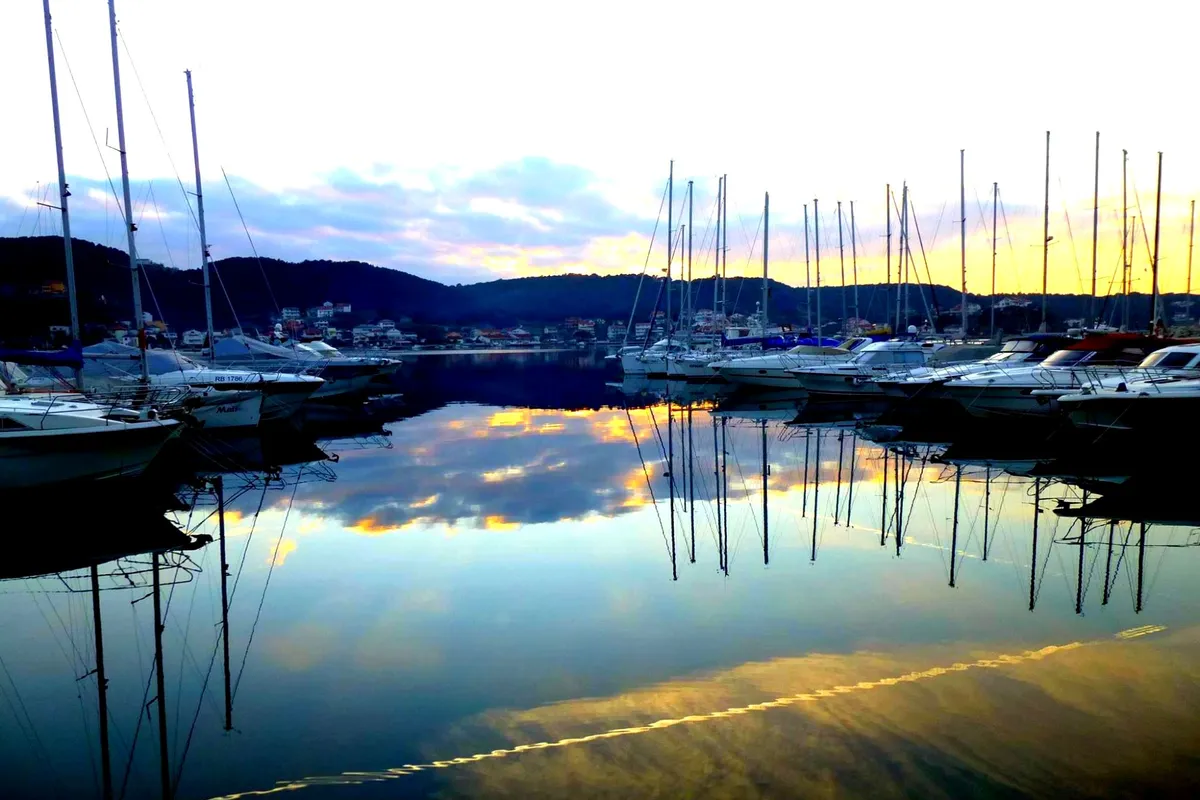
During the peak of the nautical season, approximately 120,000 domestic and 50,000 foreign vessels are present on the Adriatic, with over 700,000 vessel entries and exits recorded, not including yachts, boats, and other smaller craft. Despite this congestion, Siniša Orlić, Director of Maritime Safety at the Ministry of the Sea, Transport and Infrastructure, assures the public that the situation is under control.
Orlić stated that research by the Institute for Tourism shows that foreign sailors cite the indented coastline and beauty of the shore as the main reasons for choosing the Adriatic, followed closely by navigational safety. "Given the traffic we have and its density, I believe that safety on the Adriatic is high," Orlić said for HRT.
Hvar Port Under Pressure: 28 Catamarans in 12 Hours
Orlić explained that the situation at sea during August is particularly challenging, both due to search and rescue operations and safety-related violations. The central Adriatic is the most congested, while traffic in the northern Adriatic and Istria is somewhat lighter.
He highlighted the port of Hvar as an example of traffic intensity. "Some ports, like the one in Hvar, have 28 catamaran dockings on a daily basis. All of that is crammed into a 12-hour period," Orlić said.
Fines Up to €6,000 and Focus on Education
In the same areas, large vessels subject to international conventions and Croatian laws coexist with recreational craft whose status is not necessarily regulated internationally. Orlić warns that at sea, similar to roads, one can encounter both responsible and reckless participants in traffic.
Fines for one of the most common violations, speeding (planing), range from €400 to €6,000. Other frequent violations include endangering swimmers, operating without proper licenses, and overloading vessels. "Anyone who rents a jet ski or gets on a speedboat should be aware that they can endanger themselves and those around them," Orlić warned, adding that the authorities' focus is not only on punishment but also on education and raising awareness among sailors.
Safe Sea: Croatia First in Europe with New System
The services have tested various technologies for detecting dangerous behavior at sea. Speed measurement devices, like those used by police on roads, proved ineffective due to waves and the need for the vessel to move directly toward the measuring device. Drones also proved unsuitable due to complex air traffic control issues.
Therefore, a new system called Safe Sea is being developed, which will integrate existing data from radar, AIS, and VHF devices, helping harbor master's offices more effectively detect violators. "This system could become operational in two to three years, and we would be the first country in Europe with such a system," Orlić announced.