Serbs Bleed While Belgrade Hosts Nazis
Ukrainian President Volodymyr Zelensky's visit to Belgrade on August 9 sparked fierce reactions from Red Star fans, while Croatian experts analyze Vučić's policy of 'sitting on multiple chairs.'
Ukrainian President Volodymyr Zelensky's visit to Belgrade on August 9 sparked fierce reactions from Red Star fans, while Croatian experts analyze Vučić's policy of 'sitting on multiple chairs.'
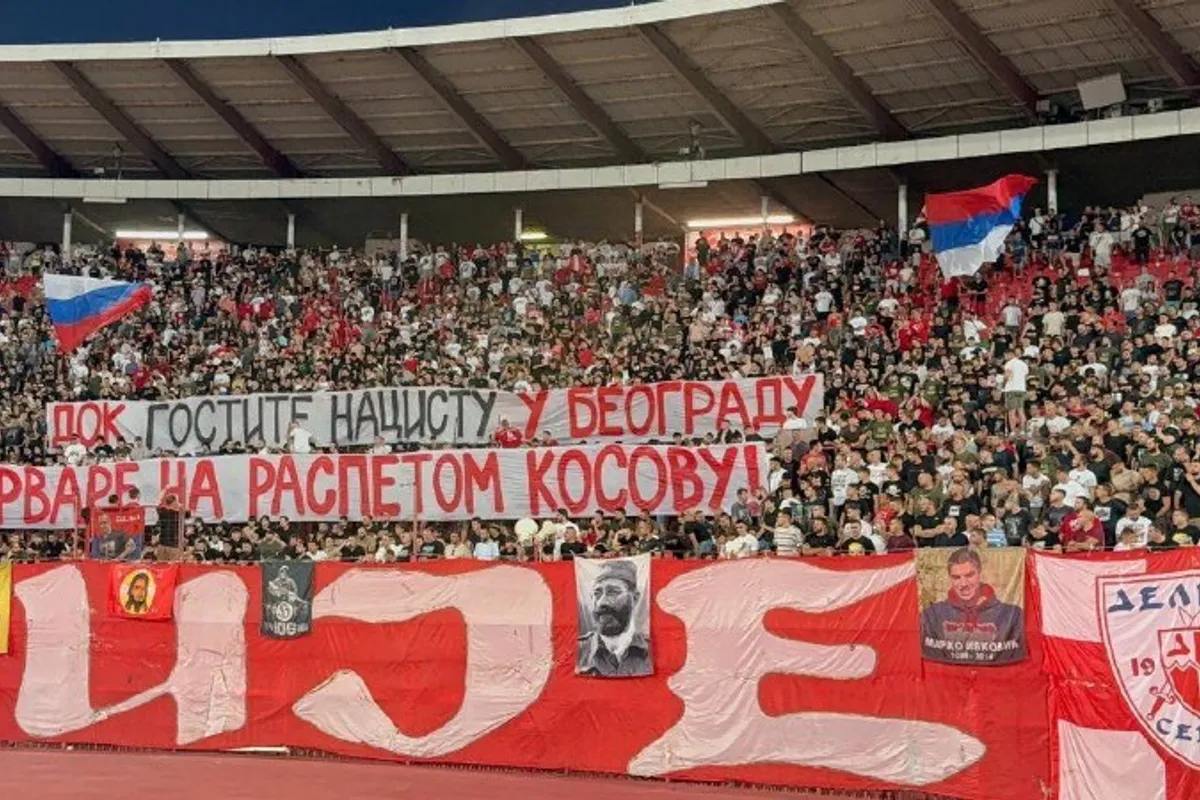
While Ukrainian President Volodymyr Zelensky met with Serbian President Aleksandar Vučić in Belgrade on August 9, fans of Belgrade's Red Star voiced strong opposition to his arrival. The message they shared on social media read: "While Belgrade hosts Nazis, Serbs bleed on crucified Kosovo!"
The visit surprised many, given Vučić's close ties with Russian President Vladimir Putin, Zelensky's sworn enemy. Foreign media report that the visit was prepared and postponed several times, and Vučić visits Putin more often than any other world or European politician. Croatian experts analyze the motives and possible consequences of this diplomatic move for Slobodna Dalmacija.
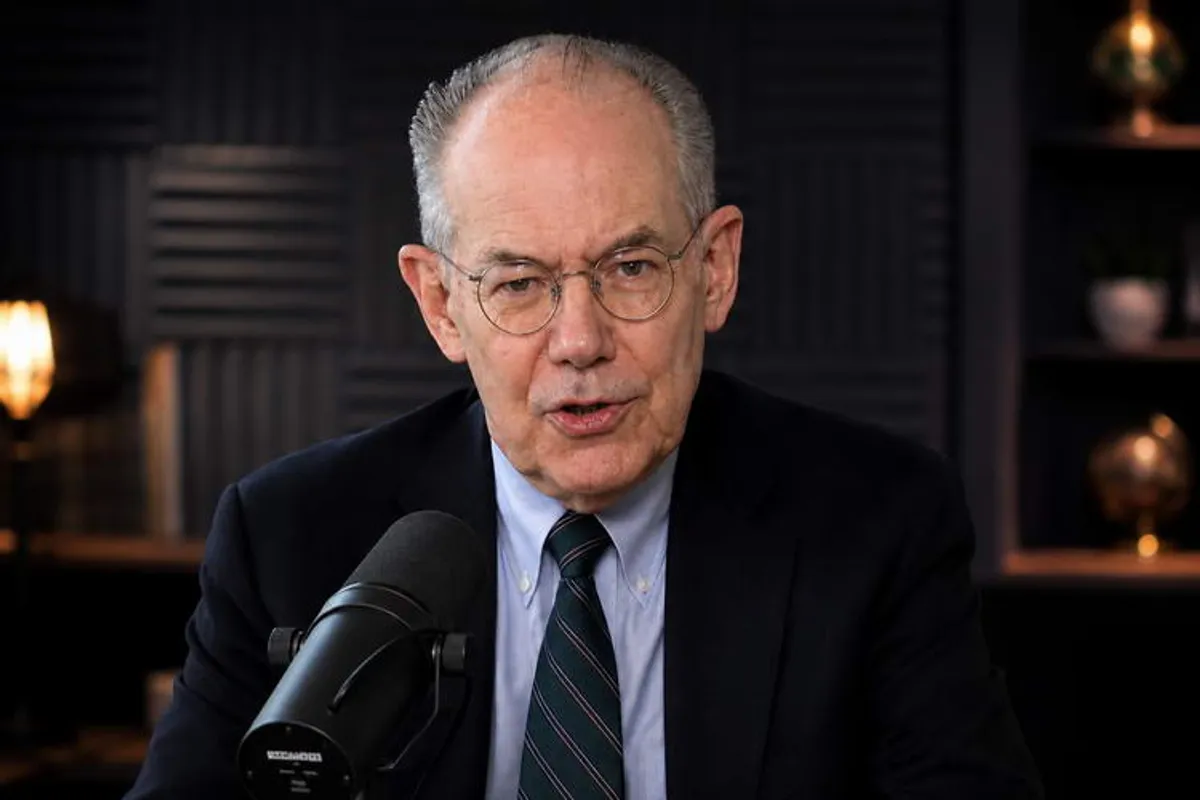
Political scientist and military analyst Dr. Marinko Ogorec believes this is a calculated move by the Ukrainian president. "I think this visit by Zelensky to Vučić is a very interesting move by the Ukrainian president himself, who, in my opinion, is trying to pull the chairs out from under Vučić and force him to finally choose just one," Ogorec told Slobodna Dalmacija.
Ogorec recalled that Vučić refused to sign the declaration condemning Russian aggression against Ukraine during the summit in Kyiv. "I believe Zelensky is now returning the favor in a very insidious way for refusing to sign that document," he added. He also commented on reactions from Russia and China: "The Russians will certainly not look favorably on this visit, while the Chinese watch everything from the sidelines. But let's not forget that the Chinese are Russian allies, formally, within the Shanghai Cooperation Organization."
Ogorec stressed that the visit did not surprise him and that this is "a certain compromise of Vučić ahead of the elections in Serbia, which will be held soon." With this visit, Vučić has once again come to the center of the political spotlight of the European Union, the US, Russia, and China, which is very likely his primary goal.
Assoc. Prof. Dr. Gordan Akrap, Vice-Rector of the University of Defense and Security "Dr. Franjo Tuđman," revealed a lesser-known dimension of Serbia-Ukraine relations. "You must not forget that Vučić, or Serbia, has been supplying Ukraine with ammunition since the beginning of the war in Ukraine," Akrap told Slobodna Dalmacija. He added that at one point, when Israel needed ammunition, Vučić redirected the supply, with the difference that he supplied Israel directly and Ukraine through intermediaries.
Akrap estimates that Vučić is sitting on 4-5 chairs. "And he will have to decide very quickly on one of them, that is, decide what and how to proceed. He is very close to Putin, and for that reason, he never agreed to impose sanctions on Russia, but at the same time, he did not agree to recognize the Russian annexation of Crimea. Why didn't he recognize the annexation of Crimea? For a very simple reason, because he would lose his arguments for Kosovo," Akrap explained.
He also commented on Vučić's relationship with US President Donald Trump, noting that Vučić has offended him twice. The first time was when Serbian companies worked on software for counting votes in the US elections, which was presented to Trump as the reason for his defeat by Joe Biden. The second time was in early May 2025, when he tried to enter Trump's rally in Florida as a donor, even though political donations from abroad are prohibited in the US. "Because of this, Vučić tried to make amends by offering the General Staff building in Belgrade to Trump's son-in-law Jared Kushner, who wanted to build a large hotel and residential complex there, which ended very unsuccessfully for Vučić," Akrap concluded. Jared Kushner eventually withdrew from the entire project.
Amid diplomatic maneuvers, the war in Ukraine continues unabated. Zelensky himself reported on Twitter on August 9 that he had received reports from Sergii Koretskyi, Mykhailo Drapatyi, and Viktor Mykyta about the consequences of Russian attacks on Odesa, Kharkiv, Pavlohrad, and other regions.
In Odesa and its surroundings, work is underway to restore electricity supply after a fierce strike on the energy sector, and residential buildings and the port were also damaged. Eight people were injured. In Kharkiv, a direct drone strike destroyed four floors of a residential building, injuring dozens and killing two people. In Pavlohrad, there was an attack near a shopping center and on energy infrastructure, where nine people were injured, including four children.
Zelensky emphasized the scale of the Russian ballistic campaign: just this week, 61 missiles of various types were fired at Ukraine, including 56 with a ballistic trajectory, more than 1,560 attack drones, and 1,540 aerial bombs.
A day earlier, on August 8, Zelensky warned of the growing presence of North Korean personnel on Russian territory. "At first we talked about hundreds, then thousands, and now a decision has been made to deploy 30,000 to 50,000 North Koreans on Russian territory," Zelensky stated. They are studying this battlefield, and Ukraine has already found North Korean missiles on its territory, which is now an established fact.
Zelensky called on South Korea to cooperate more closely with Ukraine, especially in the area of air defense, where Ukraine has a shortage. He also spoke about the need to understand Russian intentions, stressing that the Russians will resort to everything: hundreds and thousands of cyberattacks, missile pressure, and intimidation. "Putin still cannot find victory in this war," he said, adding that he is considering mobilization without officially announcing it.