Super El Niño: NOAA Forecasts 81 Percent Chance of Very Strong Intensity by Year's End
The climate phenomenon in the tropical Pacific could peak in late 2026, with impacts on weather patterns felt in Europe and Croatia as well.
The climate phenomenon in the tropical Pacific could peak in late 2026, with impacts on weather patterns felt in Europe and Croatia as well.
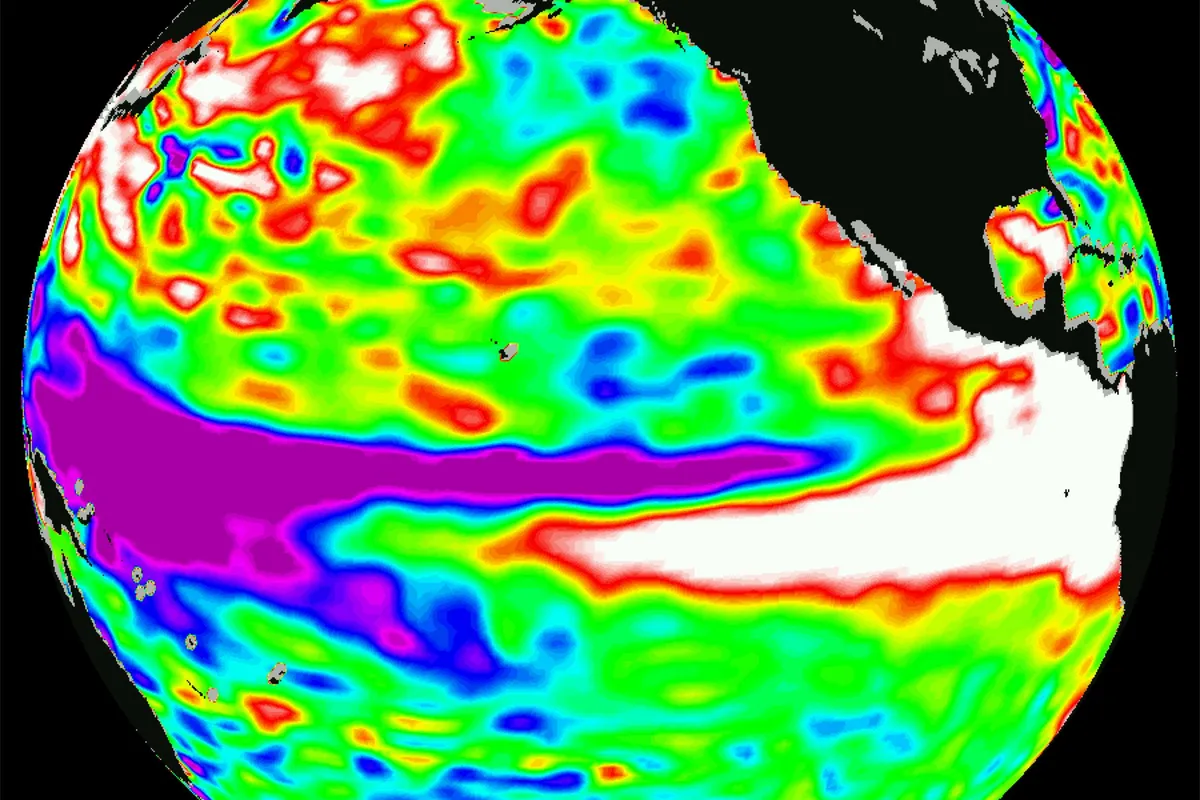
Super El Niño continues to intensify rapidly across the tropical Pacific Ocean, and according to the latest estimates from the U.S. climate forecasting agency NOAA Climate Prediction Center, there is an 81 percent probability that it will reach very strong intensity between October and December 2026. Forecasts indicate a 97 percent chance that it will persist through early spring 2027.
The meteorological portal Severe Weather Europe explains that behind this rapid growth is an unusually strong combination of westerly winds and subsurface ocean heat. El Niño occurs every few years, but Super El Niño appears only once every ten years or even less frequently. The last three such events were recorded in 2015/2016, 1997/1998, and 1982/1983.
The El Niño phenomenon begins when sea surface temperatures in the central and eastern tropical Pacific rise above normal values. This leads to a decrease in pressure over the central and eastern tropical Pacific, while a high-pressure area forms over the western part. This shift in circulation affects the global atmosphere and greatly shapes pressure patterns, winds, precipitation amounts, and the overall seasonal weather system.
Super El Niño differs from a regular one because the warming in the Pacific becomes stronger, leading to an even more pronounced impact on weather worldwide. It is important to note that "Super El Niño is not an official category meaning the entire planet will be hit by the same disaster." The strength of this phenomenon is assessed based on ocean temperatures, and its specific effects depend on the geographic region and other climatic conditions.
According to the latest data reported by Severe Weather Europe, a low-pressure area could affect Europe in autumn. From October to December, much of the continent could experience higher-than-usual surface temperatures. Westerly and southwesterly winds from the low-pressure area over the Atlantic also bring abundant moisture, increasing the likelihood of precipitation across much of the continent.
According to current early forecasts, precipitation amounts could be above average across much of Europe. However, the strongest impact of the historic El Niño event is expected during the winter months. The low-pressure area is expected to expand toward the northwestern and northern parts of the continent. This causes a large pressure difference between north and south, strengthening westerly winds toward Europe from the Atlantic, while also allowing northerly winds to penetrate across northern and northwestern regions such as the United Kingdom and Ireland.
The prevailing mild westerly flow could result in above-average temperatures during the winter season. Widespread snowfall is not expected across Europe, except in the northern and northeastern parts of the continent and in higher central areas.
For Croatia, there is no simple forecast. We cannot say "El Niño = warm winter" or "El Niño = lots of snow." The impact on Europe is less pronounced and more complex than in tropical regions, and weather conditions in Croatia are influenced by many other factors. In the coming months, experts will particularly monitor temperatures, precipitation, fire risk, water resource status, mosquito populations, and the occurrence of insect-borne diseases.
Although the World Health Organization warns that El Niño can affect the transmission patterns of certain diseases, including dengue, malaria, and some waterborne diseases, there is no basis for claims that Croatia is threatened by an epidemic. The European Centre for Disease Prevention and Control (ECDC) monitors the occurrence of locally transmitted cases during the mosquito season, but this does not currently indicate an immediate danger for the country. Dramatic headlines about a deadly disease brought by Super El Niño do not match what scientific data actually say. There is a link between climatic conditions and the risk of infectious diseases, but there is no basis for panic. For Croatia, the same rule applies as always: less panic, more monitoring of concrete data.
Autumn 2026 will be particularly closely observed. If forecasts materialize, October, November, and December will be months that climatologists will monitor with exceptional care. During that period, El Niño could reach its peak.