Drought Hits Nearly 40% of the EU
French scientist warns of catastrophic year for glaciers as drought devastates European agriculture.
French scientist warns of catastrophic year for glaciers as drought devastates European agriculture.
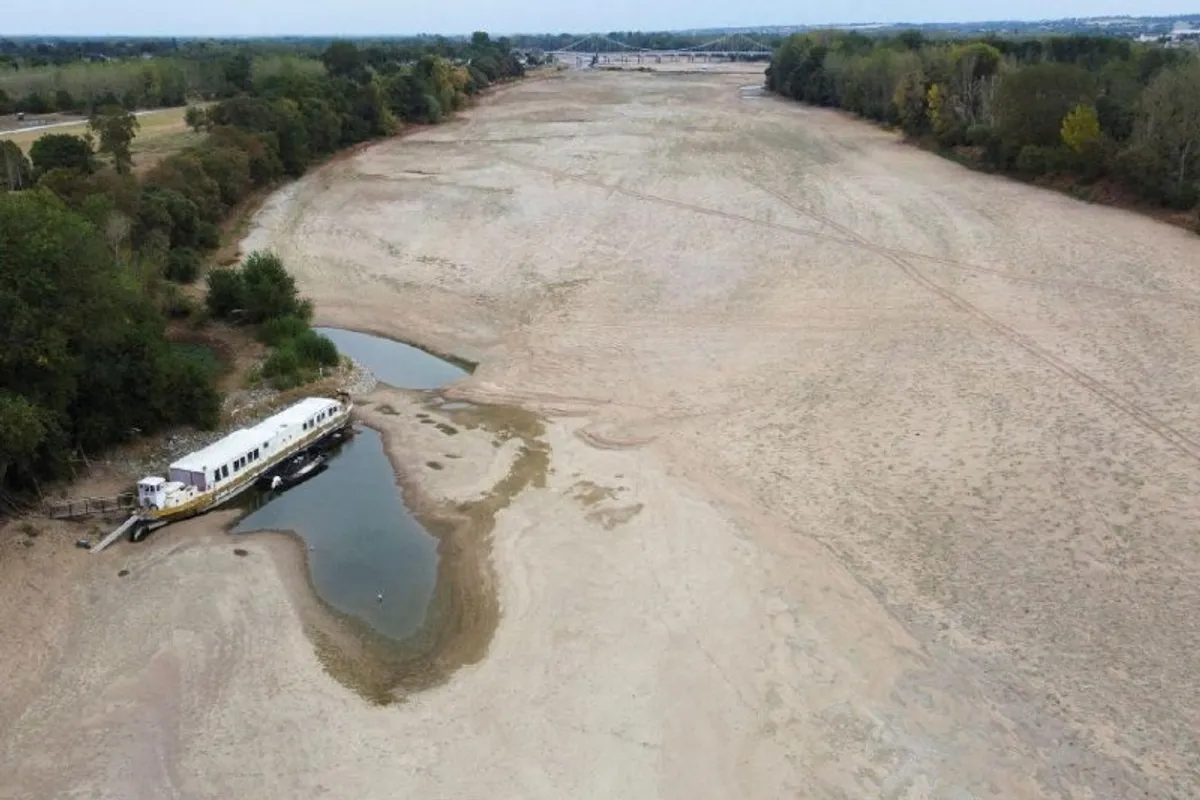
Nearly 40 percent of the European Union's territory is currently affected by drought, with consequences felt from agriculture to the highest Alpine peaks. According to data reported by Euractiv, drought has hit 38 percent of the EU's territory, including 14.8 percent of arable land and 14.5 percent of forests. At the same time, heatwaves are causing rock destabilization on the Mont Blanc massif, leading to the closure of two mountain refuges.
The drought is causing serious damage to European agriculture, affecting everything from olive oil and wine to basic feed crops like corn and sunflowers. France, one of the EU's largest corn producers, expects its lowest yield since 1980, according to UNIAN, citing Euractiv.
For livestock farmers, the priority issue is animal feed. Dried-up pastures have reduced grazing for cattle in parts of Western and Central Europe, while poor harvests make alternative feed sources scarcer and more expensive.
Ludovic Ravanel, a geomorphologist at CNRS and a member of the Compagnie des guides de Chamonix, warned on Thursday, August 13, 2026, on franceinfo that this will very likely be a catastrophic year for glaciers. "We are very likely heading toward a catastrophic year for glaciers, somewhat like what we saw in 2022," Ravanel said.
Of particular concern is the melting of ice on the northern faces of mountains. "What is very symptomatic this year is the melting of ice on the northern faces," Ravanel said, adding that these faces are known for being extremely cold. "Today, we have completely dry northern faces," he warned.
In Haute-Savoie, two refuges for climbing Mont Blanc have been closed by municipal decree due to the "mortal danger" of rockfall caused by drought. Ravanel notes that such a decision is relatively rare, previously made in 2015 and 2022 to avoid passing through corridors where rockfalls are currently very frequent and massive.
"This is the first time, as far as I know, that Mont Blanc can no longer be accessed from the Italian side, from the Chamonix side, or from the Saint-Gervais side," the scientist emphasized. It is unknown how long the situation will last, as reopening the routes requires snow and low temperatures, which might not return until late August, mid-September, or even later in the autumn.
The melting of glaciers also threatens scientific research, as glaciers allow us to study past climates. "This information can be 5,000, 6,000, 7,000 years old or more," Ravanel explained. Analyzing it provides localized information about the Alps, particularly about ancient periods of climate warming or episodes of sandy winds.
Scientists are striving to study them to gather as much information as possible before they disappear. Climate change is also affecting flora and fauna. "Vegetation tends to climb to higher altitudes, but unfortunately often not fast enough relative to what temperatures dictate," Ravanel said. "Some cold-adapted animal species are already beginning to disappear," he added.
Ravanel warns that ice melt is also changing the landscape and hiking routes. "These are hiking routes that are disappearing, and also landscapes that are disappearing," he stressed. In 2026, very numerous destabilizations are being recorded, and the volumes of rockfalls have been increasing in recent days.
"As the climate crisis accelerates, permafrost degradation will intensify, so it is clear that high mountains will become increasingly unstable," Ravanel concluded for franceinfo.