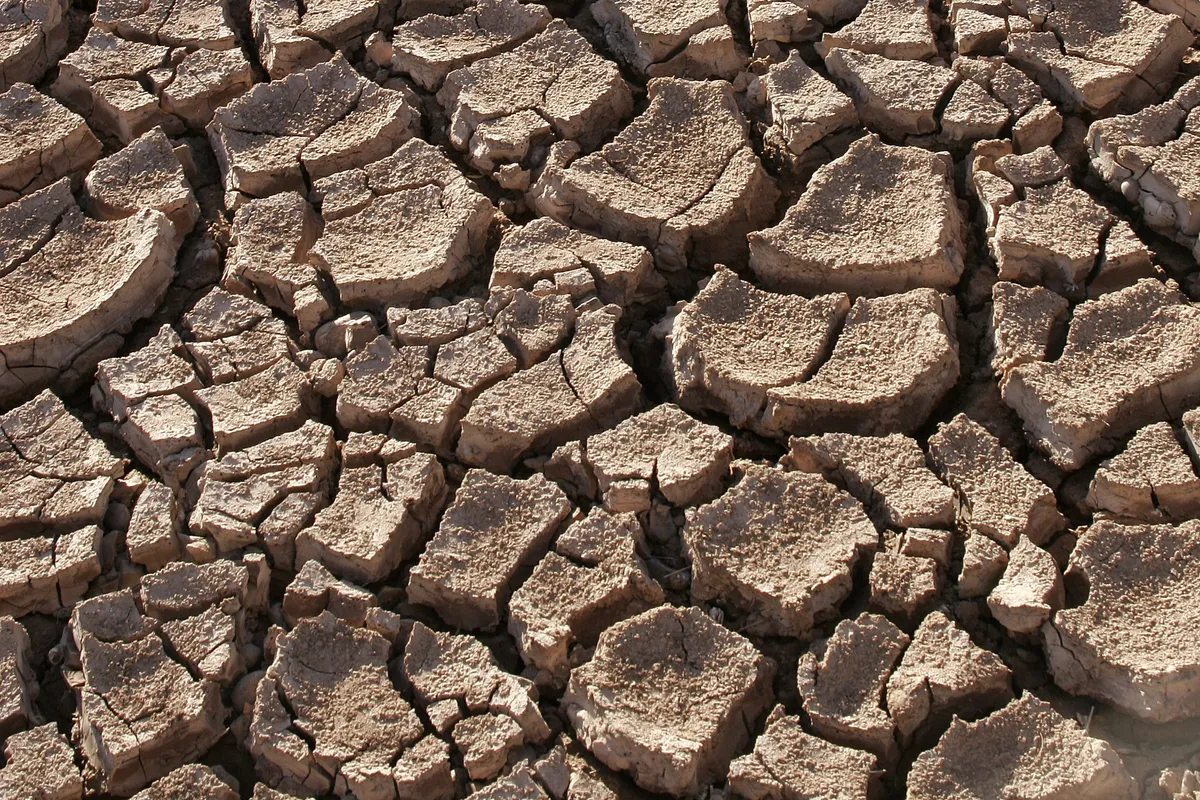
By early August, the Danube at Batina had dropped to -147 centimeters, a new absolute minimum since measurements began. Just three days earlier, the previous record from 2022 had already been broken. The Drava in Osijek followed suit: on August 5, it measured -192 centimeters, a full 20 centimeters below its previous low.
This year's hydrological drought is not only persisting but deepening day by day. This is true at all stations downstream from Batina. Dalj, Vukovar, and Ilok are all recording their own historic lows.
Two-thirds of the year in the red
According to data from the Croatian Meteorological and Hydrological Service (DHMZ), the Danube at Batina has spent nearly two-thirds of 2026 so far below the hydrological drought threshold. The previous absolute minimum of -84 centimeters, also from 2022, was already broken on July 15. Since then, the river has only continued to fall.
The consequences are already being felt on multiple fronts. Navigation is difficult, irrigation is threatened, and food production is under pressure. Water supply, industrial and energy production, and river ecosystems are taking hit after hit. As the most vivid proof of the drought's scale, DHMZ experts point to long-submerged ships now protruding from dry riverbeds, such as the one near Opatovac on the Danube.
Alps without snow reserves
The cause of these water levels is not just a prolonged lack of precipitation and high temperatures. The key culprit lies in the Alps, specifically in a dramatic shortage of snow. The Danube and Drava have an alpine snow-rain regime; a large portion of their water comes from snowmelt. However, the Alps have now gone a second consecutive season without their usual reserves.
A joint analysis by the German, Swiss, and Austrian meteorological services showed that the winter half-year was 1.1 degrees Celsius warmer than the 1991-2020 average. In the northern Alps, it was the second driest winter half-year since 1991, while in the southern Alps, it was the driest period since records began. Snow depths ranked among the five lowest in the same period.
When snow cover is scarce, less water reaches the rivers precisely when high temperatures cause greater evaporation. However, the problem does not stop at surface waters. In parts of central, northern, and eastern Croatia, groundwater levels are continuously declining and approaching previous lows. Alluvial aquifers along the Sava and north of it are particularly affected. Groundwater reacts more slowly than rivers and recovers much more slowly. This requires more abundant and prolonged precipitation across the wider catchment areas.
Europe under pressure
Croatia is not alone in this crisis. The Netherlands, a country traditionally battling excess water, declared a second-level warning for actual water scarcity on July 16. By late July, drought had affected half of England, with water use restrictions impacting millions of people. In southern Sweden, a warning was issued for potential shortages due to unusually low groundwater levels and low flows in some rivers.
The Sava basin, which covers 43 percent of Croatian territory, depends significantly on local conditions in addition to inflows from Slovenia and Bosnia and Herzegovina, further complicating the situation. The water levels of the Danube and Drava, on the other hand, reflect weather and water conditions across entire catchments that extend far beyond Croatia.
New records on the horizon
The DHMZ forecast for the rest of the summer is not encouraging. A continued gradual decline in river and groundwater levels is expected unless more abundant and prolonged precipitation arrives across the wider river basins. The seasonal forecast from the European Centre for Medium-Range Weather Forecasts indicates an increased likelihood of above-average temperatures in Croatia and across Europe during August, September, and October.
The DHMZ warns that if these forecasts materialize, combined with the current hydrometeorological conditions, the likelihood of new record-low water levels, both in rivers and groundwater, would increase. Short-lived local downpours can only temporarily improve conditions in a smaller area. Significant recovery requires abundant precipitation covering a large part of the basin and lasting long enough to replenish surface and underground reserves. Water is a renewable resource, but its available reserves are limited.