25 Drivers Under the Influence Every Day
Split police removed 5,289 drivers in the first 214 days of this year, and experts warn that alcohol doesn't just impair reflexes-it also undermines risk assessment.
Split police removed 5,289 drivers in the first 214 days of this year, and experts warn that alcohol doesn't just impair reflexes-it also undermines risk assessment.
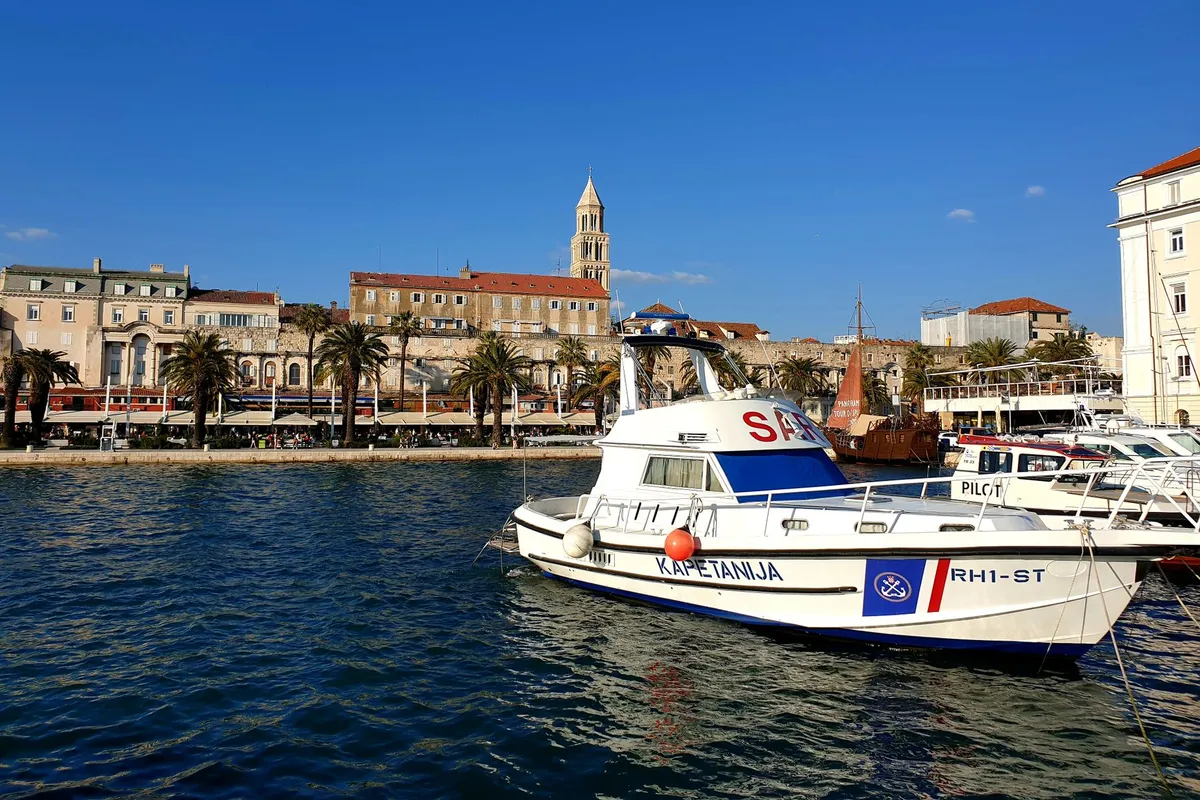
In the area covered by the Split-Dalmatia Police Department, in the first 214 days of 2026, 5,289 drivers were removed from traffic and sanctioned for driving under the influence of alcohol or drugs. That averages out to 25 irresponsible drivers per day, nearly identical to last year's average of 24.5 daily removals, when a total of 8,940 such offenders were recorded. The vast majority are repeat offenders who, despite fines and even prison sentences, will likely end up before the police and the courts again.
In 2025, 26 people died in traffic accidents in the county, three more than in 2024, while 451 people were seriously injured, 40 fewer than the year before. These shocking figures prompted a conversation with two experts: Prof. Trpimir Glavina, MD, PhD, head of the Psychiatry Clinic at Split University Hospital Center, and Željko Marušić, a traffic safety expert.
Dr. Glavina emphasizes that the danger posed by intoxicated drivers is enormous and that there is no room for even a drop of alcohol behind the wheel. "Alcohol affects every organ system. It doesn't just destroy the liver, as people commonly believe; it ravages the brain and peripheral nerves," warns the clinic director. He adds that the body deteriorates faster the more intensely or longer a person drinks.
When asked why people start consuming alcohol in larger quantities, Dr. Glavina replies: "Because of their fears, difficult life circumstances, frustrations, unfulfilled goals, or financial ruin. They then seek 'solace in a glass,' which over time becomes a lifestyle." Alcohol is considered socially acceptable when a glass of wine is enjoyed after lunch or when friends meet for a drink, but the line of moderation must not be crossed.
Although Croatia's legal limit is up to 0.5 promille, Dr. Glavina explains that even lower levels carry risk. "Even at these smaller blood alcohol concentrations, there is mild relaxation and slower reactions, and the necessary self-criticism about one's own driving is lost," he says. When the concentration reaches 0.8 to 1.0 promille, a person already has impaired vision, slurred speech, and loss of balance, which he describes as serious intoxication.
Chemically, alcohol is known as a potent anxiolytic-a drug that reduces anxiety, fear, and tension. "However, due to its high toxicity, it causes immense harm to the body. That's why it should never be consumed, especially when getting behind the wheel of any vehicle, whether on land, sea, or air," Dr. Glavina stresses.
Dr. Glavina also shared his personal experience with traffic violations. "I've paid a traffic fine twice in my life-once for not wearing a seatbelt and once for driving a bit too fast. And believe me, it wasn't pleasant. Since then, I always buckle up and strictly adhere to speed limits," he admits. He adds that instead of spending money on fines, especially those related to alcohol, he would rather buy his children sweets and toys or take a trip. "When everyone on the road starts thinking that way, there will be fewer violations, collisions, and tragic headlines," he says.
He believes that the police, whose work he praises, should instill in drivers an awareness of the punishability of such behavior and the possibility of ending up in prison. "Alcohol is really just a symptom of a deeper problem, just like in that famous saying, 'I drink to forget,'" Dr. Glavina concludes.
When asked about the dangers of cocaine in traffic, Dr. Glavina responds that this drug is even more toxic than alcohol. It manifests as a loss of critical judgment, unfounded "pumped-up" confidence, and hallucinations. "They'll drive at 200 km/h in places where you can't go faster than 60 km/h," Dr. Glavina describes the behavior of drivers under the influence of cocaine.
The phenomenon of the so-called "morning after" is particularly dangerous. Dr. Glavina gives a concrete example: a person with 1.5 promille of alcohol in their blood goes to sleep at 4 a.m. and wakes up at 7 a.m. for work. In those few hours of sleep, the body can eliminate only about 0.6 promille, leaving 0.9 promille in the blood. "Now imagine that person, drowsy, sleep-deprived, and still under the influence, getting behind the wheel," he warns.
He sees the solution in responsibility, taking taxis, walking, or relying on sober friends. He also suggests that at football matches, instead of gambling ads, messages about the dangers of drunk driving should be aired. "If we could save one or two out of ten people who get behind the wheel after having a few drinks too many, we'd have done a great job," he concludes.
Prof. Željko Marušić emphasizes that drunk driving is not just a problem of slowed reactions. "The most dangerous effect of alcohol is not just slowing reactions but impairing judgment and risk assessment. Alcohol encourages speeding, risky overtaking, late braking, and other dangerous behaviors that often end tragically," explains the traffic expert.
What is particularly concerning is that even small amounts of alcohol, which do not significantly impair motor skills, significantly increase the willingness to take risks. "A glass of wine or a bottle of beer might not make handling the vehicle more difficult, but it will increase the likelihood of speeding, running yellow or red lights, failing to yield, and other traffic violations," Marušić warns. It is precisely this psychological effect of alcohol that is often more dangerous than its physiological effects.
According to Marušić, the biggest problem is young drivers. Due to a lack of experience and a need to prove themselves, they are more prone to fast and aggressive driving, and alcohol amplifies this behavior. When they drive powerful sports cars, which are often older and have high performance but significantly lower safety levels, the risk is even greater. Motorcyclists are also particularly vulnerable because alcohol, even in small amounts, increases the likelihood of losing balance and control.
An additional problem is the simultaneous use of mobile phones and alcohol. "A phone distracts attention, and alcohol encourages risk-taking, so their combined effect multiplies the likelihood of a traffic accident," Marušić points out. In his opinion, the Road Traffic Safety Act covers this area well-Article 199 prescribes zero tolerance for young and professional drivers, while for others the maximum allowed is 0.50 g/kg of alcohol in the blood.
However, the key problem is not the law but its enforcement. "Many drivers get behind the wheel under the influence because they estimate the chances of being stopped are low. In traffic safety, the certainty of punishment is more effective than simply increasing fines," Marušić states. He therefore proposes a significant increase in police controls, especially at night, on weekends, and during holidays.
Marušić's proposal is unequivocal: any alcohol level above 0.50 g/kg should result in the immediate removal of the driver from traffic and arrest, temporary revocation of the driver's license, and impoundment of the vehicle at the driver's expense. For repeat offenders and those with very high alcohol concentrations, he proposes canceling the driver's license and requiring a new driving test.
"Alcohol doesn't just take away a driver's ability to operate a vehicle safely; it also takes away their ability to realize how dangerous they have become. That's why drunk driving is not a moment of carelessness but a conscious acceptance of an unacceptable risk that can end in someone else's death. Society must not tolerate such behavior," Marušić concludes.