The Secret Behind Bruno Guimaraes' Number 39
Arsenal's new €87.5 million signing wears a shirt number that symbolizes his father's taxi, rejections at Botafogo and Fluminense, and the journey from an overcrowded home to Premier League stardom.
Arsenal's new €87.5 million signing wears a shirt number that symbolizes his father's taxi, rejections at Botafogo and Fluminense, and the journey from an overcrowded home to Premier League stardom.
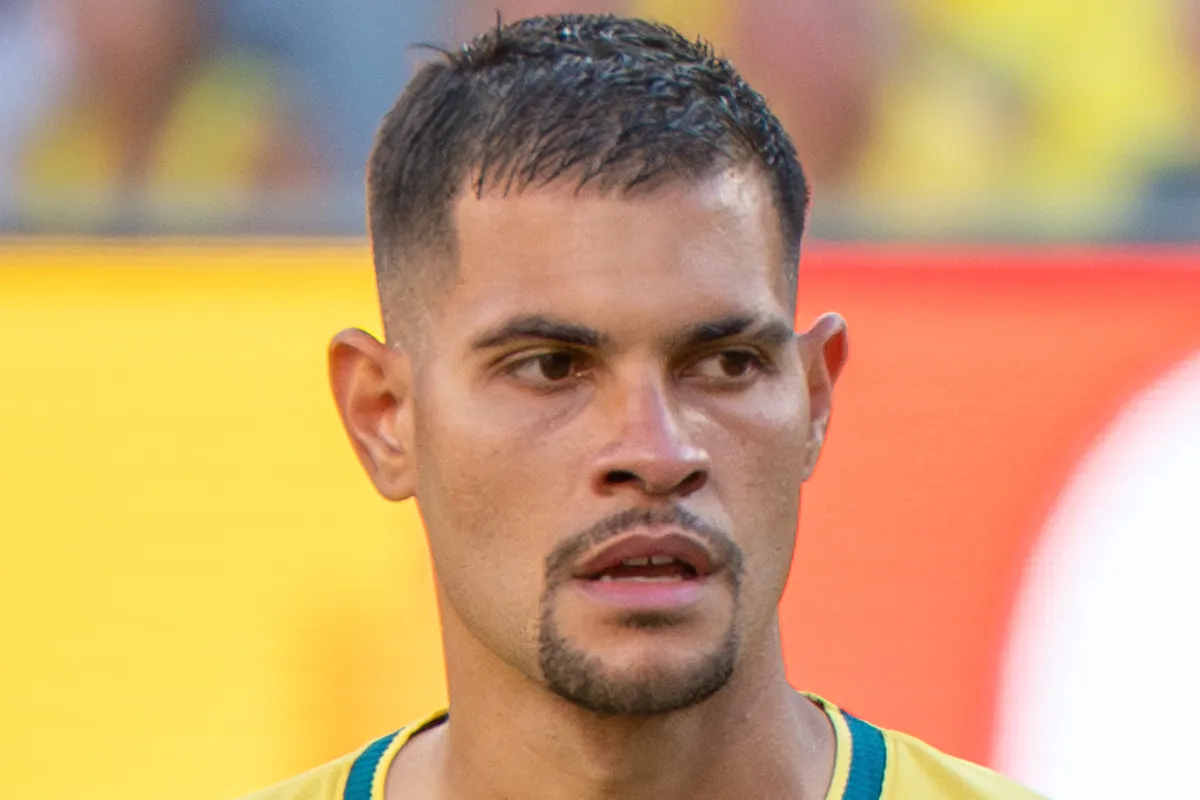
Arsenal signed midfielder Bruno Guimaraes from Newcastle United this summer for €87.5 million, making him the club's second most expensive signing in history, just behind Declan Rice. The 28-year-old Brazilian will continue to wear the number 39 on his back, just as he has at all his previous clubs. For him, this is not just a number; it's a reminder of the tough road from the brink of poverty to the top of football.
Growing up in Rio de Janeiro near the legendary Maracanã, Bruno spent every free moment chasing a ball. However, a professional career wasn't the plan. While his father wanted to sign him up for futsal, his mother was against it. "No, no, no. I don't want another one of those in the house; he'll kill me," his mother said, Bruno recalled in a piece for The Players' Tribune.
She signed him up for swimming. He lasted six months before coming home in tears. "Mom, this swimming! Seriously? I don't enjoy it at all. I'm sorry, but I have to play with a ball," he told his mother. His idol was Ronaldinho, and Cafu also became a role model, whose story of rejections inspired him when he was rejected by Botafogo and Fluminense at the ages of 11 and 12.
At 15, he got a chance at the Audax São Paulo youth academy. His parents drove him for five hours in his father's yellow taxi to the big city and left him in an overcrowded dormitory with 18 bunk beds. "I'll never forget how my parents drove me for five hours to São Paulo in my father's yellow taxi. They left their only child in this big city with teenagers they didn't know, in an overcrowded dormitory with 18 bunk beds," he recounted.
He cried every night for the first few nights. Then, one night, he reached under his pillow for his old phone and instead of plastic, he felt something hairy. "I grabbed the tail. I screamed so loud. There was this fat rat sitting there staring at me as if to say, 'Hey, what are you doing in my bed?'" he recalled. Jumping out of bed, he hit his head and saw two more rats. "I thought I had landed in hell."
Still, he endured. The decisive moment was a conversation with coach Fernando Diniz, now the strategist at Corinthians. "Bruninho, whatever you want to do in life, you'll be one of the best. Because you have dedication and you're focused. You have the soul of a great player," Diniz told him. At 19, he made his debut for the first team.
What followed was a meteoric rise: in 2017, he moved to Athletico Paranaense; in early 2020, Olympique Lyon brought him to Europe for €20 million; and two years later, Newcastle bought him for more than double that amount. Now he's at Arsenal, and with him comes the number 39.
It's the number of his father's taxi, 039, which provided everything for the family. "When I arrived at Paranaense, I was on the phone with my father, and we were talking about which number to choose. I was thinking about 97 because I was born in 1997. But he suggested, 'What about 39? It's more than a number. 039 made everything possible for us. Our house, our food, our furniture, and your football boots,'" Bruno recounted. When he went to ask the kit manager for the number, the shirt was already ready. "I opened the bag, and I swear: it was 39."
Bruno Guimaraes now has the number 39 tattooed on his arm, and he has appeared in two World Cups with Brazil. His story of rising from difficult circumstances now gets a new chapter in an Arsenal shirt.