Italy's Po River Hits Historic Low
Italy's longest river has fallen to record-low levels, with flow nearly 70 percent below normal, leaving farmers, industrial plants, and hydroelectric stations facing an uncertain future.
Italy's longest river has fallen to record-low levels, with flow nearly 70 percent below normal, leaving farmers, industrial plants, and hydroelectric stations facing an uncertain future.
The Po River, the economic engine of northern Italy, is facing one of the most severe hydrological crises in its history. Due to prolonged drought and extreme heat, water levels have dropped to record lows, forcing farmers to rethink what and how they grow, and industry to struggle for an increasingly scarce resource.
Data released on August 6, 2026, by Italy's OglioPoNews show a dramatic situation. At Cremona, the river's flow has fallen to just 193 cubic meters per second, while the average for this time of year is around 602 cubic meters. This means the flow is nearly 70 percent below normal.
Just a few days earlier, on July 30, the river at Cremona dropped to 8.59 meters below the hydrometric zero, one centimeter below the previous record low recorded during the severe drought of 2022. According to data from the Po River Basin District Authority, the flow has been reduced to less than a third of the historical average for this time of year.
Massimo Salvagnin, a 59-year-old owner of the Porto Felloni farm, was supposed to sow green beans next week on the sandy soil of his family's 600-hectare farm near the Po River delta. However, extreme heat has made the soil so hot that there is a risk the seeds will fail before they even sprout.
"The sand gets so hot that the risk of the seeds cooking, boiling, when they touch the soil is extremely high," Salvagnin told the Japan Times. His nephew, Simone Gatto, an agronomist, is helping him assess the situation on the ground.
Before planting, Salvagnin checked whether his irrigation consortium could guarantee water for the next month to six weeks. But anxiety is spreading across northern Italy. "If farms have to grow barley because it doesn't use water, they can't survive," Salvagnin warns. He estimates that a hectare of industrial tomatoes can yield twice the income of barley.
The Po River is 652 kilometers long, rising in the Alps and flowing into the Adriatic Sea south of Venice. Its basin accounts for about 41 percent of Italy's GDP and 32 percent of agricultural production, according to the basin authority. The river and its tributaries support nearly 900 hydroelectric plants that power the country's industrial economy.
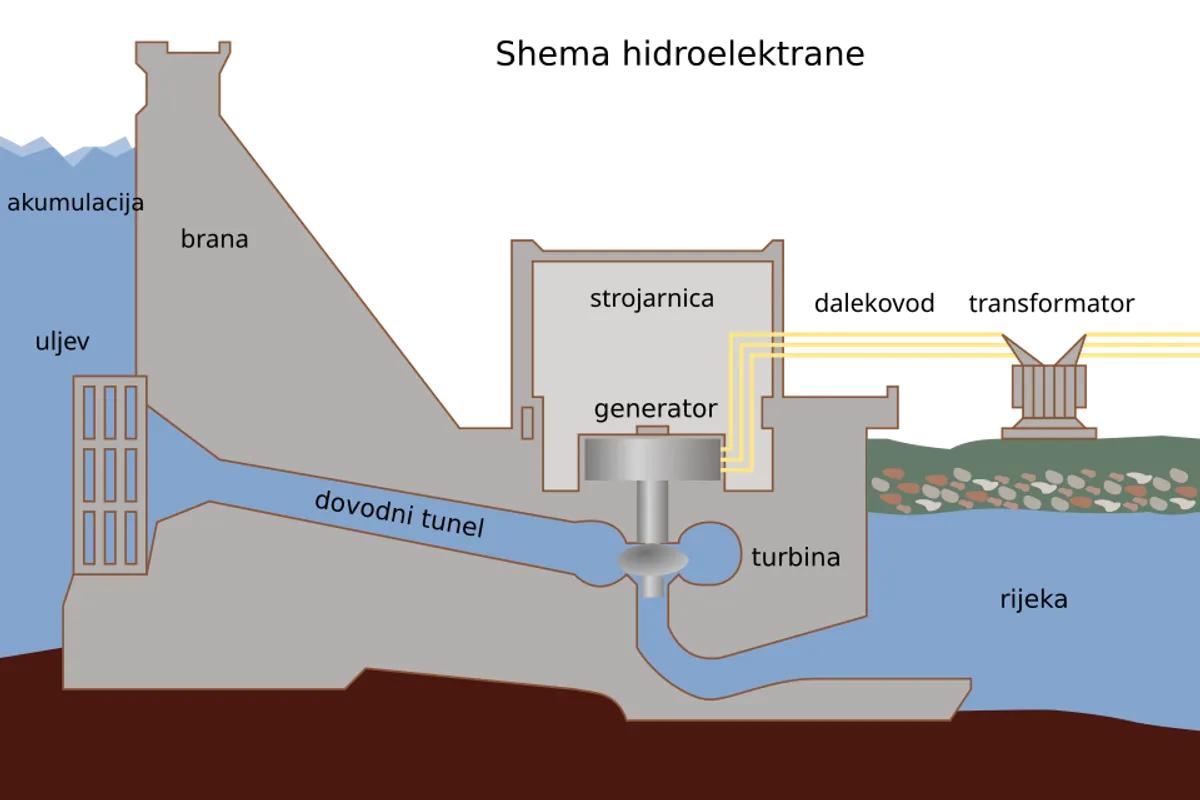
But hydroelectric plants are also feeling the effects. At the Isola Serafini hydroelectric plant, owned by Enel Green Power, all four generating units have been out of service since July 30, 2026, because the river's flow is simply too low.
Stefano Calderoni, president of the Consorzio di Bonifica Pianura di Ferrara, which manages about 4,200 kilometers of canals and 160 pumping stations, describes the growing challenges. "We have two big challenges: managing too much water and too little water. We relied on nature when we should have relied on planning," Calderoni said.
"The Po River increasingly looks like a torrent that constantly fills and empties."
At Pontelagoscuro, the last major measuring station before the delta, the Po River flows with about a third of its historical volume. This signals an increased risk of saltwater intrusion, which now penetrates more than 25 kilometers inland, threatening irrigation and ecosystems.
The problem is further exacerbated by a long-standing challenge for the reclaimed area, which sits on saline groundwater left over from the original marshes and lagoons. Freshwater near the surface helps keep salt at bay, but prolonged dry periods can allow salt to rise through the soil, scorching the land and making it harder for crops to grow.
Farmers and engineers are increasingly looking for solutions beyond their region. Nicola Gherardi, a member of the national executive committee of Confagricoltura, one of Italy's main agricultural associations, learned about drip irrigation for tomatoes from farmers in the Foggia area of Puglia, where these techniques were developed due to the hot, dry climate.
"I went to those who faced these problems before us and developed techniques and knowledge that we simply didn't have," Gherardi said. He also cites the French Rhône as a model for the Po, where water management interventions have allowed agriculture to coexist with hydropower and the delta.
Farmers have already begun to change crops. Corn production, the backbone of northern Italy's livestock and dairy industry, has been halved over the past twenty years because it requires large amounts of water and is sensitive to salinity. In its place, more resilient crops like sorghum are increasingly appearing in crop rotations.
Salvagnin traveled to the U.S. back in the 1990s to study how American farmers use technology, and today he uses soil moisture sensors, weather stations, satellite data, and crop models on his farm to estimate water consumption. Despite all this, he is pessimistic about the future.
"I'll keep doing my job. But around me, there could be a desert," Salvagnin concluded, worried that extreme heat will drive farm abandonment similar to what has emptied parts of Italy's mountain regions.