Ban Jelačić Square: Renovation of the City Savings Bank Facade Completed
The renovation cost €1.6 million, and the building, a work of architect Ignjat Fischer, shines once again in full glory amid a half-empty Zagreb.
The renovation cost €1.6 million, and the building, a work of architect Ignjat Fischer, shines once again in full glory amid a half-empty Zagreb.
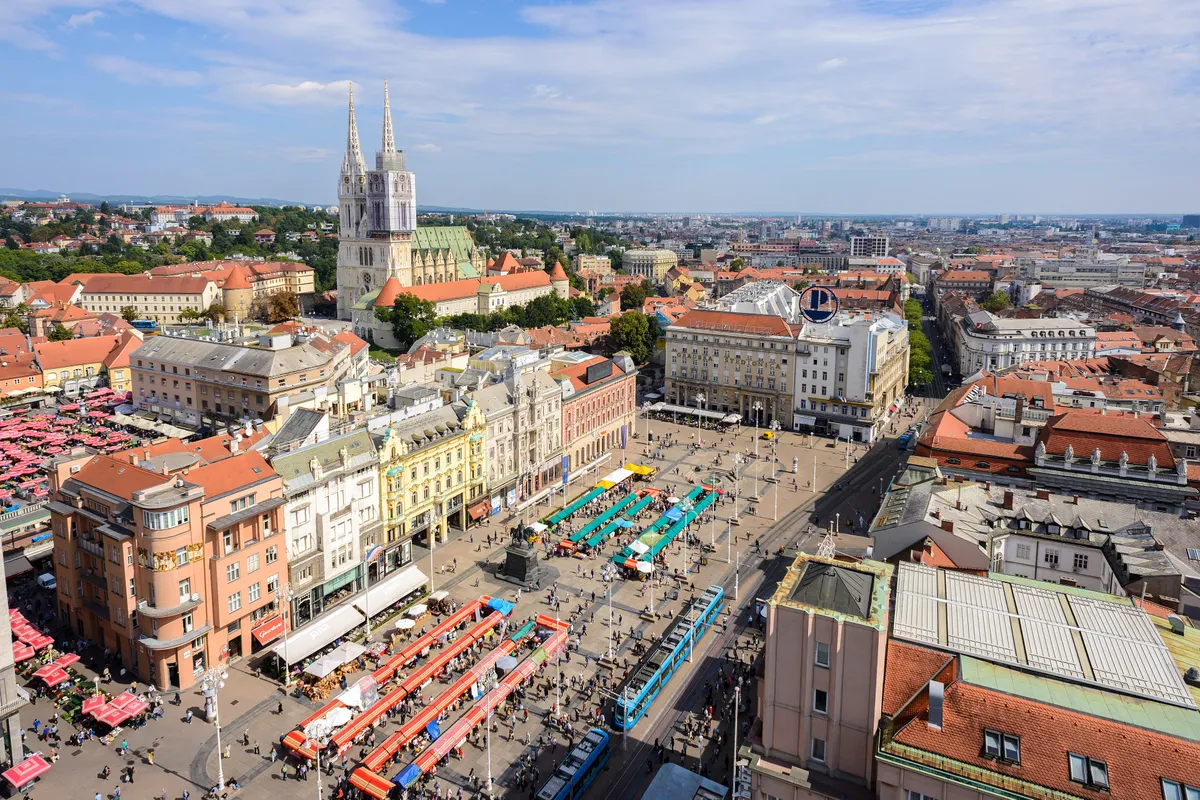
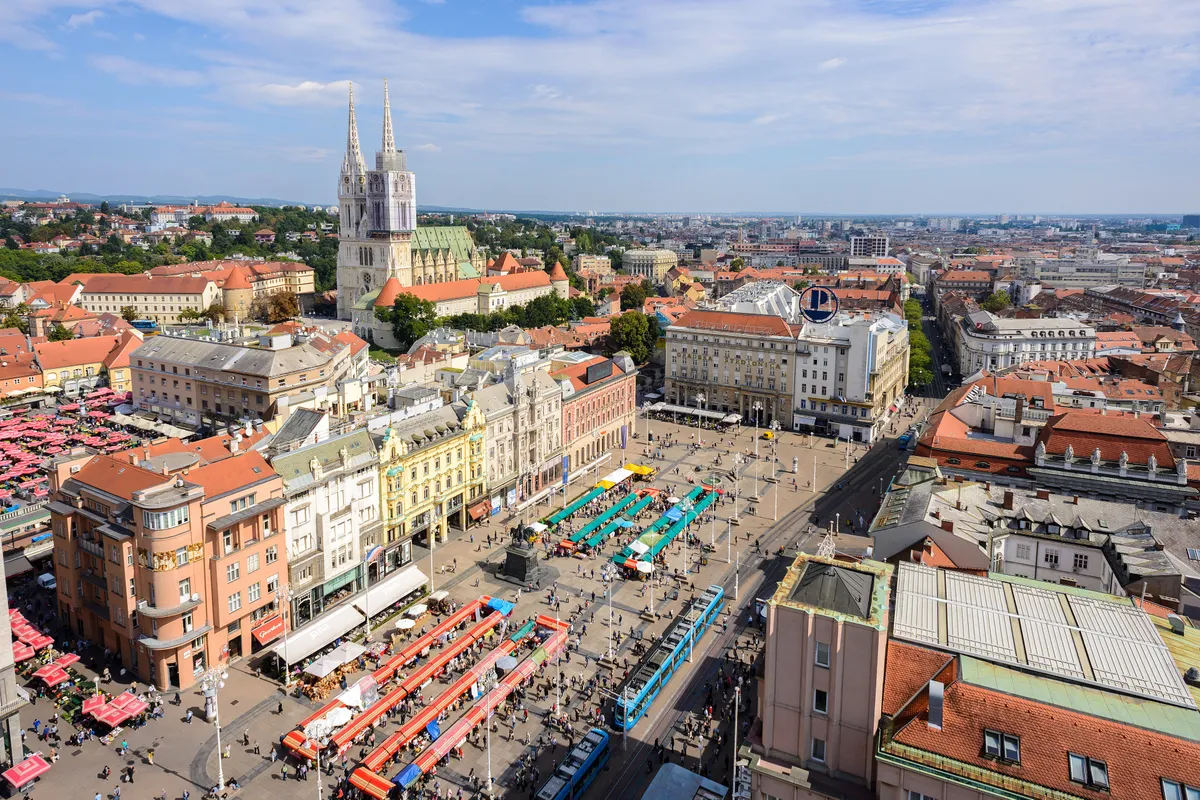
Zagreb residents and all those passing through the city center these days may have noticed that the scaffolding has finally been removed from the building on the northeastern side of Ban Jelačić Square. This is the monumental City Savings Bank building, whose facade renovation has just been completed, with works costing €1.6 million.
This "small" victory for the city center's skyline reveals a lavish facade worthy of Zagreb's main square. For decades, the building has been one of the city's symbols, not only for its architecture but also for the famous City Café located in part of the ground floor.
The building is credited to the renowned Zagreb architect Ignjat Fischer. Construction began in 1924 and lasted until 1929, with full completion in 1939. However, the City Café opened its doors as early as 1932, and contemporary newspapers declared it "the most modern café in all of Europe."
In addition to the café, the building also housed the City Cellar, located in the older section built in 1925. On the pages of Zagrebačka banka, which today co-owns part of the building, it is described how "alongside business spaces, there were apartments for citizens and rooms for the City Café and the City Cellar," with the banking space bearing "characteristics of neoclassicism and art deco."
Zagrebačka banka traces its roots precisely to the City Savings Bank, which began operations in 1914. Today, ownership of the building is divided among the bank, the City of Zagreb, the company Centar Gradski podrum, and private owners.
The first building on that side of the square belonged to the Feller family at the corner with Jurišićeva Street, while low-rise buildings lined up toward Bakačeva. As urban planning historian Snješka Knežević notes, the development of this part of the city was also aided by the relocation of the Medveščak stream, which until 1898 crossed Bakačeva and then meandered through Vlaška, Kurelčeva, Jurišićeva, and Palmotićeva streets toward the Sava River.
Art historian Irena Kraševac explained the square's transformation to Jutarnji list: "Our square was a provincial square, with single-story buildings and the Harmica fair as a marketplace. The city was administratively unified in 1850, when Zagreb became a single entity after the municipalities of Gradec, Kaptol, and the city core merged, and for many in my profession, that is the true date of Zagreb's founding."
She added that with the Croatian-Hungarian Settlement of 1868, Zagreb became the capital, which began to raise awareness of its importance, leading to the construction of the Academy and the University, and Ban Jelačić Square began to take on the face of a main square from a small square.
Art historian Marina Bagarić, who has focused extensively on architect Fischer, described the interior impression of the café: "Ignjat Fischer achieved the impression of a purified monumental yet simultaneously cozy and far from pretentious space with a few stunning elements: large columns, an impressive staircase, and the shape of the galleries. Through masterfully balanced proportions and relationships of these elements."
Although the café's interior has been renovated several times throughout history, there is now eager anticipation for the final look of its terrace, which we hope will be worthy of this prestigious location.