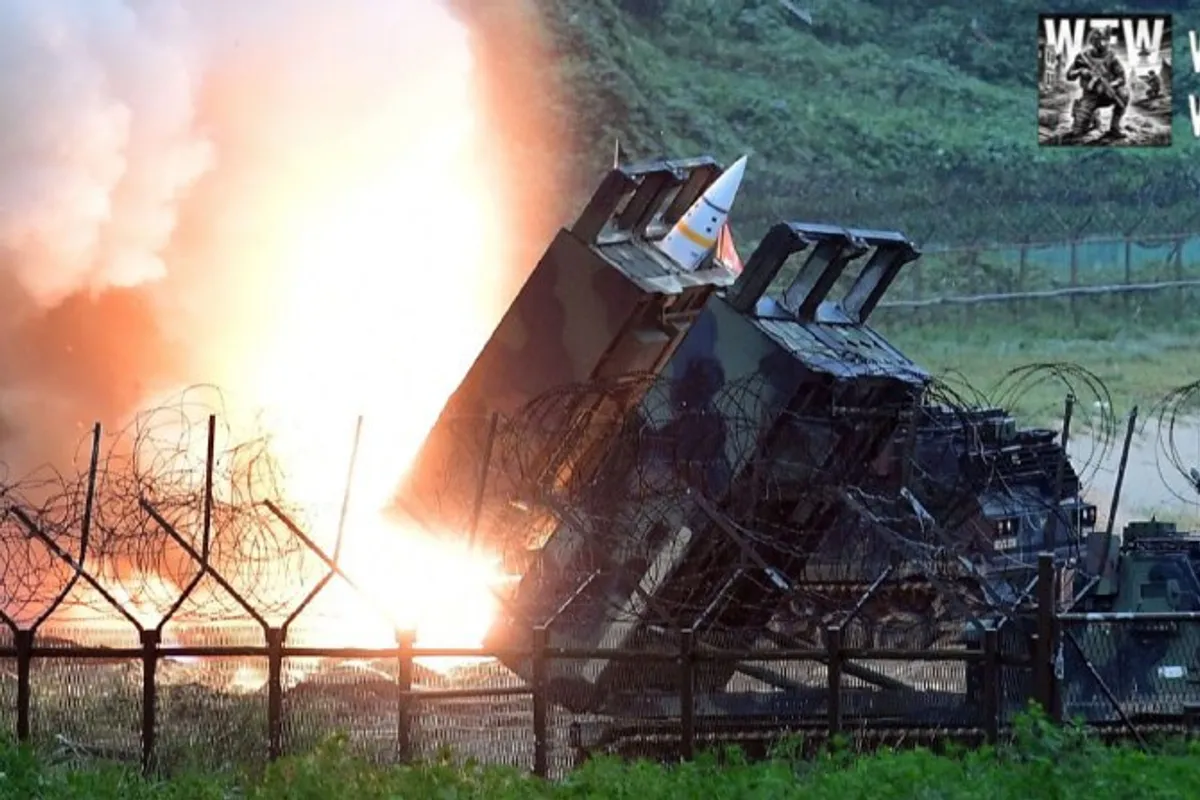
The international human rights organization Human Rights Watch (HRW) announced on Tuesday, August 11, 2026, that Turkey has formally requested permission from the United States to re-export, or transfer, more than 10 million explosive cluster submunitions to Ukraine. These are weapons that have been in Turkish stockpiles for decades, with licensed production beginning as early as 1987.
The proposed deal, valued at $256 million, includes the sale of Turkey's entire inventory of 12 M270 multiple launch rocket systems and three types of cluster munitions: 70 M39 ATACMS ballistic missiles, 2,524 M26 rockets, and 47,000 M509A1 203mm artillery projectiles. The total number of submunitions in this arsenal exceeds 10 million, and a large portion of this stockpile was produced more than three decades ago.
A 'Tragically Predictable Humanitarian Threat'
HRW's deputy director in Washington, Nicole Widdersheim, sharply criticized the planned transfer. "Transferring outdated cluster bombs into a conflict zone creates a humanitarian responsibility toward civilians that is tragically predictable," Widdersheim stated. She emphasized that it is precisely the impact of such munitions-over 30 years old, inaccurate, and unreliable-on civilians that motivated 112 countries to ban them by signing the international Convention on Cluster Munitions.
Widdersheim appealed to the US Congress to act. "These types of cluster munitions have a notorious reputation for missing their targets and injuring civilians. They should never be used. Congress can still stop this shortsighted and dangerous transfer," she urged.
State Department Arguments and Approval Procedure
According to a letter sent by the State Department to Congress on August 6, 2026, the US government is prepared to approve this transfer. A senior State Department official stated in the letter that Turkey "seeks to reduce its stockpiles of older defense items in order to direct its financial resources toward modernizing and maintaining existing systems."
Regarding Ukraine, the same official explained that "Ukraine seeks to strengthen its offensive and defensive fire support capabilities while resisting the Russian invasion. Ukraine already possesses ammunition of the same or essentially similar type."
Although the US is not a signatory to the Convention on Cluster Munitions, a moratorium on their export has been in effect in the Department of Defense budget since 2009. The previous administration of President Joe Biden circumvented this moratorium between July 2023 and October 2024, carrying out at least seven transfers of cluster munitions to Ukraine. It is not publicly known whether the administration of President Donald Trump has made a similar decision to bypass restrictions in this case. Congress has the option to review the transfer and pass a Joint Resolution of Disapproval to block the sale.
Russian Attacks and Ukrainian Commitments
HRW reminds that cluster bombs are inherently indiscriminate weapons that cannot be precisely targeted and leave behind a large number of unexploded submunitions, effectively turning them into anti-personnel mines. The organization documented hundreds of Russian cluster attacks in at least 10 Ukrainian regions as early as 2023.
Among the confirmed cases, the attack on the railway station in Kramatorsk on April 8, 2022, stands out, killing at least 58 civilians and wounding more than 100. Amnesty International also documented multiple Russian uses of cluster munitions in residential areas of Kharkiv, including an attack on April 15, 2022, that killed at least nine and wounded 35 civilians. Additionally, on February 25, a cluster bomb struck a kindergarten in Okhtyrka, killing three civilians, including one child.
On the other hand, when Ukraine received American cluster bombs in 2023, it provided written assurances that it would not use them in populated urban areas and would record the locations of use for future demining. According to a US Department of Defense study published in 2026, Ukraine has adhered to these restrictions and has not used the supplied munitions in densely populated or urban zones.