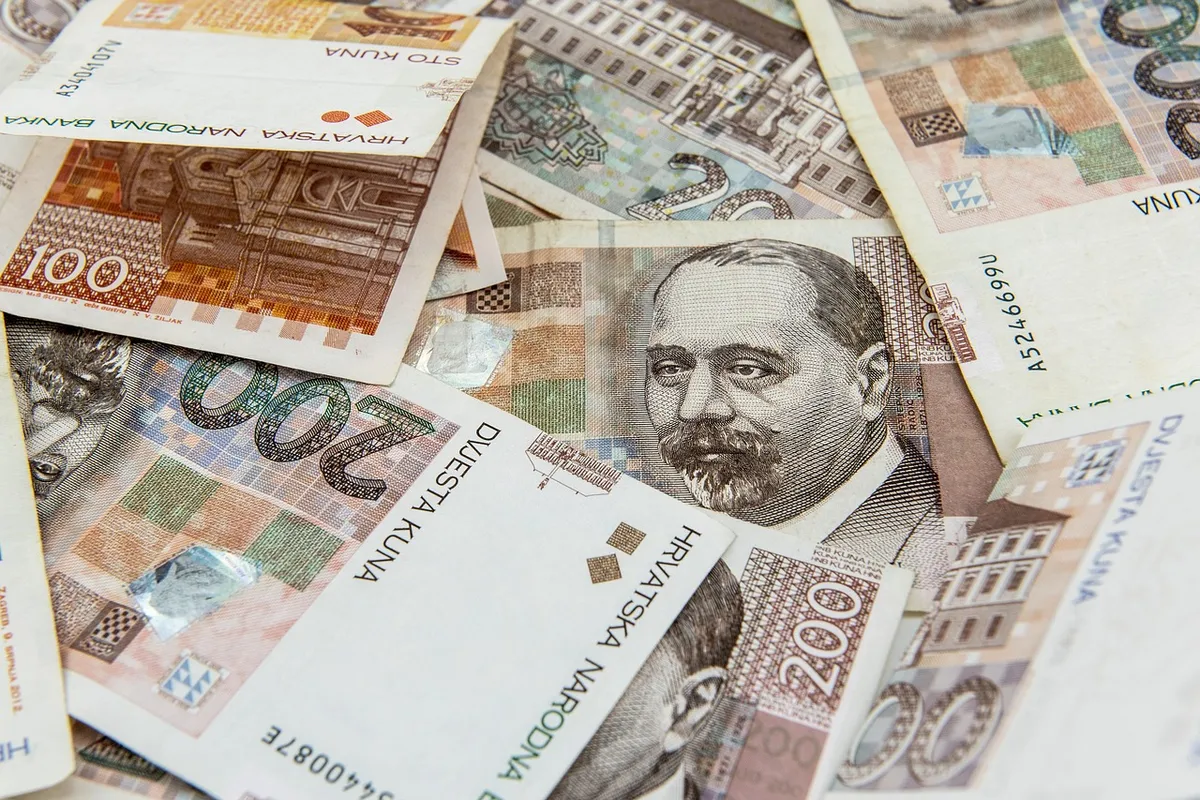
Croatia has ranked third in the world in the growth of real average wealth per adult from the start of 2020 to the end of 2025, according to the latest report by Swiss bank UBS, titled Global Wealth Report 2026. The increase reached 29 percent, with only South Korea and Russia ahead of Croatia.
How the 56 markets were ranked
In its research, UBS tracks a total of 56 markets that together represent more than 92 percent of the world's total wealth. During this period, South Korea saw growth of over 55 percent, Russia 37 percent, Croatia 29 percent, while Norway was fourth with 27 percent. UBS uses values in local currency adjusted for inflation, so this is not merely a nominal increase in asset values.
What the data does not mean
It is important to clarify immediately what this data does not mean. Croatia is not the third-richest country in the world. It is third in the growth rate of real average wealth per adult between 2020 and the end of 2025, among the countries and markets covered by the study.
Personal wealth does not refer exclusively to money in a bank account or salary level. The calculation includes financial and non-financial assets, such as real estate, investments, and other property, minus household debts. Therefore, this result should not be linked to the standard of living or monthly incomes of citizens.
Warning on inequality
UBS itself warns that average wealth can mask significant disparities within a population. A few extremely wealthy individuals can significantly raise the average, so alongside it, median wealth is also considered-the value where half of adults have more and half have less assets.
Global context
Globally, personal wealth grew by 10.8 percent in 2025 alone, the fastest pace since 2017. UBS highlights strong financial markets and rising non-financial asset values as key factors but warns that the benefits of this growth are not evenly distributed.
Nevertheless, for Croatia, this is a noteworthy figure. Over six years, including the pandemic, inflationary shock, and major geopolitical turmoil, real average wealth per adult increased by 29 percent. This result indeed places Croatia among the leaders in the analyzed world. However, the true picture of citizens' standard of living becomes clear only when, after the average, another question is posed: how much of this growth actually reached the average Croatian household?