Vučić Threatens, Dodik Sends Message to Croats
At a rally in Mrkonjić Grad, amid accusations of crimes and persecution, the Serbian leader and the RS leader sent sharp messages to Croatia, announcing integration and military readiness.
At a rally in Mrkonjić Grad, amid accusations of crimes and persecution, the Serbian leader and the RS leader sent sharp messages to Croatia, announcing integration and military readiness.
Serbian President Aleksandar Vučić and Milorad Dodik, leader of the ruling party in Republika Srpska, used a commemorative rally in Mrkonjić Grad to level a series of serious accusations and veiled threats against Croatia. The rally, organized by the RS authorities as a "day of remembrance for killed and expelled Serbs" and declared a day of mourning, turned into a platform for revisionist narratives about the wartime events of the 1990s. Despite repeated calls by the authorities for mass attendance and organized transportation, a relatively small number of participants arrived in Mrkonjić Grad, but all the highest officials of Serbia and the RS were present.
Vučić, the main speaker, claimed that the military-police operation "Storm" of August 1995 was a crime. "Storm was a crime, never again!" he said, adding that "Storms and pogroms against the Serbian people will never happen again, no matter who is on the other side." In his speech, which he emphasized would be his last as president, Vučić promised that Serbia would protect its people. "Serbia is strong enough to preserve and protect its people. We will not wait for someone else to do it, nor will we seek excuses to leave our people in the lurch," he stated.
The rally was preceded by a religious service led by Patriarch Porfirije of the Serbian Orthodox Church (SPC), who called "Storm" a "terrible persecution unprecedented in the 20th century." At the same time, he called on the faithful to "peace and good-neighborly relations with those with whom we share the same living space."
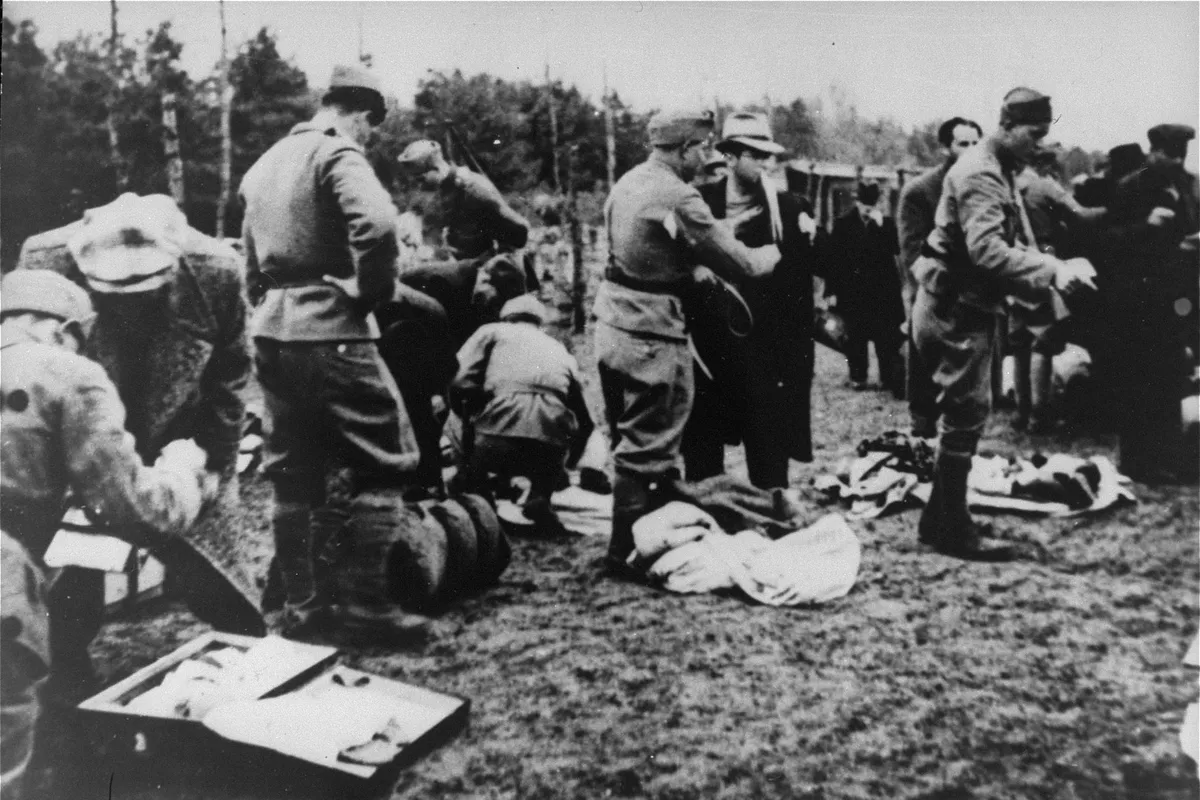
Vučić devoted a large part of his speech to accusations against Croatia, claiming that it "lies every day and deceives the whole world." He particularly addressed the ban on his visit to Jasenovac, saying: "As the president of Serbia, I was banned from going to Jasenovac, and I was surprised that Europe remained silent about it." He also claimed that the extent of the suffering in the camp is being denied in Croatia, saying: "They claim that Jasenovac is a myth, that the numbers of victims are exaggerated, and that it was just a labor camp." He also stated that the victims in Jasenovac were primarily Serbs, then Jews and Roma, while Croats, according to him, were not among them "except for some exceptions."
In his address, he also offered his own interpretation of the breakup of Yugoslavia, asserting: "It was not the Serbs who dismantled the common state that was then called the Socialist Federal Republic of Yugoslavia. That was an internationally recognized state. You set out to destroy it, while the Serbs wanted to preserve that state and remain on their hearths." He added an accusation about the expulsion of Serbs from Croatian cities, saying: "They cleansed the cities of the real Serbian elite. Zagreb, Rijeka, Zadar, Osijek, all had their own 'Kristallnacht'."
Milorad Dodik went a step further in his inflammatory rhetoric, directly linking modern Croatia to the Independent State of Croatia (NDH). "Shame on the Croats," Dodik said, accusing Zagreb of aiming to "finish the job of the Ustasha NDH." He accused Croatia of "aggression against the RS" and the USA of participating in "genocide and ethnic cleansing." In his speech, he also attacked the authorities of Montenegro, accusing them of betraying the Serbs.
Dodik concluded his speech with a message about the unstoppable integration of Serbia and Republika Srpska, emphasizing that a strong Serbia is the only way to achieve superiority over Croats and Bosniaks.
In an emotional part of his address, Vučić directly addressed the family of Siniša Dobrić, a boy who died in a refugee column during "Storm." "For the last time as President of the Republic, I want to apologize on behalf of all citizens of Serbia for Serbia being weak, for remaining silent about the crimes, for hiding you, and for not allowing you to come to Belgrade. Forgive us," Vučić said. He repeated the thesis that Serbia was too weak in the 1990s to prevent the events, saying that "Serbia was economically broken and politically weak."
However, the tone quickly returned to threats. Vučić said he "hopes he will not have to use the army for defensive purposes," alluding to those who, as he said, are waiting for the "second half." According to him, during "Storm," "250,000 people were expelled," and he also claimed that "the Croats attacked the Republic of Serbian Krajina from all sides with American and European logistical, political, and economic support."