West Runs Out of Interceptors: Kyiv Goes Dark, Allies in Panic
S.V.·Prije 23h|7 min
In August, Ukraine failed to intercept a single Russian missile, and the U.S. has used nearly two-thirds of its Patriot stockpiles. Production is years behind, and allies fear for their own defense.
Residents of Kyiv are again sleeping in crowded metro stations or in cars in underground garages, as Russia showers the city with an increasing number of ballistic and hypersonic missiles. Ukraine, which previously managed to repel most such attacks thanks to Patriot batteries, is now, in military jargon, "going Winchester," meaning it has run out of ammunition. A photo by Reuters' Valentyn Ogirenko from July 6, 2026, shows a damaged car in Kyiv after Russian attacks, a symbol of the increasingly dire situation on the ground.
Ukraine's plight is the starkest sign of a global shortage of interceptor missiles in the West. The depleted U.S. arsenal also explains why President Donald Trump has repeatedly backed down from threats to re-enter a war with Iran. Allies are alarmed: Switzerland expects delays of up to seven years for Patriot deliveries, while Taiwan fears that the 102 missiles it ordered will not arrive this year as planned. Lockheed Martin, the manufacturer of the most advanced PAC-3 MSE version, cannot guarantee delivery timelines to any foreign client due to the possibility that the Pentagon will redirect stockpiles.
War with Iran Emptied Warehouses
The immediate cause of the crisis is the massive expenditure of interceptors during Trump's war with Iran this year. The Center for Strategic and International Studies (CSIS) estimates that the Pentagon has fired nearly two-thirds of its pre-war Patriot stockpiles, as well as large portions of other interceptor missiles. Rebuilding stockpiles to pre-war levels will take until 2029, and that assumes Congress approves Trump's request for a $1.5 trillion defense budget, a 50 percent increase over current spending, which is unlikely.
Patriots have become the primary system for defending key points, such as air bases, in 19 countries. Justin Bronk of the Royal United Services Institute (RUSI) explains: "Patriot is the dinner solution: you don't need it often, but when you do, little else can help." The problem is that ballistic missiles are generally cheaper than the interceptors trying to hit them; PAC-3 MSE missiles cost $4-5 million each. Iranian Shahed drones are two orders of magnitude cheaper.
"If your adversary can field a one-way attack UAV for the price of a used car, and your response is a surface-to-air missile that costs as much as a small apartment in London, you lose the exchange even though you win every engagement."
An additional problem is that defenders typically fire at least two interceptors at each incoming missile to increase the chances of success.
Drop from 70 to 20 Percent in Four Months
Ukraine has improvised a layered defense with a top-tier network to counter swarms of Russian drones and most larger cruise missiles. But only Patriots can handle Russia's Iskander-M and Kinzhal ballistic missiles. In March 2026, Ukraine boasted of intercepting about 70 percent of ballistic missiles. By July, that figure had fallen to 20 percent. In August, it will be even worse: on the night of August 5, there were no interceptions at all, and the Ukrainian Air Force stopped publishing regular reports. Russia, noticing this, has increased missile production.
As winter approaches, Ukraine has requested at least 300 Patriot interceptor missiles. Some countries, including Germany, Greece, Poland, and Spain, still have reasonable quantities, but they are increasingly reluctant to part with them.
Production Lags, Europe Seeks Alternatives
Manufacturers have agreed this year to increase PAC-3 production from 600 to about 2,000 per year by the early 2030s. Tom Karako of CSIS warns that the Pentagon has not yet signed actual contracts for the increased production. Japan produces about 30 PAC-3 interceptors annually under license, mostly for its own needs. European company MBDA will soon begin producing older PAC-2 models in Germany.
At the NATO summit in July 2026, Trump said Ukraine would be able to produce Patriot interceptors under license, but later cast doubt on the idea. Reports suggest that manufacturers Lockheed Martin and RTX fear losing know-how or being overshadowed by cheaper Ukrainian versions.
European companies are rushing to develop their own weapons. The Franco-Italian SAMP-T system is said to be able to hit short- and medium-range ballistic missiles, but Ukrainian military sources say it performs worse than the Patriot PAC-2, let alone the PAC-3. Ukraine will receive improved SAMP-T batteries with updated interceptors in phases starting next year, but they are produced in smaller numbers than Patriots. Ukraine's defense industry and Western companies are working on Project Freyja, which involves Ukrainian company Fire Point and several European arms manufacturers, aiming to develop an interceptor at a quarter of the PAC-3's cost without American technology. Testing is expected to begin next year. Douglas Barrie of the International Institute for Strategic Studies (IISS) is skeptical, describing Freyja as a "moon shot."
Taiwan is trying to expand production of its Sky Bow III interceptors, and this year expects to begin mass production of Sky Bow IV, which it claims is more capable than the PAC-3. Few countries, however, are willing to risk Chinese anger by buying Taiwanese weapons. Lockheed Martin has announced the development of the PAC-3 ACE, known as the "Baby Patriot," smaller and less capable than the PAC-3 MSE, but half the price. It could enter production in 2028.
Instead of Shooting the Arrow, Shoot the Archer
David Deptula, a former U.S. Air Force general, emphasizes: "Air defense cannot be separated from offensive operations. The cheapest interceptor is the one you never have to fire because the weapon is never launched." Instead of shooting at missiles, it is more logical to target launchers, command centers, warehouses, and production facilities. But America has also depleted its stockpiles of long-range offensive weapons: according to CSIS, it has used a third of its approximately 3,000 Tomahawk cruise missiles. America has refused to supply Tomahawk missiles to Ukraine, and deliveries to other clients, including Australia, Germany, Japan, and the Netherlands, could be delayed.
Ukraine has built drones that can reach targets deeper into Russia, but they are slow and carry little explosive. The heavier Flamingo cruise missile from Fire Point has had some successes. Ukraine hopes to soon deploy its own ballistic missiles, the FP-7 and the larger FP-9, with a claimed range of over 800 km.
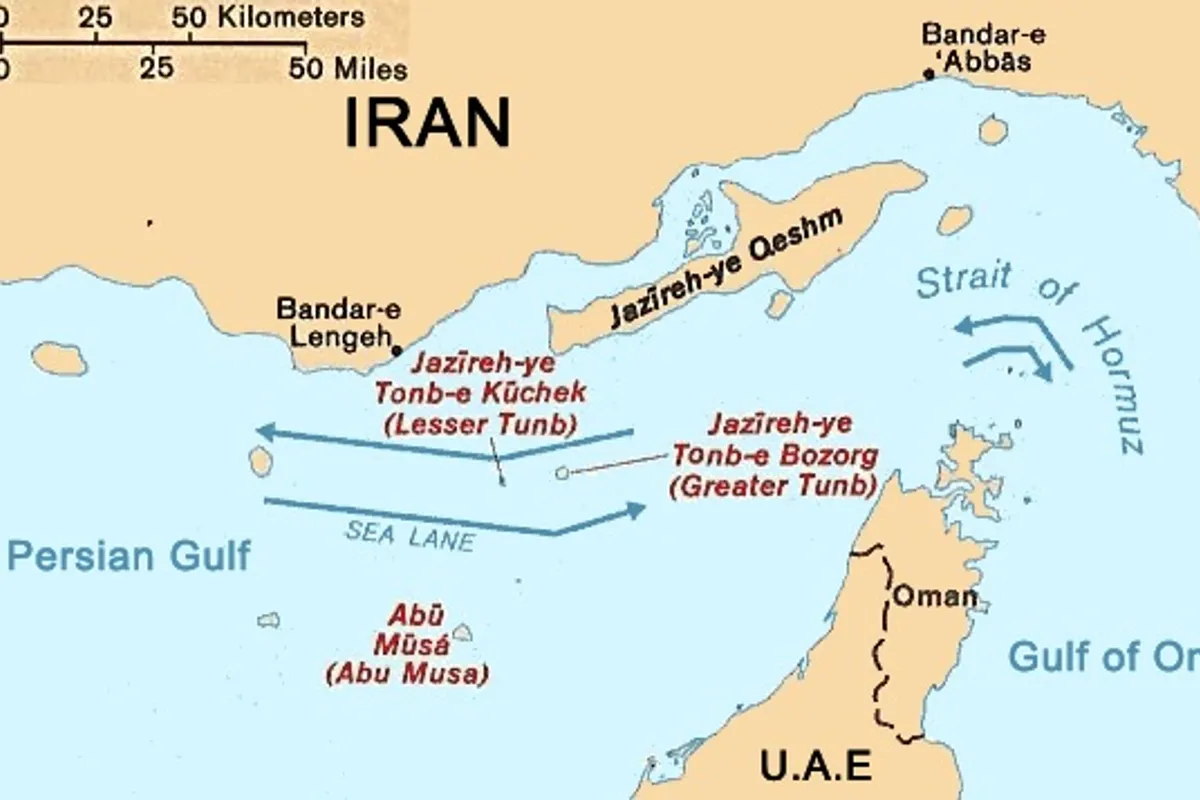
Destroying mobile launchers is difficult. America and Israel claimed this year to have suppressed Iranian fire by up to 90 percent by bombing launchers and entrances to underground "missile cities," but even with complete air superiority and excellent surveillance, they did not fully stop it. America lost radars, command centers, early warning aircraft, tankers, drones, fighters, and much more. Even after the ceasefire in April 2026, it failed to prevent Iran from targeting ships in the Strait of Hormuz.
China as a Nightmare
A future air war against China, for example over Taiwan, would be a daunting undertaking. Chinese missiles can reach bases as far away as Alaska and Hawaii, as well as warships in the middle of the Pacific. The Heritage Foundation, a Washington think tank, estimates that America would exhaust its interceptors within days in a war with China and would be unable to use its bases in Japan and Guam. To defend against the People's Liberation Army, it would need more than 19,000 Patriot interceptors, more than 20 times its current stockpile according to CSIS estimates.
Shooting the Chinese "archer" would be a tempting alternative, but it carries two major problems. First, America would have to strike the Chinese mainland, which would provoke retaliation against the continental U.S. Second, China's rocket forces are also responsible for land-based nuclear missiles, so attacks on them could be interpreted as an attempt to destroy China's nuclear forces, risking nuclear escalation. Instead, U.S. forces are practicing how to survive within China's "weapons-engagement zone" through various forms of dispersal.
Meanwhile, NATO allies continue joint exercises. Forces from Denmark, Sweden, the United Kingdom, the U.S., and Ukraine developed new skills and exchanged knowledge during an exercise on Gotland, NATO announced on August 19, 2026, on platform X.
All possible solutions to the interceptor shortage, even if accelerated and intensified, will take time. In Ukraine, civilians still have to take shelter underground. As they contemplate another freezing winter of danger, many will wonder how their leaders allowed this to happen. Other governments should draw a lesson.