Dove 11 Kilometers into an Abyss and Found a Plastic Bag
American explorer Victor Vescovo descended to the deepest point of the Mariana Trench and, besides unknown species, encountered human waste in a place where almost no one has ever set foot.
American explorer Victor Vescovo descended to the deepest point of the Mariana Trench and, besides unknown species, encountered human waste in a place where almost no one has ever set foot.
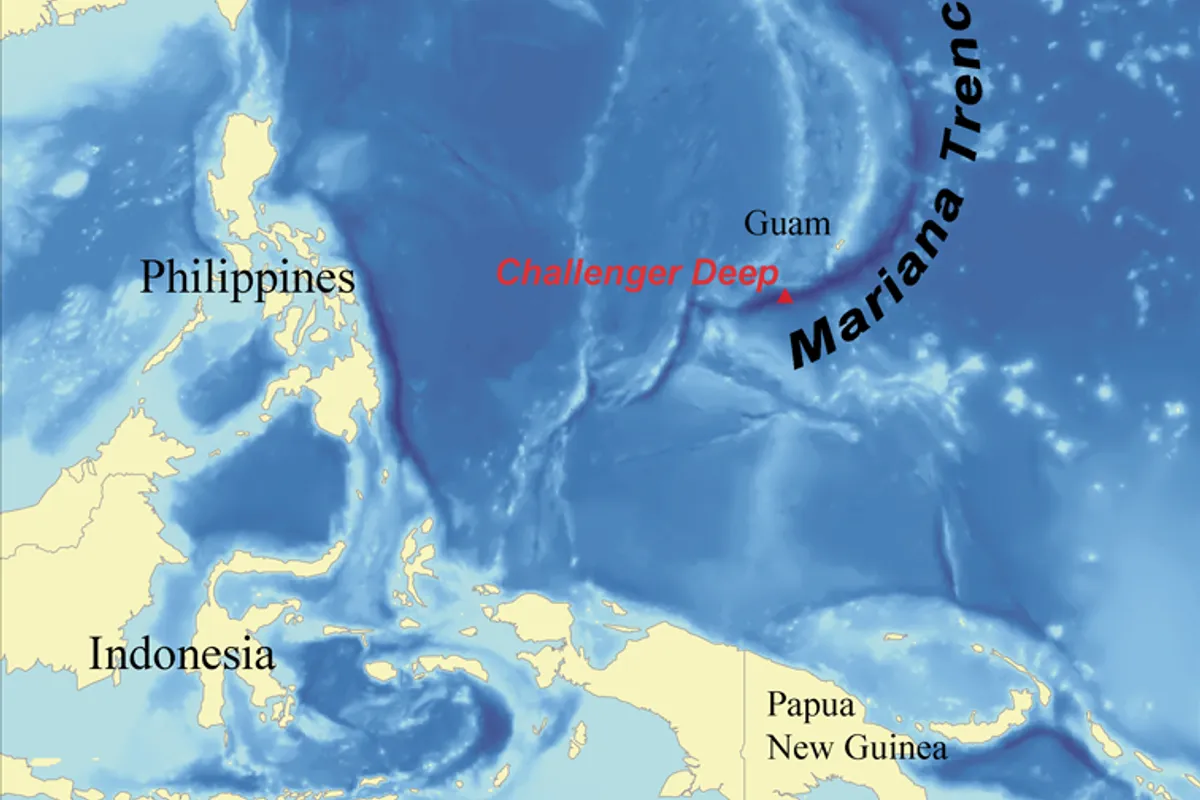
At a depth of 10,927 meters, where pressure exceeds a thousand atmospheres and where fewer people have been than in space, explorer Victor Vescovo came across a sight that shatters any illusion of untouched nature. At the bottom of the Mariana Trench, at the lowest point of Challenger Deep, lay a plastic bag and candy wrappers, as reported by Dnevno.hr and N1 Serbia.
According to N1 Serbia, Victor Vescovo descended on May 1, 2019, in a specialized submarine to the bottom of the Mariana Trench in the western Pacific. He set the record for the deepest solo dive in history, reaching 10,927 meters below the surface. Challenger Deep, the lowest point of the trench, reaches 10,935 meters according to the most precise measurement from 2019.
To grasp this depth, imagine Mount Everest placed there-its peak would remain more than two kilometers below the ocean surface. The pressure at the bottom is 1,086 atmospheres, equivalent to the weight of about fifty passenger jets stacked on a human body.
The inaccessibility of this area is best illustrated by a number: by 2024, only 27 people had descended to the bottom of Challenger Deep. For comparison, twelve people have walked on the Moon, and far more have gone into space. The first to do so were Don Walsh and Jacques Piccard back in 1960 in the bathyscaphe Trieste. Filmmaker James Cameron made a solo trip to the bottom in 2012.
Vescovo spent about four hours at the bottom. He filmed rocks, marine organisms, and objects that do not belong there. Before returning, he turned off the submarine's engines and, in silence, observed the deepest place on Earth, eating a tuna sandwich along the way, as reported by N1 Serbia.
The discovery of a plastic bag and candy wrappers was not the first of its kind. As early as 2018, a study was published that, by reviewing footage from more than five thousand dives over thirty years, found that the deepest recorded piece of plastic was an ordinary shopping bag, found at a depth of nearly 11 kilometers. Earlier research also showed that small crustaceans from the six deepest ocean trenches had plastic particles in their bodies.
Plastic in the sea gradually becomes covered with microorganisms and fine particles, becomes heavier than water, and slowly sinks. Ocean trenches act like natural funnels-currents gradually push waste toward the lowest points, where it accumulates because there is nowhere else to go. Due to this effect, some deep trenches record higher concentrations of pollutants than some of the world's most polluted rivers.
Vescovo's dive in the Mariana Trench was part of a broader expedition aimed at reaching the deepest point of each of the world's oceans. At each of these locations, the same pattern was confirmed-human waste has reached places where human feet can almost never tread. Don Walsh, then 91 years old, was waiting for him on the ship when he surfaced.