Scientists Count Whales, Dolphins, and Turtles from the Air
The eighth international survey of these protected species began on July 31, and the team has completed 40 flights over the Adriatic Sea so far.
The eighth international survey of these protected species began on July 31, and the team has completed 40 flights over the Adriatic Sea so far.
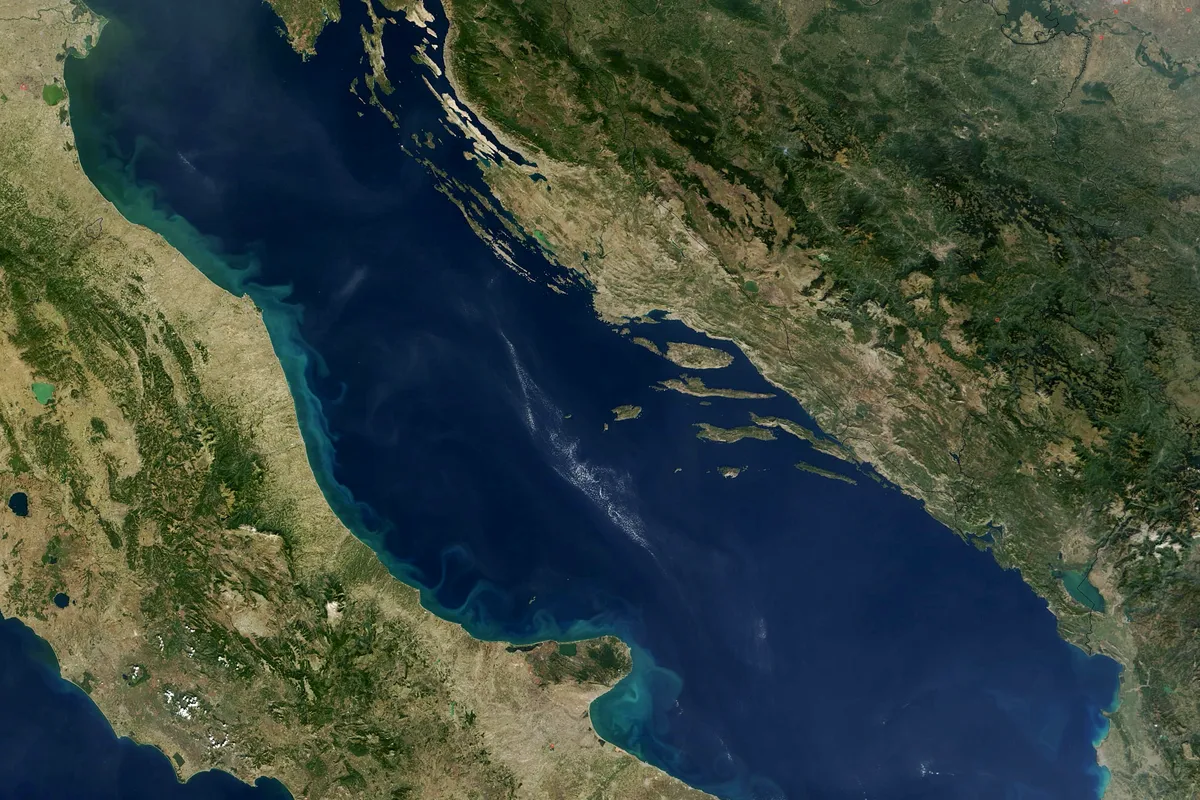
The eighth international aerial survey is in full swing in the Adriatic, aiming to determine how many whales, dolphins, and sea turtles inhabit our sea. The survey, which began on July 31, 2026, is being conducted by a team of Croatian scientists and represents a key contribution to the conservation of the marine ecosystem and the fulfillment of the Republic of Croatia's obligations under European Union directives.
The first flights were conducted in the far south, in the area of the Otranto Strait and the southern Adriatic, with the team taking off from the airport in Brindisi, Italy, for the first three days. After that, the base was moved to Dubrovnik, from where flights over the southern and central Adriatic continued. By August 8, researchers had completed a total of 40 flights. Due to an announced change in weather, the research aircraft is currently on Lošinj, from where the survey will extend to the northern Adriatic.
The coordinator of the survey for the Adriatic area, Associate Professor Draško Holcer, PhD, from the Croatian Natural History Museum, explained that the work is based on a strict international aerial survey methodology. "The aircraft flies along predetermined transect lines (which are 15 kilometers apart in the Adriatic), and when animals are sighted, their distance from the transect line is recorded," said Dr. Holcer.
After data collection, detailed processing follows, first determining abundance in the area directly surveyed, and then using statistical methods to calculate the total abundance for the entire study area. "Using a standard method ensures systematic coverage of the entire Adriatic and the collection of comparable data across the whole study area," he added.
The survey is a joint effort of Croatian and Italian institutions. On the Croatian side, it is coordinated by the Blue World Institute, Blue World Vis, and the Croatian Natural History Museum, while the Italian part is conducted by the National Institute for Environmental Protection and Research (ISPRA) under the LIFE MareNatura project, led by Giancarlo Lauriano.
Dr. Holcer emphasizes that cross-border cooperation is absolutely necessary. "Our insistence on a joint survey of the entire Adriatic is based on the fact that large marine vertebrates do not recognize national borders. Dolphins we encounter on the Croatian side today may be in Italy tomorrow," he stressed. He warned that without joint monitoring, understanding of real changes in abundance and how these animals use their habitat would be significantly diminished.
The importance of this long-term work is also confirmed by Assistant Professor Grgur Pleslić, PhD, from the Blue World Institute. "Thanks to a continuous series of surveys since 2010, the Adriatic Sea today represents an area where the abundance and distribution of whales and dolphins (Cetacea) and sea turtles are best monitored in the entire Mediterranean, primarily due to the largest number of surveys conducted and the largest total area covered by survey flights," he stated.
The first surveys of the entire Adriatic were conducted in 2010 and 2013, and in 2018, a survey at the level of the entire Mediterranean was organized for the first time as part of the ACCOBAMS Survey Initiative (ASI-1). Additional surveys of the northern and central Adriatic followed in 2019 and 2020, and in 2021 and 2022, the entire Adriatic was covered again.
Team member Maša Frleta-Valić from Blue World Vis explained that this year's survey does not rely solely on aircraft. "Given the specificities of certain areas and the need to determine the abundance and presence of some species that occur in small numbers in the Mediterranean, such as the sperm whale or Cuvier's beaked whale, the survey occasionally combines aerial surveys with vessel-based surveys that record whale vocalizations," she said. She added that this year, in addition to the Adriatic, she also participated in aerial surveys in the Ionian Sea during July.
The Croatian part of the survey is funded under the project "Nature in Sight, Monitoring the Conservation Status of Species and Habitat Types," implemented by the Ministry of Environmental Protection and Green Transition and the Institute for Environmental and Nature Protection, co-financed by the European Union. The collected data will be crucial for national monitoring programs, international reporting, and regional analyses under the ASI-II initiative, ensuring long-term protection and sustainable management of marine species and ecosystems.