The military-police operation Operation Storm, which began on August 4, 1995, at 5 a.m. and ended on the evening of August 7, is still considered a key victory for the Croatian Army and police in the Homeland War. The operation liberated approximately 10,400 square kilometers, or 18.4 percent of Croatia's total area, ending a four-year occupation of that region.
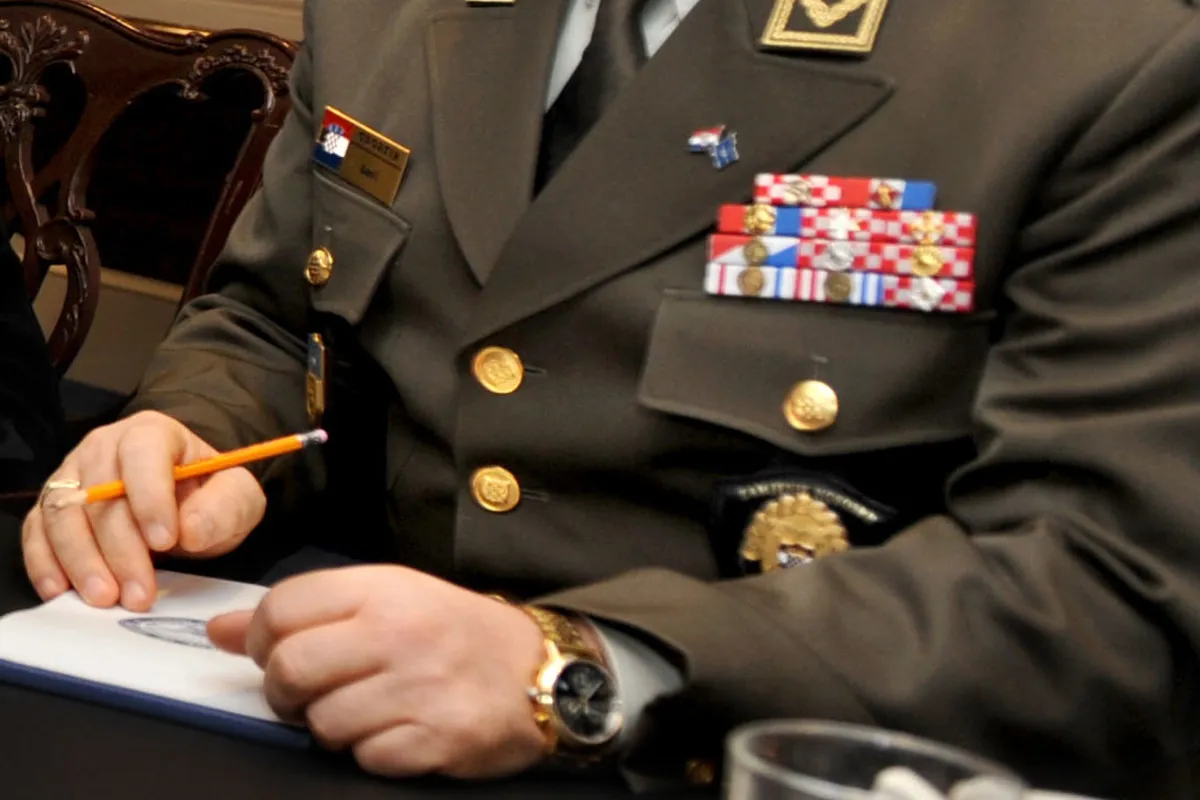
On August 5, when Knin was liberated, Croatia celebrates Victory and Homeland Thanksgiving Day and the Day of Croatian Defenders. On this occasion, Lieutenant General Slavko Barić, who was deputy commander of the front in eastern Croatia during Operation Storm, spoke to the Zadar List about the significance of the operation and how its memory is passed on to young people.
Uncertainty on the Eastern Front
Barić recalled the tension that prevailed in the area from Baranja to Osijek, where Croatian Army forces were put on the highest alert. "No one knew what Serbia's reaction to Operation Storm would be, whether they would try to relieve their forces in the operation by activating this front line," Barić told the Zadar List. He stressed that the forces in eastern Croatia were ready to neutralize the threat and send a clear message of readiness even in the event of an engagement by the former Yugoslav army.
The lieutenant general emphasizes that Operation Storm has its roots in the very beginnings of the Homeland War. "It is the culmination, something magnificent, into which every one of our defenders invested themselves, their knowledge, skills, and sweat," he said. He added that the Croatian Army at that time operated with exceptional strength and power, capable of carrying out complex operations involving air and ground forces, and even the navy.
Surrender in Banovina and the Price of Victory
One of the most striking scenes from Operation Storm occurred in Banovina, where about 5,000 soldiers from the besieged 21st Kordun Corps, under the command of Colonel Čedo Bulat, laid down their arms before Croatian Army forces led by Petar Stipetić. Most Serbs from the area of the self-proclaimed Republic of Serbian Krajina left Croatia in columns, at the request of their leadership and according to pre-prepared plans, contrary to the calls of the Croatian political leadership.
The victory was not without casualties. In Operation Storm, 245 defenders were killed or went missing. Bosnian Serb artillery retaliated by shelling several Croatian cities, from Županja to Dubrovnik. Despite this, all objectives were achieved: occupied territories were liberated, the return of displaced persons was made possible, the besieged Bihać was unblocked by linking up with the 5th Corps of the Army of Bosnia and Herzegovina, and Croatia reached its internationally recognized borders.
From Vukovar to Knin: Learning in the Field
Barić believes that today's younger generations are interested in hearing what their parents, grandparents, or other participants experienced, but that more work needs to be done on the quality of conveying that information. "Pulling out only individual sequences simply does not give a complete picture of what constituted our entire society at that time, and what Croatian defenders did on the ground," he warns.
He considers it crucial to step out of the classroom. "Because it is not the same to explain the Battle of Vukovar on the banks of the Danube or in any other part of Croatia. That is why organized visits for young people exist. It is similar for Knin," he said. He adds that young people need to experience the space where events took place in order to get a true picture of the contribution of one generation of Croatian citizens to how we live today.
"We must accept that younger generations want quick information and as many sources as possible. We can do even more to convey it to them in a more interesting and faithful way and make them active participants in everything," Barić concluded for the Zadar List, calling for a combination of the living words of participants and a methodologically clear presentation of historical events.