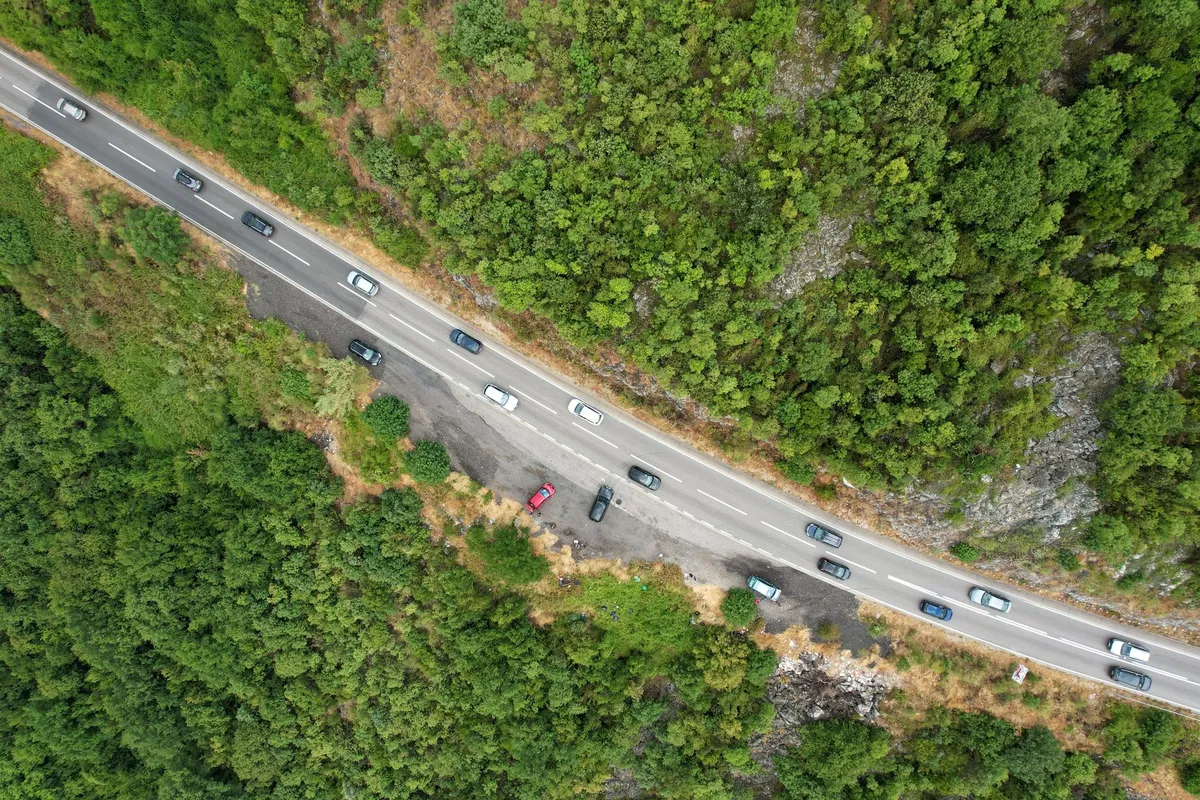
Multi-kilometer vehicle columns and hours-long waits at the Karasovići border crossing over the past weekend completely paralyzed Konavle. Travelers waited up to fifteen hours to exit Croatia towards Montenegro, with the queue stretching along the Adriatic Highway all the way from Čilipi, where Dubrovnik Airport is located.
Due to the extraordinary situation, the municipal mayor of Konavle, Božo Lasić, activated the Civil Protection Headquarters. As some travelers in vehicles experienced health issues, emergency medical services also intervened. Firefighters and local residents brought water to people and opened their homes so they could freshen up and use the restroom.
Record Number of Travelers and Plenković's Explanation
Montenegrin media reported on Monday that over the past weekend, more than 78,800 travelers entered Montenegro via the Debeli Brijeg border crossing, which borders Karasovići. Prime Minister Andrej Plenković commented on the situation, linking it to the end of the school year in Germany.
"In Bavaria, school obligations have ended, and holidays have begun in the largest German state closest to us, hence such a large number of people. What happened towards Montenegro was mostly Albanian citizens living and working in Western Europe, who took this route as it is the shortest," said Plenković.
Marušić: New Toll Collection System Will Worsen the Situation
Traffic expert Željko Marušić is convinced that the problem will be even more pronounced next year. As one of the key reasons, he cites the planned introduction of a contactless toll collection system in Croatia at the beginning of next year, which will paradoxically create additional pressure at the border.
"The introduction of a contactless toll collection system without stopping will add extra pressure on the border with Montenegro and worsen the situation. When a wave of vehicles exits the highway faster and reaches that area, an even bigger problem will arise. That system will speed up flow on highways, but not where you exit the highway system onto regular roads," Marušić explained.
Regarding the border crossing itself, Marušić explains that the issue lies in its capacity, tied to Schengen rules. When the intensity of vehicle arrivals exceeds the capacity of a given section, congestion occurs. According to him, the problem will be hard to solve because the capacity of traffic infrastructure in Montenegro itself is also limited. Even without border controls, congestion would still occur there due to that. Marušić adds that even building a third traffic lane would not significantly improve the situation because the border crossing itself will remain a bottleneck, and increased vehicle arrival speed at the border will mean nothing if Montenegrin roads cannot absorb them. He sees a solution in a bilateral agreement with Montenegro.
Albania's Growing Popularity Further Burdens Southern Croatia
Additional pressure on the roads in the far south of Croatia is also created by Albania's increasing popularity as a tourist destination.
"Albania is experiencing a tourism boom; they have quality offerings and affordable prices, but traffic infrastructure is slowing down that trend. If this traffic problem in southern Croatia is not resolved, it will be even bigger in the coming years as demand for Albanian tourism grows," Marušić warned.
Dobroslavić: Blame for the Fast Road Is Not on the State
Former County Prefect and current President of the County Assembly, Nikola Dobroslavić, commented on the traffic blockade yesterday. He praised the reaction of the Konavle Municipality and emphasized the need to widen roads, but also shifted responsibility for the slow construction of the fast road from the state to the local level.
"All praise to the Konavle municipality for their reaction in the unpleasant situation with the clogged highway this weekend before Karasovići. Indeed, we need to speed up the solution by building more lanes before Karasovići, regardless of the fact that such columns only form during exceptional periods; traffic has already normalized today," wrote Dobroslavić.
In his post, he clearly stated that responsibility for the delay in building the fast road towards the airport, and even to the border crossing, does not lie with the state. He added that a large part of the responsibility for the speed of border checks falls on Montenegro and Albania, which should meet the criteria for EU accession as soon as possible. According to him, traffic has normalized today.