Rivers across Europe, from the Danube to the Rhine and the Loire, have reached alarmingly low water levels this summer. This is a consequence of the prolonged drought and extreme heat that have hit the continent, giving rise to surreal scenes: the skeletons of history and the remains of long-vanished creatures emerging from the water.
Ghostly Remains of War on the Danube
On the Danube, Europe's second-longest river, the receding waters have revealed dozens of German warship hulls scuttled during World War II. A photograph taken on August 4, 2026, in Serbia by Darko Vojinović of the AP shows a man walking on a sandbar right next to a rusted hull. On the same day, near Apatin in Serbia, boats in a marina were left stranded on dry ground, as captured by photographer Nenad Mihajlović of AFP.
Ice Age Mammoth and Explosives to Aid Navigation
The falling water levels have not only exposed war wounds. Scientists from the Regional Museum of History in Rousse were investigating the remains of an ancient mammoth on July 30, 2026, whose bones surfaced on the Danube's bank near the village of Ryahovo, south of Bucharest. On the other hand, in Romania, the military is also battling the effects of the drought. The Romanian Navy conducted a controlled demolition of submerged rocks near Izvoarele on August 3, 2026, using underwater explosives to improve water flow.
Frogs in Puddles and Stranded Fishermen
Scenes illustrating the ecological drama have been recorded along the entire course of the Danube. Photographer Andreea Alexandru of AP captured a frog floating in a puddle on August 3, 2026, in an area that is usually completely submerged near Rasova in Romania. Western Europe has not been spared either. In Germany, on the Rhine, a photograph by Ina Fassbender of AFP from July 30, 2026, shows a former eel fishing boat covered in dried mud, stranded on a low sandbank near Neuss.
France: The Loire's Bed Becomes a Beach
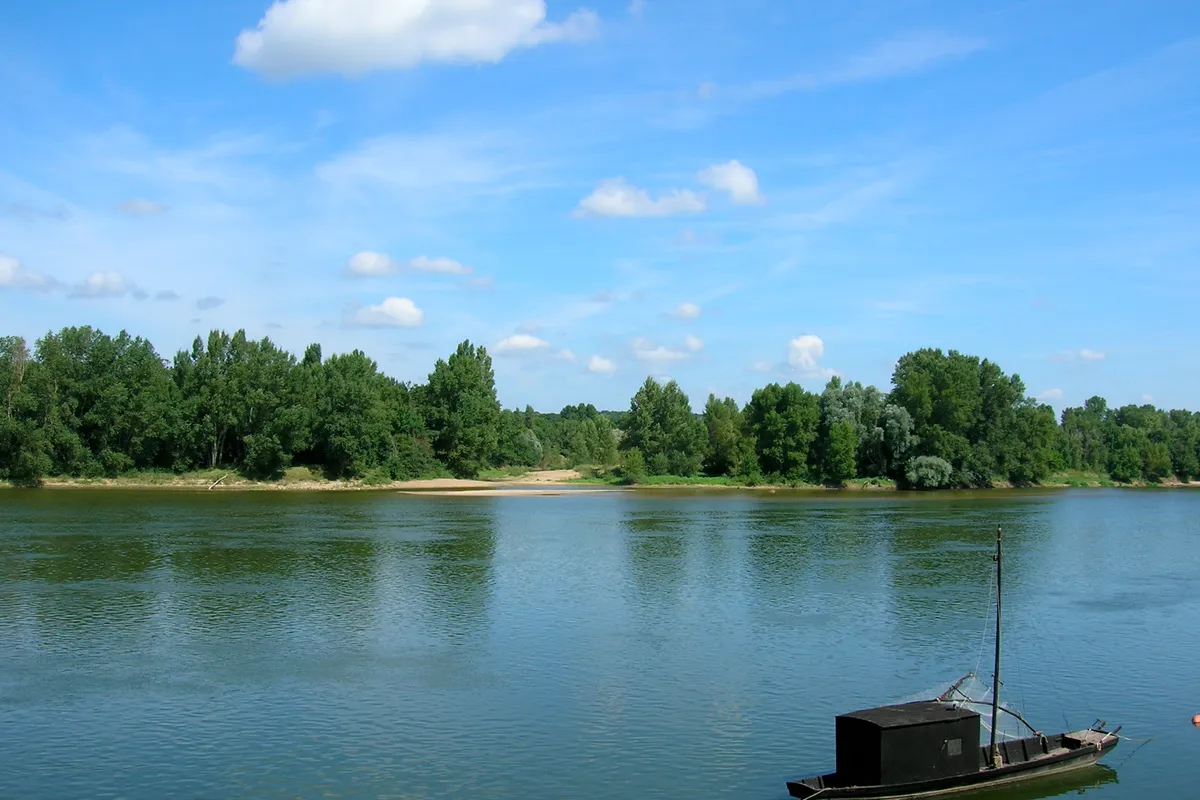
In central France, the Loire River has dried up so much that its bed has become a leisure spot. Photographs by Alain Jocard of AFP, taken on July 22, 2026, show visitors swimming and sitting on the sand of the partially dry riverbed in Orléans, while a plant sprouts from the cracked earth near nearby Chécy. These scenes powerfully illustrate the scale of the drought that has hit much of Europe, with consequences felt across shared river systems.