Croatia's tourism sector is facing contradictory signals this summer. On one hand, there are warnings about a decline in guest numbers at campsites and angry letters from boaters about high prices, while on the other, certain destinations are reporting record occupancy, and one of them has become a real hit precisely because of its affordability.
Drop in overnight stays and rising prices at Croatian campsites
According to data reported by Dnevno.hr, Croatian campsites recorded the largest drop in overnight stays in June 2026, down 11 percent compared to the same period last year. At the same time, market analyses show that camping prices in Croatia have risen by about 12 percent in just one year, placing the country among the most expensive camping destinations in Europe.
The average daily price for a camper pitch for two adults and a child in Croatia is around 73 euros. For comparison, in Italy the average is 63 euros, in Switzerland 61 euros, and in Germany only 41 euros. The European average is approximately 49 euros per day. At five-star campsites, the average price in Croatia reaches 95 euros, with only Spain being more expensive at 98 euros.
Stoja Camp defies the trend, guests complain about prices
Despite the negative figures at the national level, Stoja Camp near Pula, located in a pine forest by the sea with a capacity of 2,200 guests, is not feeling the crisis. "Our camp is 97 percent full, and the percentage will only go up in the coming days, up to 100 percent. We have not experienced a drop in overnight stays," camp director Dolores Dragun told RTL.
Pitch prices at Stoja Camp range from 40 to 70 euros, depending on location and amenities, while mobile homes for up to six people can reach nearly 400 euros per night. Some guests, like Frank from Germany, believe camping has become too expensive: "The price is okay, but it's high, almost like a hotel. Last year we traveled through Switzerland and Italy, and when I returned after three weeks, I compared costs with hotels. I calculated that hotels would have cost us a thousand euros less."
Luxury glamping resorts are not lagging behind in prices either. About ten kilometers from Pula, there is a resort with 199 luxury tents and a capacity of 600 guests that is completely full. At the end of August, a week's stay there costs 1,675 euros, and at the end of July, the price of the only remaining available tent was 549 euros per night.
Fratarski Island: eight euros for overnight stay, squid for eight euros
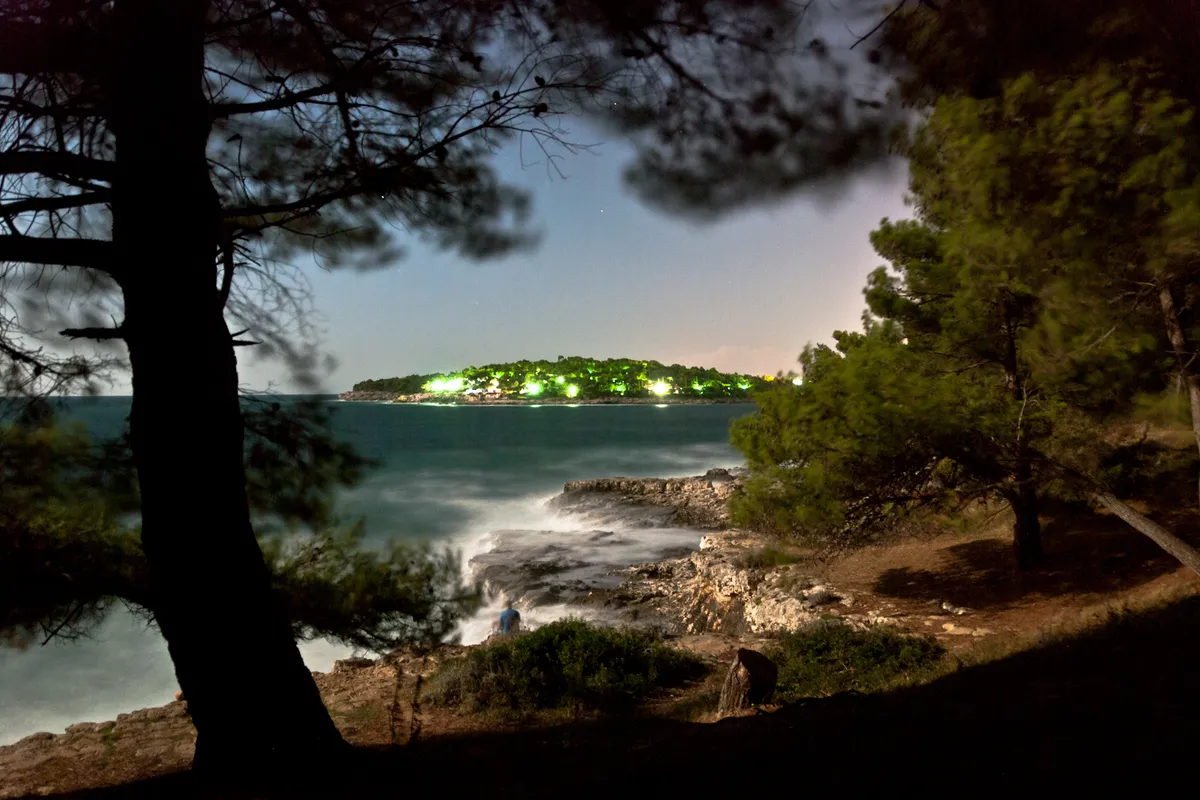
A completely different story is offered by Fratarski Island, located near Pula, reachable by boat from Pula's Bunarina in five minutes. The island, covering 19 hectares and stretching 600 meters in length, can accommodate about 300 tents, and all spots are currently occupied.
Prices there, as described by director Damir Milanović, are "competitive, almost symbolic." A reservation for a spot for the entire season costs 70 euros, and then for each night you pay three euros per person and five euros for the tent, meaning total camping costs only eight euros per night. Food prices are also not burdensome: a hamburger costs six euros, pizza ten euros, and fried squid eight euros.
"We have no problems with occupancy; everything is completely full. The goal is social life; the people of Pula are very attached to the island, and there are also people who have been coming here since birth," said director Milanović, adding that about 90 percent of guests are domestic visitors. Andrej from Pula confirms: "We don't lack tourists, but there are Germans and Slovenians here too." Tine from Slovenia highlights the sense of freedom: "Here, there is freedom. I can sleep wherever I want, take a tent, occupy as much space as I like, and be there."
Boaters bypass Croatia due to "greedy policy"
The nautical sector is not spared criticism either. The Morski.hr editorial team received a letter from a foreign yacht captain with years of experience, warning that Croatia is losing guests due to high mooring prices. "I've been in boating and yachting for a long time, and unfortunately, Croatia has the most expensive moorings-twice as expensive as others. I constantly face guest complaints: 'Why are you so expensive?', 'These prices are insane!', 'We won't come back!' and so on," he stated in his letter.
As a concrete example, he compared prices for a 26-meter yacht, noting that marinas in Montenegro, such as Portonovi, are significantly more affordable. He particularly criticized the offering of ACI marinas compared to Greek D-Marin marinas: "In Greece, at the well-known D-Marin marinas, moorings are also twice as cheap, and every D-Marin is much better equipped and more content-rich than ACI marinas in Croatia. They have pools for guests, restaurants, and cafés within the marina itself, as well as shops and other additional amenities."
The captain concluded with a sharp message: "I believe this is a wrong and greedy policy and the direction the state is taking with ACI marinas, as well as with nautical tourism in general. Best regards, and let's protect our sea."