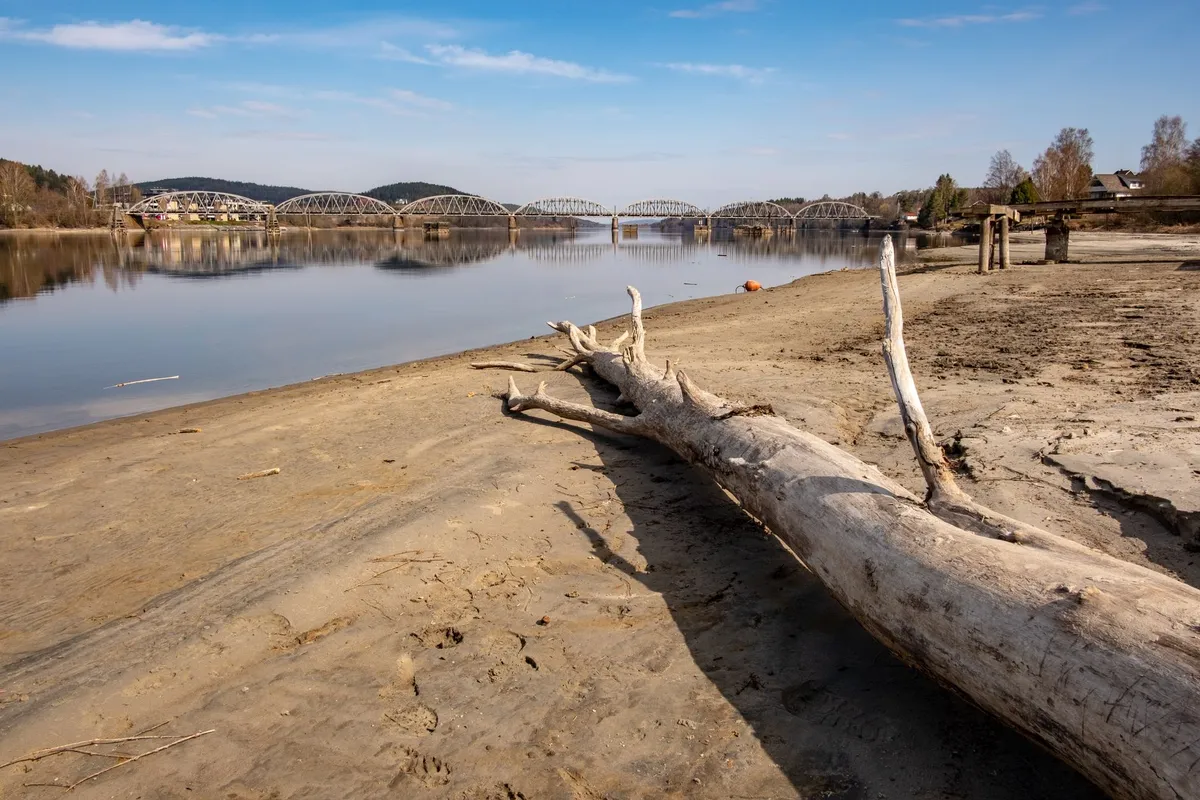
Europe's rivers, from the Rhine to the Danube, have fallen to historically low levels due to the prolonged drought and heatwaves that have been gripping the continent for weeks. The water level crisis is seriously threatening electricity generation and river transport, but Croatia's power utility (HEP) says that the electricity supply in Croatia is not at risk.
According to data reported by the BBC, by the end of July 2026, as many as 44% of measuring stations on the Rhine and 78% on the Danube had recorded extremely low water levels. According to a report by the EU's Drought Observatory, drought conditions remained stable and critical across much of Europe, worsening in central-western Europe in mid-July. The situation is particularly alarming on the Rhine, which has fallen to record lows at several locations in Germany and the Netherlands since records began.
Navigation on the Rhine on the Brink of Profitability
The key navigability indicator, the depth of the fairway at the Kaub narrows near Koblenz, hit a record low of 25 centimeters on Friday (July 31, 2026), tying the record from 2018. Although the situation improved slightly on Monday, freight traffic has already been severely affected.
Martin Wolters, a representative of the Waterways and Shipping Administration on the Rhine, warned that shippers will have to take precautionary measures, such as distributing cargo across multiple vessels to reduce draft. In the long run, this leads to higher transport costs and supply bottlenecks. "There comes a point where the loads are too small to be profitable, or shipowners worry they will damage their vessels," one commodity trader told Reuters.
Nuclear Shutdowns and Reduced Power Generation
The situation is no better on the Danube, which flows through ten countries. Last week, water levels in several countries, including Serbia and Romania, fell to their lowest in 30 years. The consequences are dramatic: Hungary was forced to completely shut down its Paks nuclear power plant.
"We don't know when we will be able to restart the plant. We hope it will happen as soon as possible, and we are hoping for cooling, life-saving rain that forecasters don't yet see on the horizon," said Peter Magyar, Prime Minister of Hungary.
In Romania, authorities resorted to a controlled explosion on the Danube's bank to redirect the flow and ensure cooling for the Cernavodă nuclear plant. Serbia has reduced output at its coal-fired thermal plants due to a lack of water for cooling systems, while the Đerdap hydroelectric plant on the Serbia-Romania border is operating at only a fifth of its capacity.
Po at Historic Low, Threatening Drinking Water Supplies
Italy's Po River reached a historic low near Cremona at the end of July. Authorities have raised the drought alert level to "high" across the entire Po Valley, and experts are warning of potential disruptions to drinking water supplies. The reduced flow at the river's mouth has also pushed saltwater from the sea into the riverbed, damaging the ecosystem and creating serious problems for farmers who use Po water to irrigate crops.
Scientists from the World Weather Attribution group recently concluded in a study that there is no clear long-term trend of decreasing precipitation across much of Europe, but that human-induced climate change is increasing moisture evaporation through higher temperatures, making droughts more likely. Hot and dry weather further increases the demand for water for households, agriculture, and industry.
HEP: Reservoirs at Average Levels, System Stable
Although drought has not bypassed Croatia, HEP says the situation is under control. "Despite lower water levels, the water levels in the reservoirs are at the planned, i.e., average, levels for this time of year, which allows for optimal management of the reservoirs and the production capacities of the hydroelectric plants," the company stated.
HEP continuously monitors hydrological conditions and adjusts production accordingly. They emphasize that the security and stability of supply are ensured through the optimal use of all domestic sources and, if necessary, by purchasing electricity on the market. "This mode of operation is a regular part of managing the power system, especially during periods of increased consumption, such as during heatwaves," the statement reads.
However, the company warns that reduced production in neighboring countries could increase demand on the regional market. "While such circumstances may affect the price and availability of electricity for market procurement, they currently do not pose a risk to the security of supply in the Republic of Croatia," HEP concludes.