The Stench of Urine and Crumbling Glass: Zagreb Bus Station
Despite revenues of €4.59 million, the station grapples with filth, homeless individuals, and aging infrastructure, with an investment plan of €1.36 million for this year.
Despite revenues of €4.59 million, the station grapples with filth, homeless individuals, and aging infrastructure, with an investment plan of €1.36 million for this year.
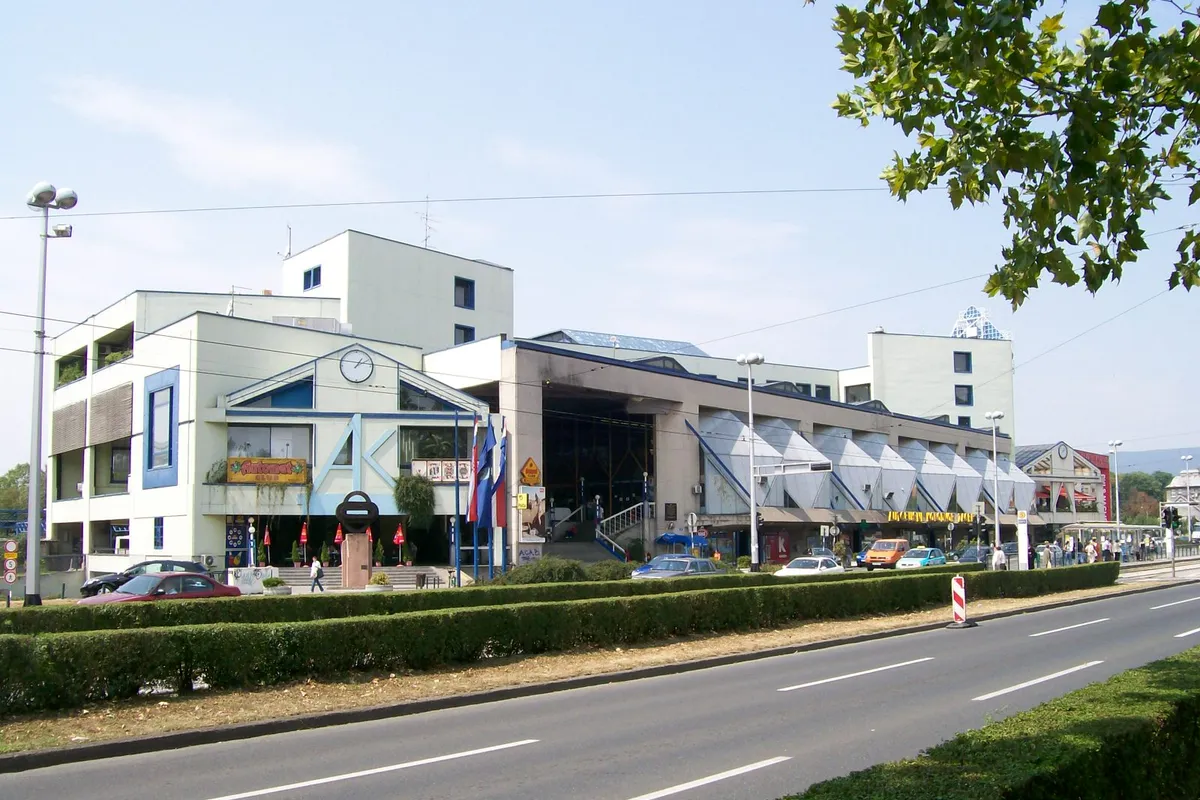
Zagreb Bus Station (AKZ), a hub through which thousands of passengers pass daily, remains a hotbed of numerous issues. From the unpleasant odor of urine on the platforms, to pigeon droppings on the glass walls, to a recent incident involving collapsing glass, the image the station projects is far from representative. Tportal.hr visited the platforms, waiting areas, and corridors one morning this week to see what is being renovated and what continues to bother passengers the most.
Currently, the station is partially covered in scaffolding due to the repair of steel structures, and the restroom on the arrival platforms is closed for renovation.
For years, two seemingly incompatible shops have operated at the station, and business appears to be thriving. The saleswoman at the sex shop reveals who the customers are. "Locals buy here, but passengers also drop by. They say they forgot to pick up a little something for their husband or wife, so they stop in," she told Tportal.
While the floor with ticket counters and cafés appears relatively clean, the departure platforms tell a completely different story. The biggest issue is the unbearable smell of urine. "Don't ask me anything. There are homeless people, beggars, drunks. They won't or can't spare 50 cents for the toilet, so they do their business here. Security guards chase them off, but they can't handle everything either," a cleaner at the station lamented to Tportal.
On the arrival platform near the currency exchange, a sign prohibits urination, with an additional threat of testicle removal. However, judging by the strength of the odor, few are bothered. Pigeon droppings and discarded trash further mar the impression.
About ten years ago, water sprinklers were installed on the arrival platform to prevent people from crossing to the departure platform, but that move ultimately proved to be a waste of money, as people still pass through today.
A taxi driver quipped, "Take a picture, take a picture," but declined to offer any further comment on the station's condition.
In front of a bus from a well-known carrier, one of two drivers addressed a passenger with large suitcases: "Where you going with that?" Seeing her confused look because she was a foreigner, he added, "Hauling junk, huh?" and concluded, "This can't be regular luggage. We'll have to charge double. Have a nice day."
Some passengers, however, are more lenient in their assessments. "A station is a station. You can't expect it to be a pharmacy. This one is still decent compared to others," said an elderly gentleman who declined to give his name.
Passenger Sanja, waiting for a bus to Split, believes the exterior of the station isn't cleaned. "I don't know if it's washed, but from what I see, I wouldn't say so," she stated. She also criticized the bus drivers. "Our drivers are typical Balkans-they keep engines running while buses are parked. Even now, as we speak, the bus behind us has its engine idling. They'll say they need to run the AC, but the AC could be turned on later. So we're being poisoned completely unnecessarily," Sanja said.
Still, she thinks there are worse examples: "There are cities where there aren't even benches to sit on. For instance, in Vienna, the station is under a highway interchange, and the waiting room and restrooms are in containers." On the other hand, there are excellent examples like the station in Maribor, though Sanja admits she hasn't been there.
Comparing Zagreb's station to Split's, she didn't hold back: "Are you kidding me? That thing in Split can't be called a station. I don't know if anyone from Split's city government has ever set foot there. It's terrifying. We're in the tourism business. What does that even look like?"
Marijana, a student from Ploče, had one specific complaint: "It needs a good wash. That's my biggest gripe."
Designed by Slovenian architects Vojteh Ravnikar and Majda Kregar, the station opened for the 1987 Universiade. According to Tportal's data, it currently employs 42 staff members. In 2025, revenues amounted to €4.59 million, while expenditures were €4.35 million.
After glass from one of the departure platforms fell and shattered near a passenger in recent months, the Drito city councilors' club requested a report on the station's condition and investments from the City Assembly. A few days ago, AKZ responded that this year's investment plan allocates €1.36 million for infrastructure, business security, and technological modernization. They also highlighted that over the past five years, they have invested €670,000 in infrastructure modernization, digitalization, energy efficiency, air conditioning, and accessibility for people with disabilities.