Academician Grgić Dispels Fears About Food Prices
Despite drought and high temperatures, academician Ivo Grgić says there is no reason for panic over food prices this year, but warns of key long-term challenges.
Despite drought and high temperatures, academician Ivo Grgić says there is no reason for panic over food prices this year, but warns of key long-term challenges.
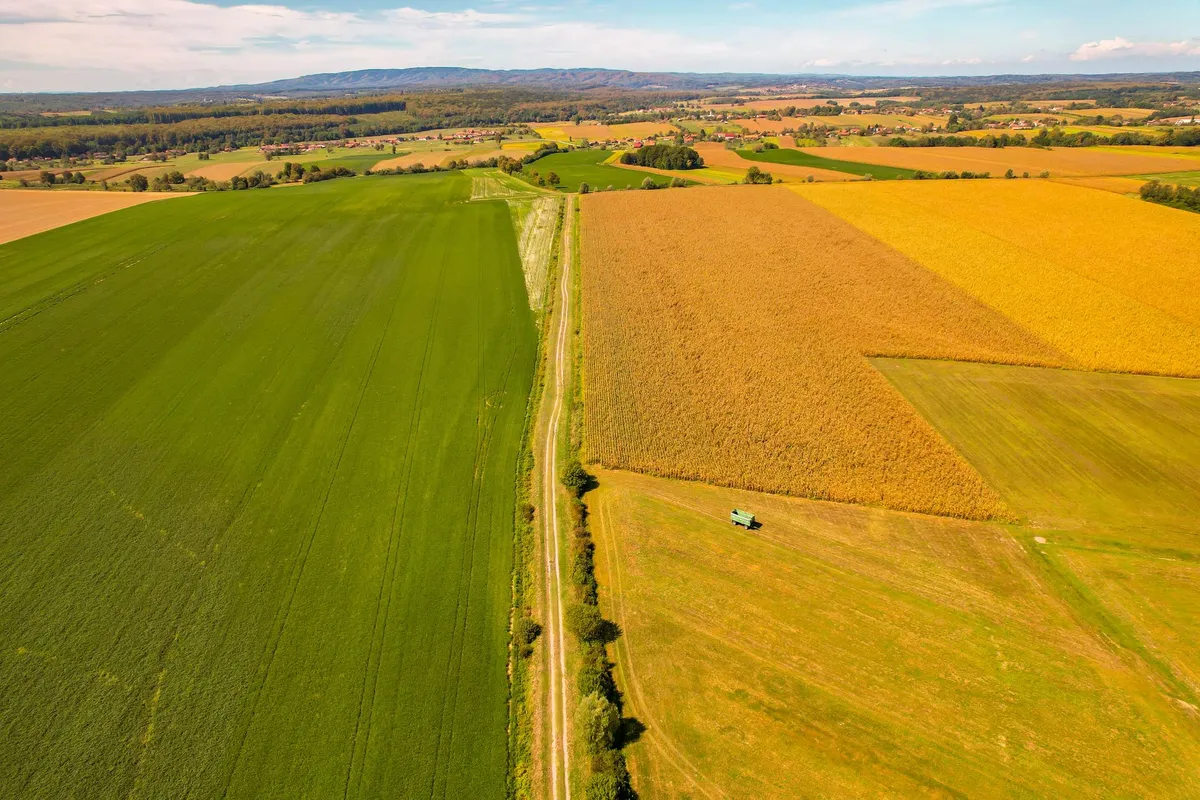
After prolonged heatwaves and the drought that hit parts of Europe, concerns about a possible new wave of food price increases have resurfaced among citizens. However, academician and agronomist Ivo Grgić, in an interview with Dnevno.hr, says there is no reason for panic for now, although he emphasizes that price formation in stores is not a simple matter.
"For this year, I do not expect, and there should not be, major market disruptions, but that does not mean there won't be when it comes to food prices, because when we talk about that, we have two prices, one that the producer gets and one that the consumer pays," said Grgić. In other words, even stable production does not automatically guarantee unchanged prices on shelves, as energy costs, transport, and retail margins also play a role.
The academician bases his optimism on the fact that this year's drought has not significantly harmed overall European production. "The drought that occurred did not significantly affect production, possibly only a portion of vegetables in Spain and Italy. However, these are large producers, so Europe's needs will be met," he explained. He adds that the European Union is a major producer of grains and wheat, and supply is further ensured by volumes from the Black Sea basin, namely from Russia and Ukraine.
Regarding domestic production, Grgić points out that the wheat harvest was good, while corn and sunflower yields, in the event of new rainfall, will be only slightly below expectations. "Since these are products we have in surplus, this will not affect the situation on the domestic market," he said. Due to large reserves within the Union, purchase prices for producers could even be lower compared to last year.
As an example of successful coping with weather adversities, Grgić cites his own experience as a micro-producer. "As a micro-producer with two irrigation methods, drip irrigation and shading, we achieved the best vegetable production ever. We also applied some preparations that are appearing on the market. Very cheaply, we managed to protect the production and we have excellent tomatoes and other vegetables on 250 square meters," he recounted. However, he warns that this model cannot simply be replicated on large agricultural areas that depend solely on rainfall.
Although he believes that the impact of climate change is sometimes overemphasized, Grgić stresses that adaptation is necessary. "We cannot influence climate change, but we can adapt," he said. Science will play a key role, from which he expects a "stronger breakthrough" in finding cultivars resistant to extreme temperatures, as well as potentially harsher winters.
One of the concrete measures that has been discussed for a long time is changing the method of soil cultivation. "For a long time, some scientists have advocated reduced tillage because with classic deep plowing we open channels through which moisture more easily escapes into the air, while with reduced tillage moisture is much better preserved," explained Grgić. He believes that such adaptations will be a key response to climate challenges.
He also sees a special situation in domestic viticulture. "In Croatia, due to the shifting of the grape harvest, many have unsold wine reserves and are now offering them on the market, while at the same time offering higher prices to grape producers," he said. Despite everything, Grgić's final message is reassuring: "That is what gives me optimism that there should not be a significant increase in prices."
Although the short-term outlook is stable, the academician warns that things could get complicated if such weather conditions continue to repeat. "Next year is something else. If something similar to this year were to happen..." he said, leaving open the question of long-term sustainability without significant investments in irrigation, new technologies, and more resilient varieties. For citizens, this means one thing for now: this year's drought should not cause a sudden jump in food prices, but the true picture of stability will only be drawn in the years to come.