Bessent: Deal with Iran on Strait of Hormuz possible soon
US Treasury Secretary believes reopening the key maritime route could stabilize global energy prices, while Pakistan and Qatar intensify diplomatic efforts.
US Treasury Secretary believes reopening the key maritime route could stabilize global energy prices, while Pakistan and Qatar intensify diplomatic efforts.

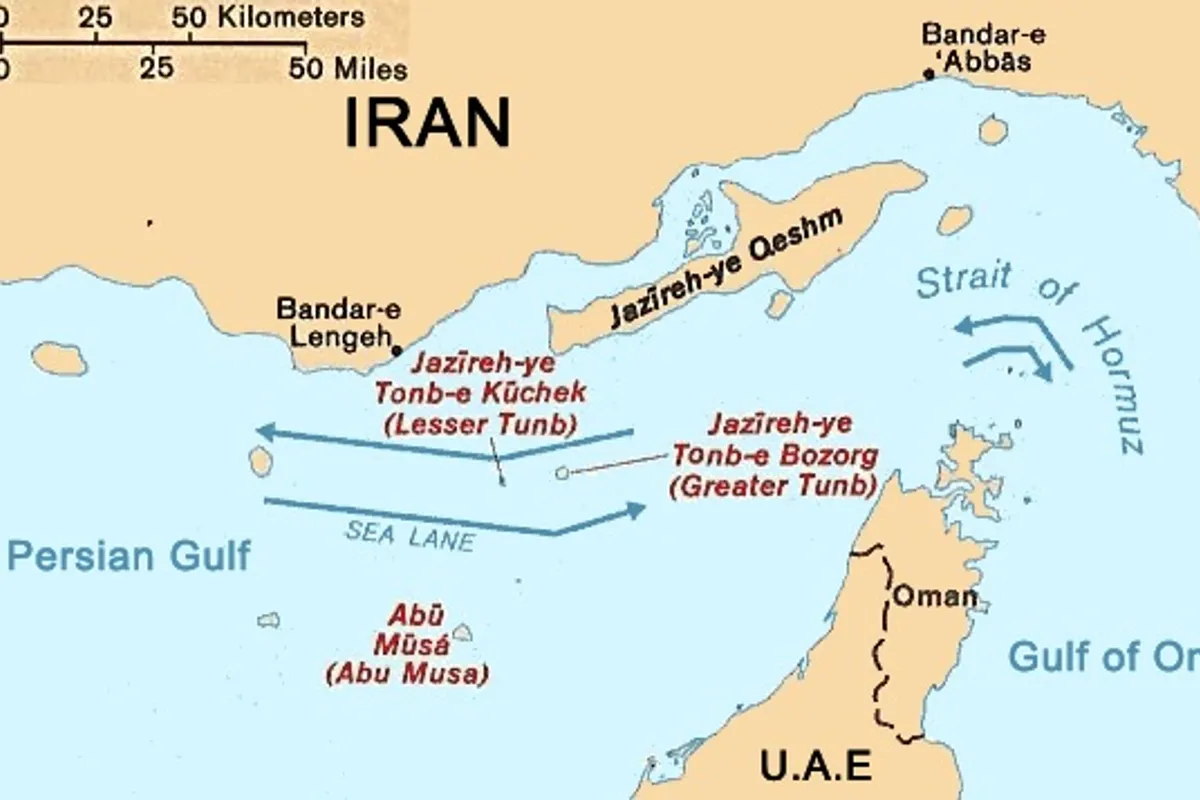
US Treasury Secretary Scott Bessent said on Monday that the United States and Iran could reach a deal as early as today or tomorrow to reopen the Strait of Hormuz. This critical maritime route for global oil transport has been at the center of a months-long conflict.
"We are in negotiations with the Iranians, and I think there is a possibility that we could reach an agreement today or tomorrow on opening the strait and moving to a more normalized phase of this conflict," Bessent told CNBC. He added that the deal entails freedom of navigation, not charging ships for passage. "It will be freedom of movement."
Bessent's remarks came a day after President Donald Trump said the strait could be opened within hours, backing away from threats of a massive military strike. However, tensions remain high. On the same day Bessent spoke, an unidentified projectile struck a cargo ship right in the Strait of Hormuz.
Despite the incident, Bessent expressed optimism about the potential deal's impact on the energy market, noting that hundreds of ships are waiting to pass through. "Although the situation has remained somewhat uncertain in recent days, we are already seeing a large number of ships setting sail," he said. "I expect energy prices to return to lower levels, which will be good for the entire world."
While Washington signals progress, contradictory messages come from Iran. Iranian Foreign Ministry spokesman Esmaeil Baghaei insisted on Monday that no negotiations are taking place with the US, only technical discussions with Oman about reopening the strait. At the same time, Baghaei confirmed that Pakistan remains a "mediator" in talks concerning Iran and the US.
Pakistan intensified its diplomatic efforts on Monday. Foreign Minister Ishaq Dar invited his Iranian counterpart Abbas Araghchi "to visit Pakistan as soon as possible." National Assembly Speaker Ayaz Sadiq extended a similar invitation to Iran's chief negotiator Mohammad Bagher Ghalibaf.
In addition to Pakistan, Qatar also plays a key mediating role. A spokesman for Qatar's Foreign Ministry said mediators are closely coordinating efforts to facilitate negotiations between the US and Iran and exchanging draft agreements, expressing hope that normal conditions in the Strait of Hormuz will be restored "as soon as possible."
The war, launched by the US and Israel on February 28, 2026, has been marked by a series of failed de-escalation attempts. In April, the first direct talks between the two sides in decades were held in Islamabad, followed by the signing of the Islamabad Memorandum of Understanding (MoU) in June. However, every agreement quickly collapsed, with ceasefires lasting only a few days before new exchanges of attacks and the US naval blockade of Iranian ports.
Former Pakistani ambassador to Iran Asif Durrani described the MoU as a "foundational document," not a dead letter. "Pakistan could only facilitate, and it did so sincerely, and that sincerity is internationally recognized," he told Al Jazeera.
Analysts, however, point to deeper problems. Grace Wermenbol, a former US national security official, believes that "the persistent recurring conflict has eroded the trust needed for a longer-term ceasefire." Even more blunt is Professor Mehran Kamrava of Georgetown University in Qatar: "The United States has no exit strategy, no clear objectives, no sense of what the endgame is or should be, and it keeps moving the goalposts."
Kamrava argues that the source of intransigence lies precisely there, not in the failure of mediation. On the other hand, Tehran-based analyst Seyed Mojtaba Jalalzadeh believes that repeated failures have reduced Pakistan's role "from a mediator capable of resolving the conflict to a facilitator with access to the parties." He also warns that "if Pakistan promises more than it can deliver, its reputational capital will erode in the long term."
President Trump further complicated the picture by accusing leaders in Tehran of being "incredibly duplicitous" and telling Iran that this is its "last chance" for a "good document" before facing "a deal or total surrender."
Analysts are divided over the nature of Trump's rhetoric. Jalalzadeh describes it as an attempt "to create a sense of urgency and impose costs on Iran," or as "a statement of intent and a negotiating tactic." Kamrava, meanwhile, believes Trump's statements are simply inconsistent. "What we have seen from Donald Trump are erratic statements and positions, and what is strikingly absent is consistency," he said. "Mixed messages do not constitute a negotiating tactic. They reflect the absence of strategy."