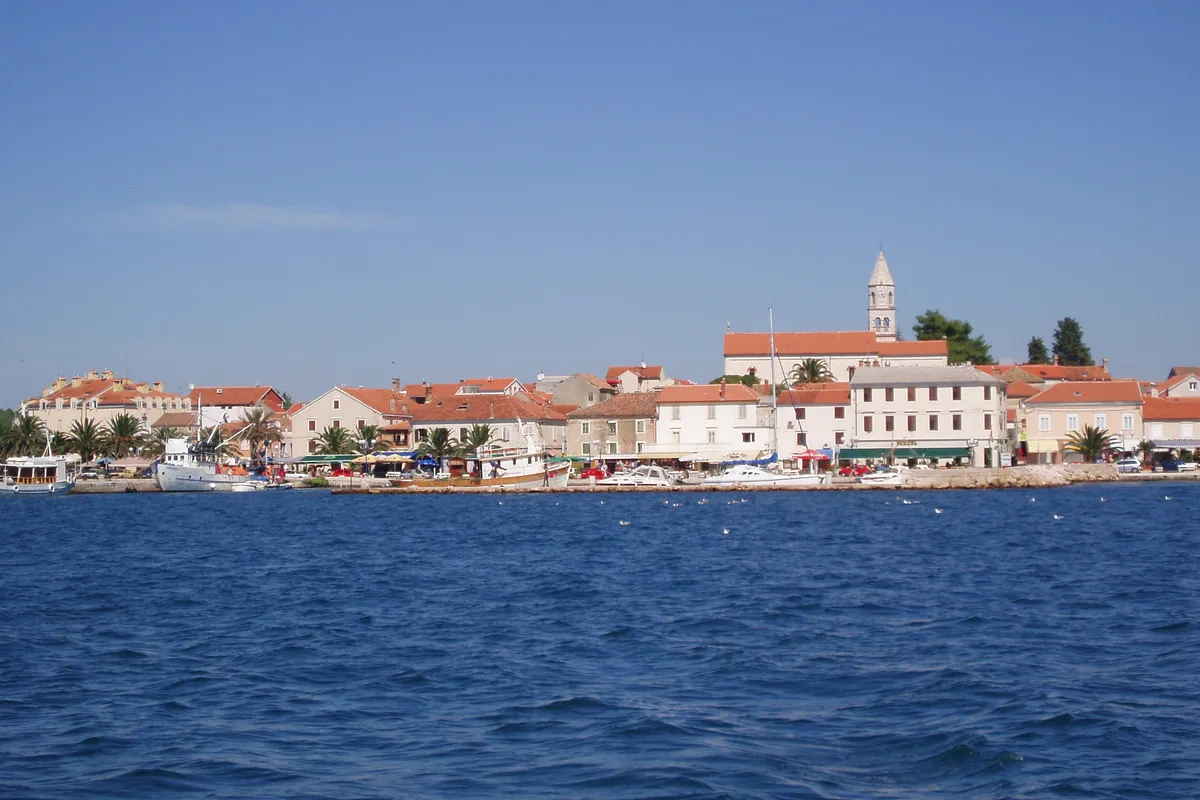
The mournful sound of a bell echoed across Biograd's waterfront on Saturday, August 8, 2026, marking the start of a commemoration for the 81st anniversary of the atomic bombing of Hiroshima. Gathered by the crane monument, a symbol of peace and longevity, attendees evoked the memory of one of the darkest chapters of the last century and issued an appeal to the international community to commit more decisively to the permanent abandonment of nuclear arsenals.
Biograd: A Rare Voice for Peace Outside Japan
What makes this event unique is that Biograd na Moru is one of the few cities outside Japan to regularly observe this somber anniversary. Mayor Ivan Knez emphasized that the horrors of Hiroshima and Nagasaki and the suffering of the survivors remain a permanent warning to the planet. "The destruction caused by the atomic bombs in Hiroshima and Nagasaki and the indescribable suffering endured by so many people must never be repeated. Wars have no winners, only losers," Knez said.
Since 2009, Biograd has held a seat on the Executive Committee of the global network Mayors for Peace, which currently includes 8,589 cities from 166 countries and regions, representing over one billion people.
An Appeal from a Nation That Survived Atomic Horror
Program host Branka Pelicarić reminded attendees of the timeline of events. "Eighty-one years ago, on August 6, 1945, the first atomic bomb used in war exploded over Hiroshima. Three days later, Nagasaki suffered the same fate. In a matter of moments, entire city districts vanished, and more than 200,000 people lost their lives due to the explosion and radiation. It was a tragedy whose consequences humanity still feels today," she stated. For the seventeenth consecutive year, the message from Biograd's waterfront remains unchanged: peace is only possible in a world free of nuclear weapons.
The gathering was also attended by the Japanese Ambassador to Croatia, H.E. WADA Mitsuhiro. He highlighted Japan's enduring commitment-as the only nation to have experienced an atomic attack-to creating a world without such weapons. "This commitment is even more important today, in a time of profound geopolitical shifts and new security challenges," the ambassador said. He also warned of the dangers arising from current conflicts, specifically mentioning the situation at the Zaporizhzhia nuclear power plant in Ukraine, which demonstrates the fragility of peace and the threat wars pose to all of humanity.
Lantern Light for All Victims
Ambassador Mitsuhiro called on those present to pray not only for the victims of Hiroshima and Nagasaki but also for all who have perished in wars and their families around the world. "This commemoration in Biograd is part of that shared mission," he concluded.
The final act of the ceremony included laying flower petals and releasing lit lanterns onto the water beside the monument. This ritual, symbolizing light and hope, is a direct reference to the custom on the Ota River in Hiroshima. Musical contributions were provided by Japanese artists Naho Hirai Sigl, Burchard Sigl, and Tomoko Nishikawa, along with the drumming group Dokyo, with translation facilitated by Jasminka Bajlo, vice president of the Visions Campaign 2020 association within the Mayors for Peace organization.
"The destruction caused by the atomic bombs in Hiroshima and Nagasaki and the indescribable suffering endured by so many people must never be repeated. Wars have no winners, only losers."
Ivan Knez, Mayor of Biograd na Moru