CRISPR enzyme that shreds DNA could kill cancer cells
Two new papers published in Nature describe how the unusual bacterial enzyme Cas12a2 recognizes cancer cell RNA and then destroys their entire DNA, causing cell self-destruction.
Two new papers published in Nature describe how the unusual bacterial enzyme Cas12a2 recognizes cancer cell RNA and then destroys their entire DNA, causing cell self-destruction.
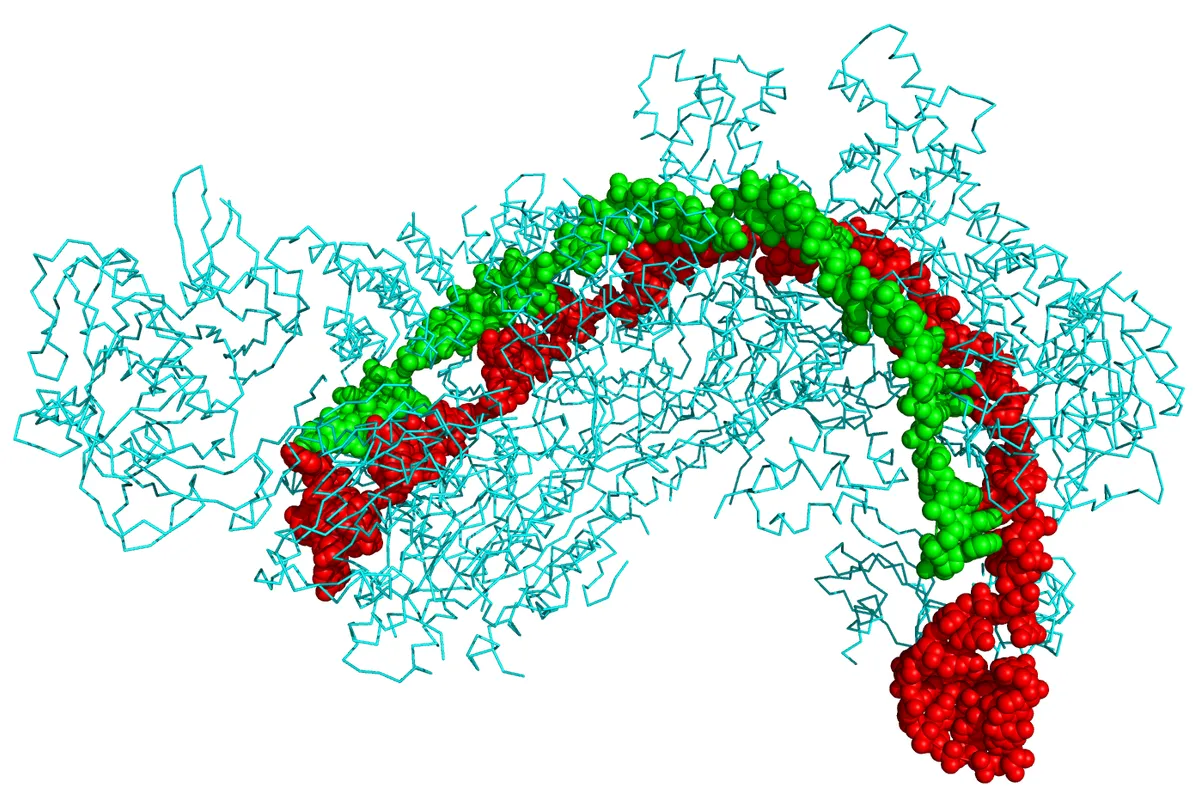
Scientists have harnessed an unusual CRISPR enzyme that, after recognizing RNA specific to cancer cells, wildly shreds the entire DNA of those cells and triggers their self-destruction. The results from two independent research teams were published in two papers in the prestigious journal Nature, and the approach could open the way to treating tumors that have until now been extremely difficult to target with conventional drugs.
The enzyme in question is called Cas12a2 and is part of the CRISPR system, a set of molecular tools that bacteria naturally use as a defense immune mechanism against viruses and other invaders. Unlike the better-known CRISPR-Cas9 enzymes used for precise genome editing, Cas12a2 does not cut DNA at one specific site; instead, after activation, it randomly shreds the entire genetic material of the cell. Yang Liu, a molecular biologist at the University of Utah School of Medicine in Salt Lake City and co-author of one of the papers, describes this mechanism with the words:
"It's a molecular kill switch that recognizes a particular RNA. This is basically a programmable chemotherapy."
The story of Cas12a2 began almost a decade earlier, when Ryan Jackson, a biochemist at Utah State University in Logan, and his colleagues started studying the mechanism of this protein. They assumed it would behave like other Cas enzymes used for genome editing, but experiment after experiment yielded unexpected results. "We said, 'Well, this isn't behaving the way we want.' I accused my students of contaminating the protein," Jackson recalls. Eventually, Jackson and collaborators, as well as another independent team, realized that Cas12a2 works differently: after recognizing an RNA sequence that matches its guide RNA, the enzyme becomes activated and begins randomly cutting DNA, causing the infected cell to stop growing. In nature, this mechanism limits the spread of infection through bacterial populations.
Both research teams directed Cas12a2 against cancer cells, specifically targeting tumors driven by mutant proteins that have been difficult or impossible to target with conventional drugs. One team aimed the enzyme at RNA produced by cells with a mutation in the TP53 gene, which is altered in up to 50 percent of all cancers. The other team targeted RNA derived from a mutated version of the KRAS gene, whose mutant proteins can cause uncontrolled cell growth and are responsible for some of the most dangerous forms of cancer. Rene Bernards, a cancer geneticist at the Netherlands Cancer Institute in Amsterdam, commented on the discovery with a touch of humor:
"How the hell does nature come up with a trick like that? But, whatever. We can make good use of it."
While both research teams published fundamental scientific results, the biotechnology company Akribion Therapeutics, based in Zwingenberg, Germany, is already developing a therapy based on this approach. The goal is to treat head and neck cancers caused by human papillomavirus (HPV). Paul Scholz, co-founder of the company and head of research and development, who is also a co-author of one of the published papers, states that the aim is to collect initial clinical trial data by 2030. It is important to emphasize that this is an early stage of therapy development, and the path to an approved drug is still long, requiring passage through all phases of clinical trials.
The approach using Cas12a2 is attractive precisely because of its ability to target so-called "undruggable" mutant proteins, such as those encoded by the TP53 and KRAS genes, which have long been the Achilles' heel of oncology. The enzyme can be programmed to recognize specific messenger RNA, theoretically achieving selectivity for cancer cells. However, key questions about safety, delivery of the enzyme to target tissue, and potential side effects in clinical settings remain unanswered and will be the subject of further research. Details of the methodology of both papers are available in the journal Nature.