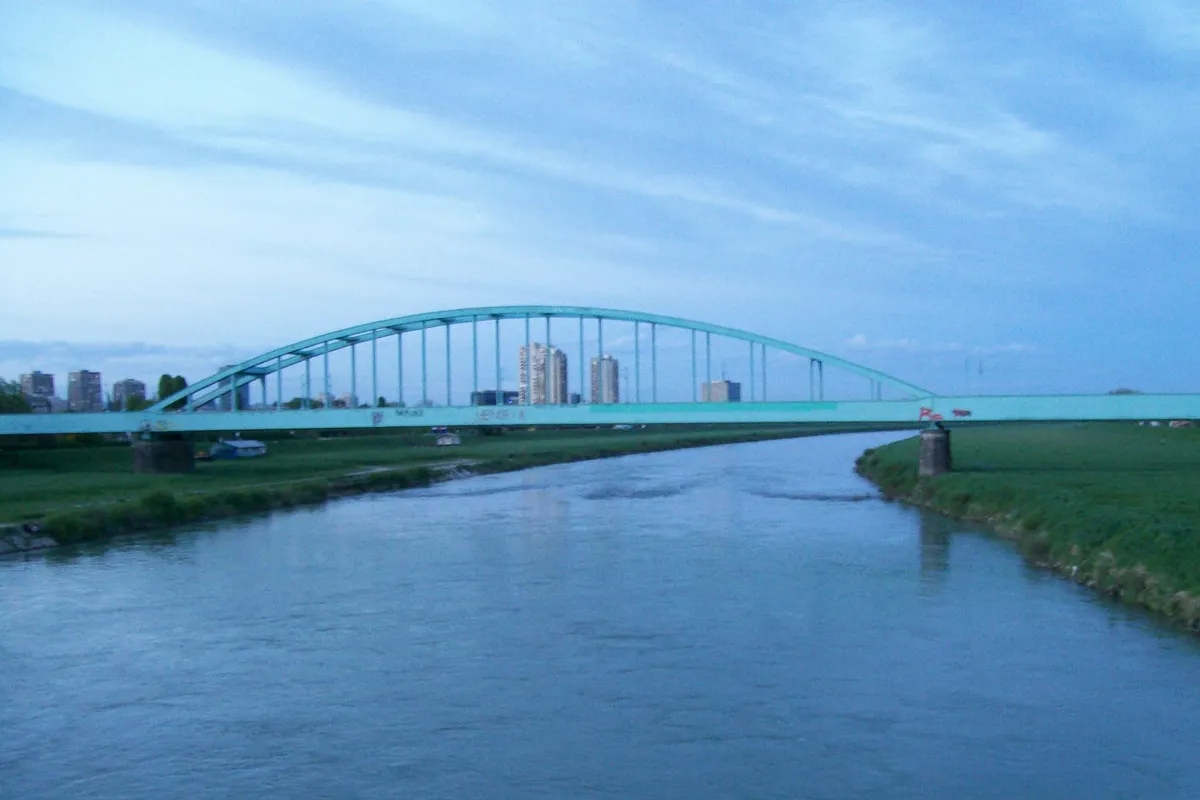
Croatia is facing record-low water levels in its major rivers. Due to a prolonged heatwave and lack of precipitation, the Drava River at Osijek was measured at 178 centimeters below zero this morning, which is two to three meters lower than the same period in previous years, reported HTV reporter Marina Gantar, citing data from Hrvatske vode (Croatian Waters).
According to the State Hydrometeorological Institute (DHMZ), the situation is even more alarming at other measuring stations. The Danube at Batina fell to -143 centimeters this morning, while the Sava River in Zagreb stood at -297 centimeters. These figures do not mean the water has disappeared; rather, they indicate how far the river surface is below the established zero level at each station.
A Decline That Has Lasted for Weeks
The low water levels are not sudden. The Danube at Batina was already measured at -108 centimeters on July 19, 2026, which was then the lowest level since measurements began there. The decline continued, and on August 3, DHMZ reported a new record of -142 centimeters. New record lows were also recorded downstream in Dalj, Vukovar, and Ilok.
The Drava reached its historical minimum on August 1, 2026, when it fell to -192 centimeters at Osijek, 20 centimeters below the previous record from 2022. DHMZ notes that the Danube at Batina has spent 142 days this year below the level considered extremely low.
Consequences for the Ecosystem and People
"The situation is serious. Due to a combination of factors-prolonged high temperatures and lack of precipitation-some canals and sections of watercourses have already dried up," said Mario Spajić, deputy director of the Water Management Department for the Danube and Lower Drava at Hrvatske vode.
Spajić warns of a wide range of consequences. "This affects flora and fauna, groundwater, agriculture, the microclimate... No extreme is good, whether the water level is extremely high or extremely low," he emphasized. Reporter Gantar adds that high air temperatures also lead to high water temperatures, directly impacting the entire ecosystem, and reduced water flow also hampers navigation.
The low water level at Ilok has exposed large sandbars, and aerial photographs show how much the water has receded from shallower parts of the riverbed. Hrvatske vode warns citizens that walking on these sandbars is unsafe and that they are under increased surveillance. Numerous warnings and restrictions are also being issued along the Drava and Danube.
What Is the Cause and What Lies Ahead?
The main reasons for this situation are a prolonged lack of rain, high temperatures, and scarce snowfall in the Alps, whose melting typically feeds the Danube and Drava during spring and early summer. According to Marina Gantar, given the available weather forecasts, no significant changes in water levels are expected in the coming period. To improve the situation, more abundant rainfall across the entire river basins throughout Europe is essential.
Note on data: For the Drava water level at Osijek this morning, there are two measurements. DHMZ records -177 centimeters, while Hrvatske vode reports -178 centimeters. The difference is most likely due to different reading times or rounding.