Drava in Osijek at Lowest Level in Nearly 200 Years
Croatian rivers hit historic lows, Orljava near Požega at just three centimeters, and residents at the foot of Papuk are left without well water.
Croatian rivers hit historic lows, Orljava near Požega at just three centimeters, and residents at the foot of Papuk are left without well water.
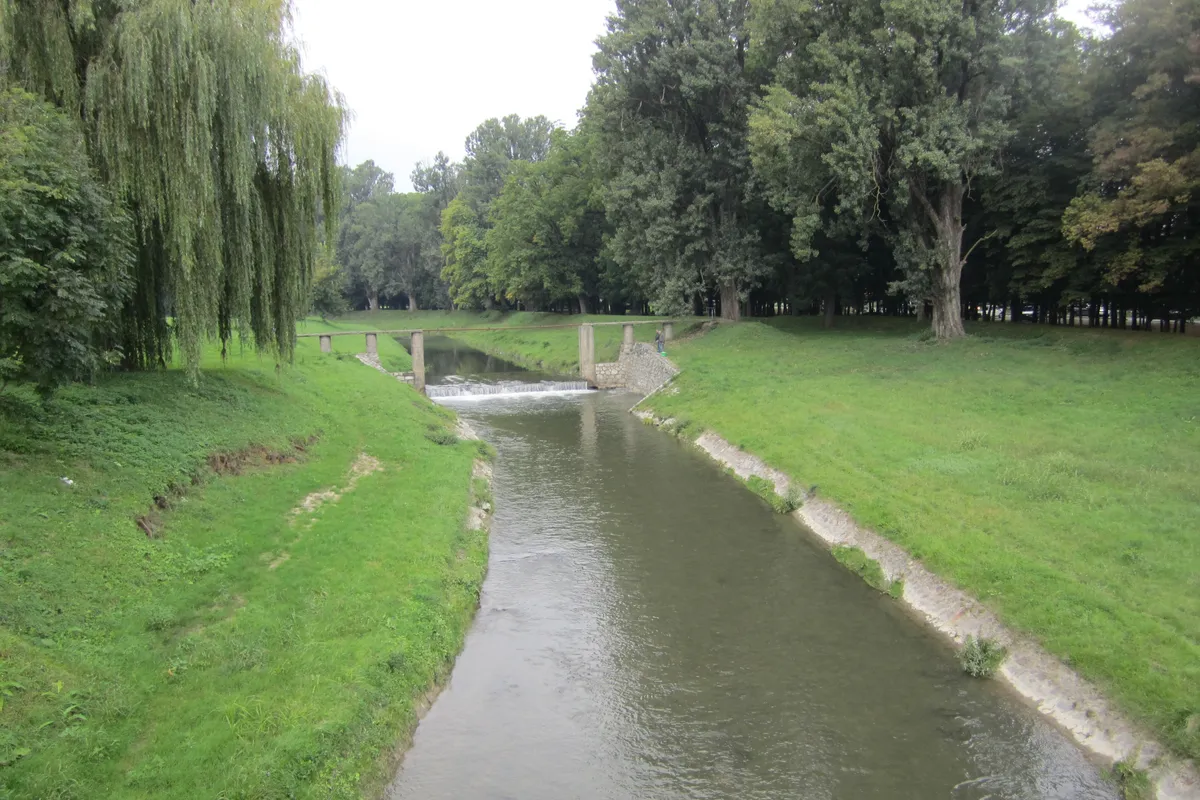
Water levels in Croatian rivers remain alarmingly low, with the most dramatic situation recorded on the Drava in Osijek, where readings not seen in nearly two centuries have been measured. As OsijekNews reported this week, the navigable route on the Drava has been cut off by massive sandbars that have emerged due to the lack of water, preventing cargo and passenger ships from entering the city.
According to the morning report from the State Hydrometeorological Institute (DHMZ) for Sunday at 7 a.m., the Drava's water level in Osijek stood at -183 centimeters, while the Danube at Batina was at -138 centimeters. Both rivers are dangerously close to their historical minimums. In early August, DHMZ recorded a new record on the Drava in Osijek of -192 centimeters, and the Danube at Batina sank to an unprecedented -142 centimeters on August 3, 2026. On Sunday morning, the Drava was nine centimeters above that lowest point, and the Danube just four centimeters above its record minimum.
Zoran Đuroković, General Director of Hrvatske vode (Croatian Waters), has been highlighting the severity of the hydrological situation in the media in recent days, emphasizing that there are currently no signs pointing to an imminent recovery of the Danube and other rivers. He drew particular attention to the Drava near Osijek, reminding that its water level has been continuously measured since 1827, and values like the current ones have not been recorded in nearly 200 years.
Other major waterways are also showing no signs of improvement. DHMZ reports that the Sava in Zagreb has fallen to -293 centimeters, the Kupa in Karlovac to -58, and the Mura at Mursko Središće to 147 centimeters. Institute experts confirm that this is a low-water condition, a period of unusually low flows and water levels.
The most critical point is the Orljava near Požega, whose water level reached just three centimeters on Sunday. Đuroković estimates that this river in the Požega area could completely dry up within the next few days. As a possible solution for the future, he mentioned the construction of a reservoir upstream from the town, which would allow controlled water release during dry periods and preserve the biological minimum.
Portal 24sata brings testimonies from residents at the foot of Papuk whose wells are filling extremely slowly or have completely dried up. On some smaller watercourses, water remains only in puddles, and water guards and engineers from Hrvatske vode warn that the Orljava could be completely without water by the end of this week or the beginning of the next.
DHMZ's forecast does not bring optimism. No significant changes are expected over the weekend, and the Sava, Kupa, Danube, and Mura should remain in the low-water zone, while stagnation is also predicted on the Drava. The Institute also warns of the long-term consequences of the lack of precipitation and reduced river flows. The Danube at Batina has spent most of 2026 below the hydrological drought threshold, and groundwater levels in central, northern, and eastern Croatia continue to fall, approaching previous minimum values. DHMZ notes that groundwater recovers much more slowly than the rivers themselves.