Danube at Record Low: Nazi Warships and Mammoth Bones Emerge
Unprecedented drought reveals decades-hidden historical remains but also threatens nuclear plant shutdowns and an energy crisis in Central and Eastern Europe.
Unprecedented drought reveals decades-hidden historical remains but also threatens nuclear plant shutdowns and an energy crisis in Central and Eastern Europe.
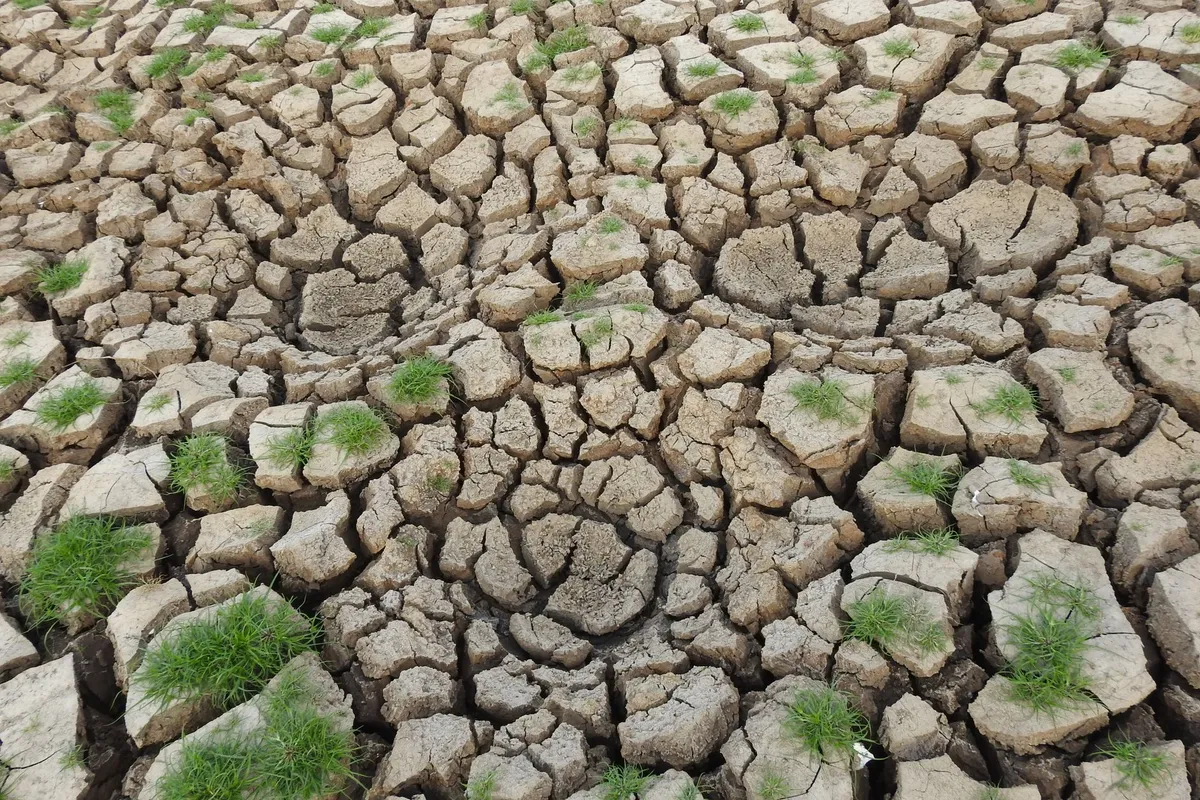
A record drop in the water level of the Danube, Europe's second-longest river, caused by prolonged heatwaves, has brought eerie sights. From the riverbed emerge the wrecks of German warships from World War II, as well as bones of Ice Age animals. At the same time, critically low water levels are seriously jeopardizing the operation of nuclear power plants and river traffic.
Near the Serbian town of Prahovo, at least 20 ships of various sizes are currently visible from the shore. These are vessels of the Nazi Black Sea fleet that the Germans deliberately scuttled in September 1944 during their retreat from the Soviet army. The problem of their removal has persisted for years because some wrecks still contain explosives.
The low river level is hampering navigation, and locals warn that large cargo ships can no longer pass through certain sections of the Danube, CBS News reports. The wrecks have also surfaced in previous years, but this year's drop in water level has once again brought the issue of navigational safety into focus.
On the Bulgarian section of the Danube, near the city of Ruse, an even older relic of the past has been found. Last week, locals came across several bones of a woolly mammoth, a species that went extinct in Europe about 4,000 years ago. According to Nikolay Nenov, director of the Regional Historical Museum, parts of a jaw, fragments of tusks, a piece of a shoulder blade, and a thigh bone with a joint head have been identified so far.
Archaeologists emphasize the value of the find because all the bones were discovered in one place and likely belong to the same, younger individual. Woolly mammoths lived alongside early humans who hunted them for food and used their tusks and bones to make tools.
Beyond the historical discoveries, the consequences of the drought are far more serious. The Danube, which flows through 10 countries and connects four national capitals, is a vital source of water for industry and cooling nuclear power plants. In Romania, on Monday, August 3, 2026, the navy conducted a controlled underwater explosion to blast a rocky outcrop near the village of Izvoarele. The goal was to redirect cooling water toward the Cernavoda nuclear power plant.
In Hungary, the country's only nuclear power plant has already been temporarily shut down. To reduce pressure on the power grid, more than 300 companies have voluntarily cut their electricity consumption.
Scientists see climate change as the primary driver of this extreme weather. Western Europe has been exposed to recurring heatwaves since late May 2026. June was the hottest on record in Europe, and high temperatures returned in July, triggering historic wildfires in France and Spain.
Today, August 5, 2026, the region is again gripped by a heatwave with an average high of 28 degrees Celsius, which is 4.4 degrees above the historical average for this date. Satellite data show exceptionally low water levels on other major European rivers as well, including the Rhine near Boppard in Germany, the Loire near Saumur in France, and the Po near Cremona in Italy.
"As the climate continues to warm, the hydrological extremes we are now experiencing will be just the tip of the iceberg. Managing water resources will become increasingly challenging," Richard Allan, professor of climate science at the University of Reading, told CNN.
Liz Saccoccia, head of water security at the World Resources Institute, warned CNBC of broader implications: "Major rivers like the Rhine and the Danube are key trade corridors and sources of water for industry and energy production, so when water levels drop, the effects extend far beyond the waterways themselves."
Photographs captured by Reuters photographer Djordje Kojadinovic bear witness to the scale of this unprecedented drought and its bizarre yet concerning consequences.