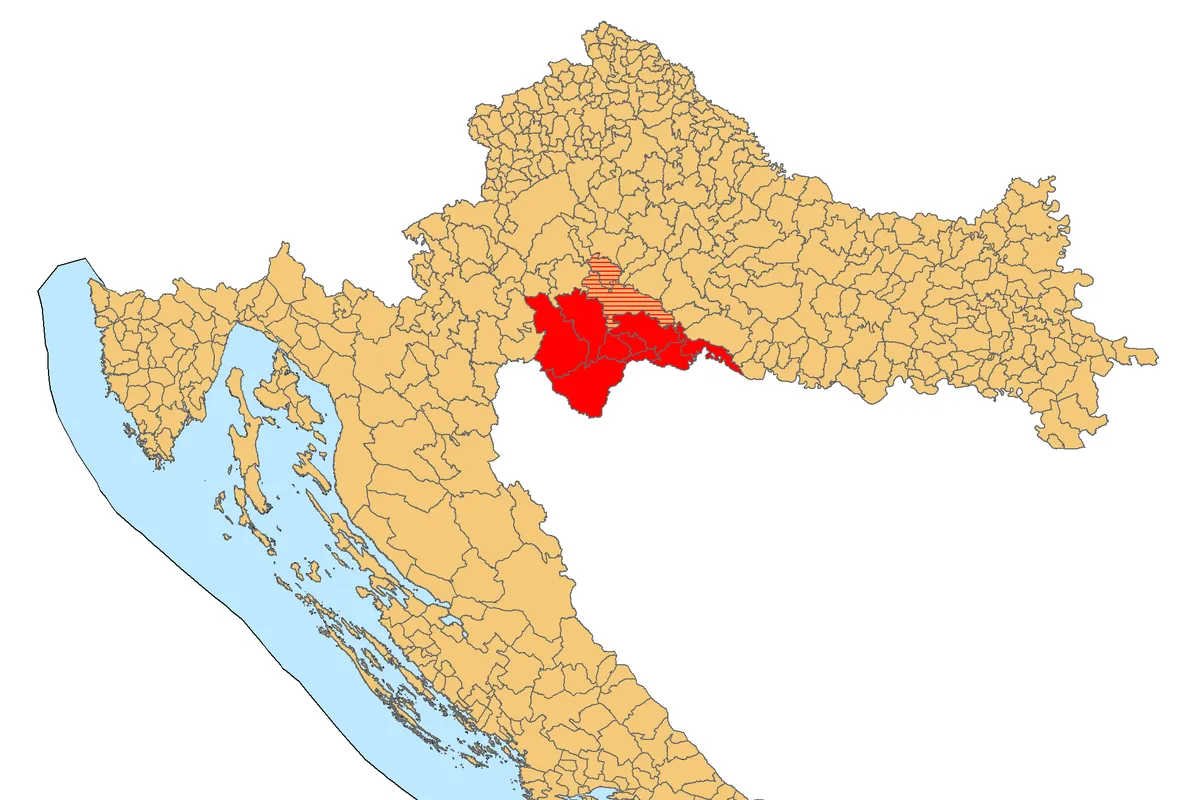
The environmental disaster at the illegal waste dump at Bilajska 50 in Gospić is escalating in severity. The latest expert analyses by the Faculty of Geotechnical Engineering at the University of Zagreb, conducted at the request of USKOK, have confirmed that contamination from the soil has reached the groundwater. Samples taken downstream from the site showed double the permissible concentration of hazardous PFAS compounds, sparking strong reactions from the citizens' initiative "Gospić is Our Home," which accuses the authorities of slow and uncoordinated action.
Scale of Pollution: A Hundred Times Above the Limit
The data from the expert analysis is alarming. The site contains approximately 37,000 tons of waste, mostly buried over an area of 14,267 square meters at an average depth of three meters. This is hazardous waste containing remnants of electronic and medical waste, as well as plastics. Soil measurements revealed copper concentrations of up to 9,946 milligrams per kilogram, nearly a hundred times the permissible 100 milligrams. Lead was found at up to 1,051 milligrams, also against a limit of 100. Contamination has also been proven 50 meters beyond the landfill's boundaries.
The transfer of toxins into the food chain has already been confirmed. Plants within 200 meters of the landfill contain antimony, copper, zinc, lead, and cadmium. Trees along the edge of the site are drying out, and between 2017 and 2024, vegetation was removed from 17,796 square meters. Particularly concerning is the ecotoxicity data, which measured 254.8 against a threshold of 25.
Forever Chemicals in Water: A Warning That Came True
As early as March 2026, experts described in their initial findings the pathway by which contamination could reach groundwater, warning of cracks in the rock and an overly thin protective clay layer. In July, the supplementary expert analysis confirmed the worst-case scenarios. Water downstream from the landfill contained 200.5 nanograms of PFAS compounds per liter, double the permissible 100 nanograms under EU directives. Upstream, these compounds are absent, unequivocally pointing to the source of pollution.
"Despite the reassuring words of Mr. Budiša, we must highlight the true scale of this catastrophe. We cannot say that the Fund and the Ministry of Environment have not lost a single day," said Vjeko Bušić, a representative of the citizens' initiative "Gospić is Our Home." Bušić particularly criticized the failure to consider preventive measures in time: "Geotechnical polymers could have been used to protect against the infiltration of harmful substances into the soil. There is responsibility because this could have been done; the evidence would have been preserved, and today we would have far less pollution."
Four Remediation Options: From €2 to €125 Million
Mirko Budiša, Deputy Director of the Environmental Protection and Energy Efficiency Fund (FZOEU), presented four possible models for remediating the buried waste on HRT. The first and cheapest option is encapsulation-covering the waste with a waterproof layer to prevent rainwater infiltration and further contamination of groundwater. The cost is estimated at €2 to €3 million.
The second option involves complete excavation and transport of the waste to a hazardous waste landfill. "Unfortunately, we do not have such a landfill in Croatia. Last week, we sent inquiries to about ten such landfills in the European Union," said Budiša. This option would cost between €20 and €25 million. The third possibility is transporting the waste to an incinerator, which would cost between €100 and €125 million. As a fourth option, Budiša mentioned solidification-stabilizing the waste through physicochemical methods to convert it from hazardous to non-hazardous, allowing disposal at a standard landfill. This method would cost €10 to €15 million.
Fragmented System and Call for Accountability
The citizens' initiative also warns of a serious problem of uncoordinated action among institutions. Several separate investigations are being conducted in parallel by the FZOEU, the Inspectorate, the DORH, and USKOK, but without common measurement points or harmonized parameters. The Institute of Public Health, whose very task is to protect human health, has not received any order to conduct testing. "Everyone works for themselves; no one comes to the same table with data that can be interconnected," states the initiative's press release.
The initiative demands an immediate start to remediation without waiting for the conclusion of public procurement procedures, the establishment of permanent monitoring of soil and groundwater, and the determination of responsibility across the entire chain. "Undoubtedly, a lot of time has been lost. The local nature of the contamination exists today, and there is a risk of spread. Precisely because of this, we cannot accept lengthy remediation procedures. We must find an urgent solution, and those who were slow must be held accountable," Bušić emphasized. It was particularly stressed that all suspects in this case remain at large, while the only victims so far are the citizens of Gospić, who have been assured for over a year and a half that there was no reason for urgency.