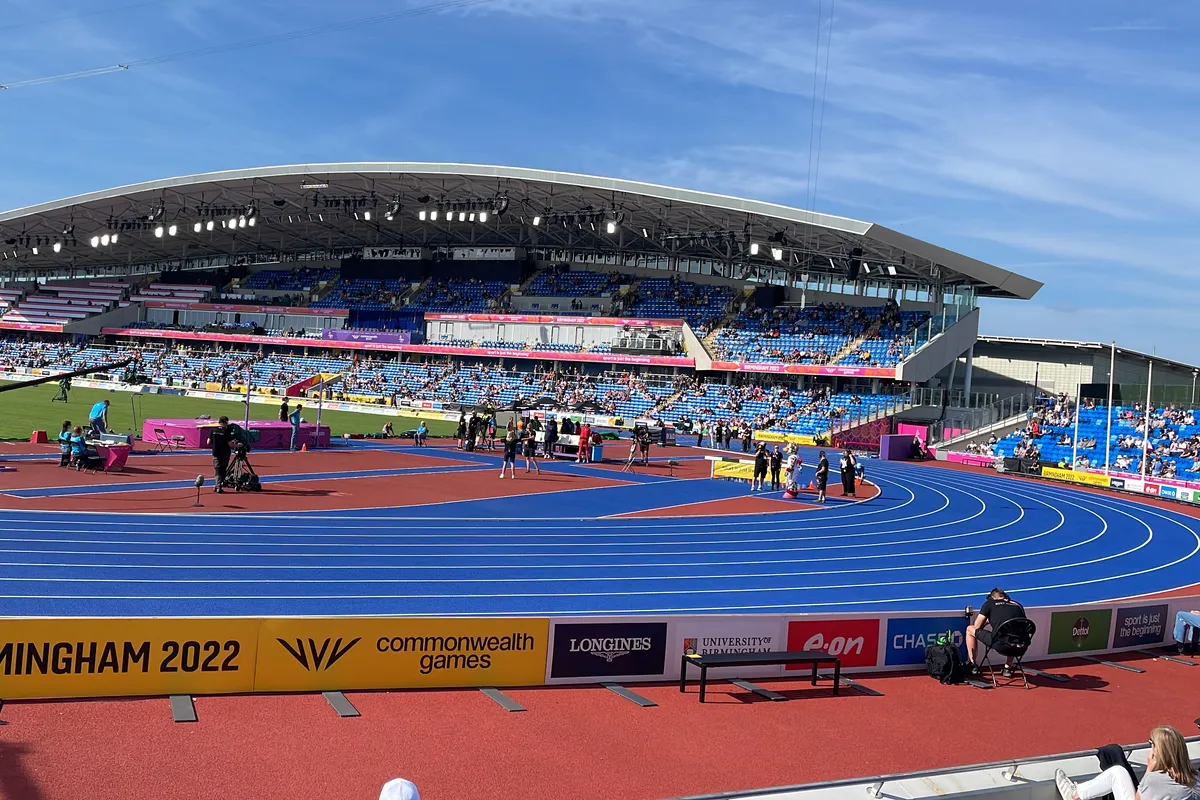
The first European Athletics Championships on British soil in 92 years of competition history has been overshadowed by the sight of half-empty stands. On Monday evening, when Britain's Amy Hunt won gold in the 100 meters, only 13,623 spectators were present at the 23,000-capacity stadium, leaving nearly 10,000 seats vacant.
Organizers said they were "delighted" with ticket sales that "far exceeded their targets," noting that evening sessions on Friday, Saturday, and Sunday were close to selling out. However, attendance figures of 55% on Monday morning, 59% in the evening, and 56% on Tuesday morning, along with images of rows of empty seats, sparked strong reactions.
Ticket Prices Under Fire
The main source of discontent is pricing. Category A tickets for the finish line on Monday cost £150, with no discounts for juniors. For the men's 100m final on Tuesday, those same tickets were selling for £110. By comparison, a similar ticket for the final in Rome two years ago cost €88, or about £75. The cheapest ticket was £26.
Chris Brown, a 40-year-old who photographed the empty rows from the stands on Monday, told the BBC: "I think they've slightly missed the mark with prices for weekdays. The cheapest tickets are £26, which is reasonable, and most people bought those, so the back rows are full. Maybe they should invite everyone to move down to the lower seats, just to make it look good on TV."
"The view from the £40 and £26 tickets is almost the same, so that price category has become redundant. I think £110 for the best seats is reasonable for a weekend evening session, but not for midweek."
Chris Brown, spectator
Brown added that the Commonwealth Games, held during the same period in the UK, may have affected attendance, but he expressed disappointment that "many Brits didn't bother to show up."
"Pricing Fans Out of the Sport"
Adam Hilton, a 34-year-old from Manchester, paid £120 for two tickets to Saturday's evening session for himself and his girlfriend but said he didn't feel he got value for money. "Seeing so many empty seats on the first day was very disappointing, especially at the evening session. In the summer, with good weather, I'd love it to be at least nearly full," Hilton said. "It's a shame, because it seems to be a trend in most sports where fans are priced out of events that should be far more accessible."
Hilton also criticized the infrastructure, noting that the nearest train station is a mile away, and he only managed to find parking three kilometers from the stadium.
British Olympian Sharron Davies took to social media: "We need to bid for more events, but we must make them affordable, so we can enjoy them first-hand, fill the stadiums, support our athletes, promote our country, and inspire generations to love sport." Davies also criticized food prices, pointing out that pork buns are sold for £18.50 and hot dogs for £15 at the stadium.
Jenny Meadows, co-coach of Keely Hodgkinson, wrote: "I believe it's a lot for some final evenings, but it's a shame we couldn't fill the stadium for the entire duration." BBC commentator Steve Cram added during the broadcast: "A bit disappointing in terms of spectators, I must say, especially over there on the opposite straight. There aren't many people in those stands at all."
Sara Kolak: "A Lot of Experience Has Accumulated"
While debates rage in Birmingham over empty stands, the Croatian athletics expedition will be completed on Wednesday with the arrival of Sara Kolak. The 31-year-old javelin thrower, Olympic champion from Rio 2016, will compete in qualifying on Friday, at her fifth European Championship. She will be joined by the youngest team member, 19-year-old Vita Barbić, who celebrates her birthday on Wednesday and arrived in Birmingham directly from Eugene with a world junior silver medal.
"I'm doing final training sessions, traveling to Birmingham on Wednesday, nothing special is happening," Kolak told Sportske novosti. "I'm satisfied with the form I'm bringing to the Euros; I was throwing quite well in the first part of the season, then I eased off a bit. But I have no complaints about how ready I am, how I'm throwing, or how I feel."
Kolak views European championships with particular respect, aware that qualifying is specific because it offers only three attempts. "It's an extra challenge that raises adrenaline. I don't think about the final standard-it, like the groups, is determined 24 hours before qualifying," she explained. "The most important lesson I've learned is that you should never play it safe; you should throw as far as you can even in qualifying."
"I wouldn't put it that way. They're harder in the sense that you only have three throws, but it's also just the first step you need to take. So I don't think qualifying is harder than the final; it's just special."
Sara Kolak, Croatian javelin thrower
Sara congratulated her young colleague Barbić on the junior silver from Eugene, a city that also brought her a world junior bronze in 2014. "It's interesting how that coincided; Eugene obviously suits us. I don't know the reason, but I know it's always nice to throw there-it's a track-and-field city with a great atmosphere," she said.
Croatia's record holder comes to major competitions with an impressive pedigree: besides the gold from Rio (66.18m), she has a bronze from the 2016 European Championships in Amsterdam (63.50m), a fourth place at the 2017 World Championships in London (64.95m), and a fourth place at the 2024 Paris Olympics (63.40m). Although last season brought more modest results, including a 33rd place in qualifying at the 2025 World Championships in Tokyo (54.49m), Kolak is confident that her form is peaking at the right time.