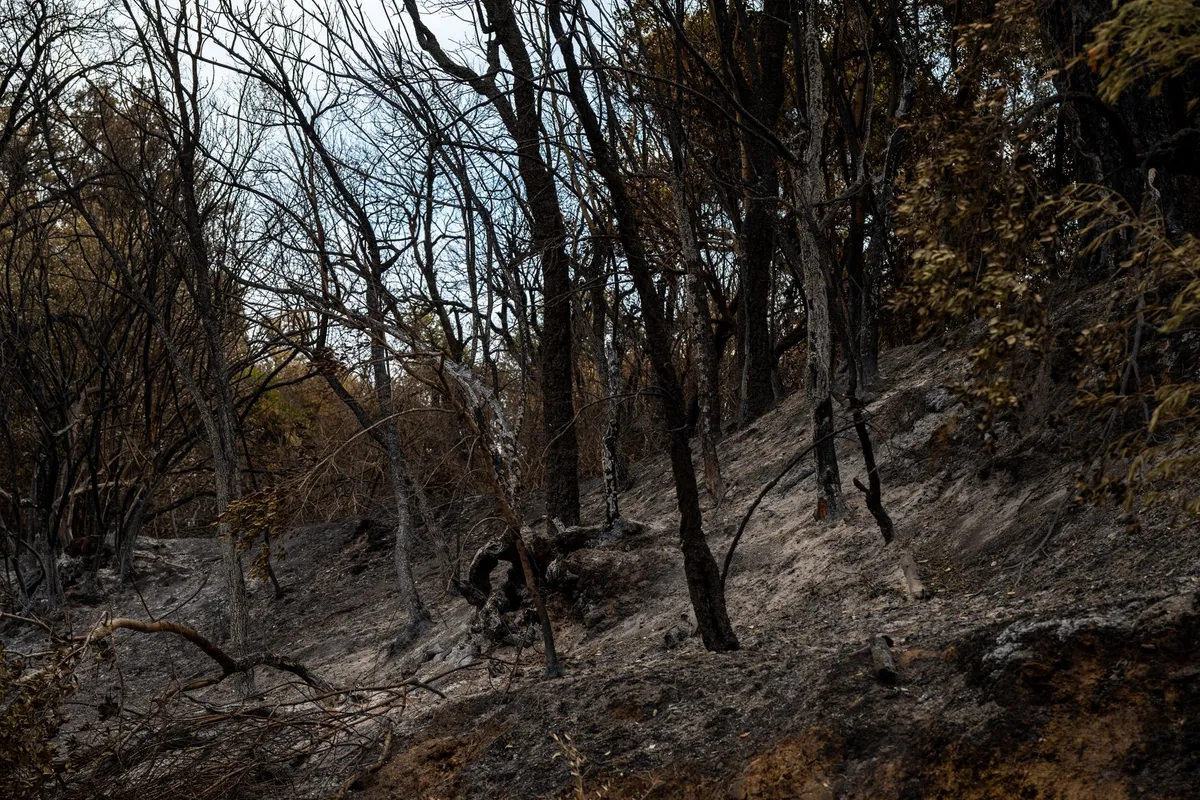
This year's wildfires in France have left behind unprecedented devastation, consuming over 300,000 acres of land. The causes are multifaceted, ranging from climate change to human factors, but authorities have decided to send a strong message: 420 people have been arrested on suspicion of starting fires, including as many as 166 minors.
Scale of the Disaster and the Human Factor
The fires that swept through France this summer have burned approximately 121,000 hectares, marking the most extensive damage caused by fire in the country since the end of World War II. Although climate change, driven by fossil fuel use, has created ideal conditions for fire spread, the statistics are relentless: nine out of ten forest fires in France are caused by humans, whether intentionally or through negligence.
The French Ministry of the Interior has released the figure of 420 arrests, but without a detailed breakdown of charges, sparking debates about the proportionality of the response. In one of the most drastic cases, a 23-year-old man has been accused of deliberately starting ten fires in just five days in the Var department in the southeast of the country. He faces up to 15 years in prison and a fine of €150,000.
Harsh Penalties and Criticism of the Judiciary
Courts have already begun handing down prison sentences. A man who started three fires in the Raon-L'Étape forest in the Vosges region was sentenced to three years in prison, even though, as reported by the newspaper L'Est Républicain, only a few square meters of undergrowth were burned. Critics warn that some proceedings have been particularly harsh, including cases involving homeless individuals and a person with severe autism who were penalized for discarded cigarette butts.
"Discarding a cigarette butt or lighting a barbecue in a forested area can constitute endangering lives because just one spark is enough," said Bordeaux prosecutor Renaud Gaudeul to Le Monde.
On the other hand, lawyer Muriel Gestas, who has represented several defendants, including two firefighters, expressed astonishment at the number of arrests. "I was stunned by the number of arrests; it seems excessive," she told the BBC. She suspects that many cases will not result in convictions. The French newspaper Le Monde also raises the question of how thoroughly the police investigated each case, given the very short timeframe in which the arrests were carried out.
How Fires Start and Who Are Pyromaniacs?
Investigating the causes of fires is extremely complex. Eric Dufayet, a police officer who investigates fires, explained to the BBC the procedure of mapping the fire's path to trace its origin. "In drought periods like this, a simple lighter is enough," he said. For fires caused by cigarettes, Dufayet cites the so-called "rule of 30": a temperature of at least 30 degrees Celsius, humidity below 30%, wind weaker than 30 km/h, and at least 30% of the cigarette butt remaining unburned.
Professor of psychiatry Michel Lejoyeux from Paris 7 University explains that people who set fires can be divided into three categories: the careless, those who benefit (for example, from insurance), and pyromaniacs. "A pyromaniac doesn't gain money, has no spirit of revenge, fire serves no purpose for them, but they love fire," he clarified. Nevertheless, he notes that pyromania is a rare psychiatric disorder that is difficult to diagnose and accounts for only a small number of convictions.
Government Accountability and Climate Adaptation
While authorities focus on punishing individuals, pressure is also mounting on the government, which is accused of not being sufficiently prepared for a disaster of this scale. President Emmanuel Macron has stated that now is not the time for criticism. "We will have to replant and build a different kind of forest because we must adapt to the structural conditions of climate change," he said this week, adding that there will be a time to analyze the lessons learned, but for now, the country must remain united.