Italy Imposes Controls on Flights from Spain
Rome's decision came after more than 70,000 migrants crossed the border in the Spanish enclave of Ceuta, with measures applied randomly, from document checks to full screening of entire aircraft.
Rome's decision came after more than 70,000 migrants crossed the border in the Spanish enclave of Ceuta, with measures applied randomly, from document checks to full screening of entire aircraft.
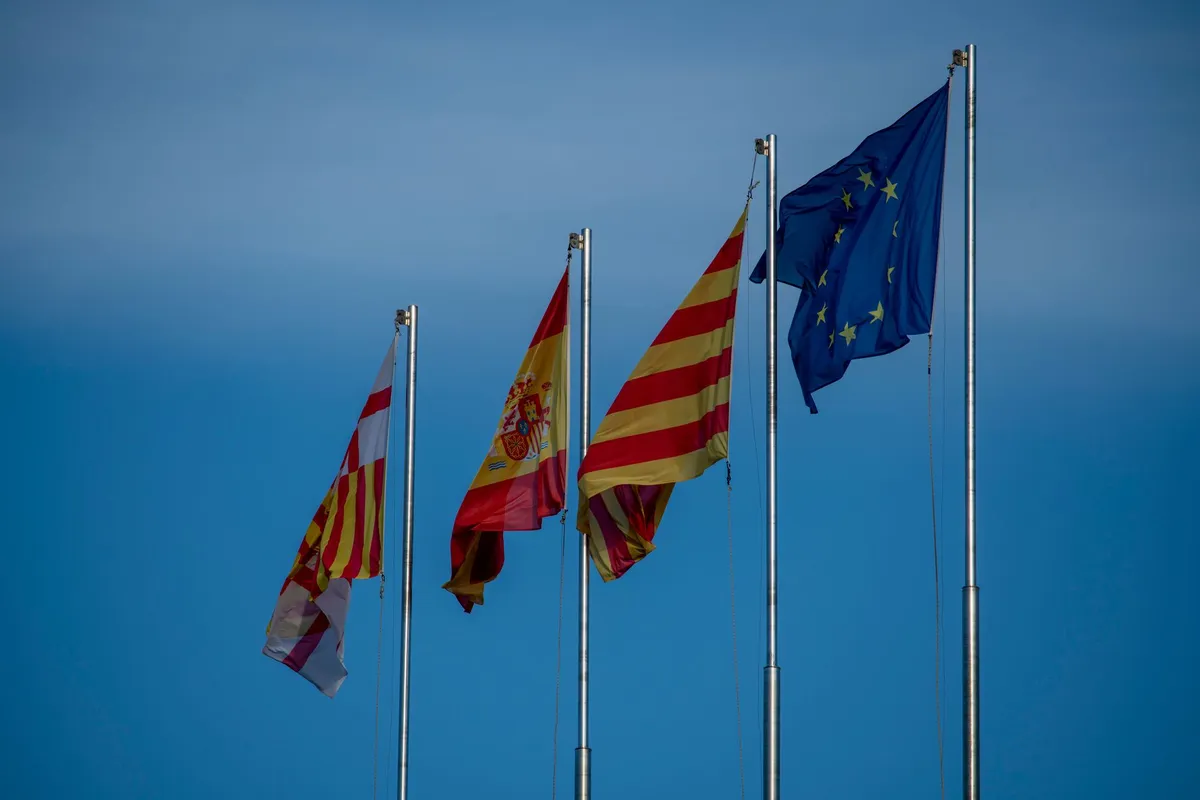
As of Saturday, August 1, passengers flying from Spain to Italy face the reintroduction of border controls. Italian Prime Minister Giorgia Meloni suspended the Schengen Agreement with Spain, citing "threats to national security" and the need to protect the European Union's borders. The decision followed dramatic scenes in Ceuta, a Spanish territory in Africa, where more than 70,000 migrants crossed the border, creating images that went viral worldwide and sparked a political upheaval.
The measure, announced almost overnight between July 31 and August 1, caught many off guard. At Rome's Fiumicino airport, which handles an average of 60 daily flights from cities like Madrid, Barcelona, Valencia, and Seville, checks are carried out in various ways. According to the Spanish newspaper El Mundo, police sometimes review passenger manifests before landing to identify third-country nationals, while on the ground, checks range from random stops to organized document inspections for all passengers on flights from Spain. In Venice, for instance, flights have been redirected to terminals designated for non-Schengen passengers. Italy, which had already maintained a Schengen suspension with Slovenia to control migration flows on the eastern route, similar to what France did at the border near Ventimiglia, continues this practice.
Ricardo, a Spanish economics professor living in Madrid, landed at Fiumicino and encountered only "police checks with dogs." His impression of the whole situation is bleak. "It's a very sad atmosphere we're living in within the European Union, which should be a symbol of human rights," he told El Mundo. Ricardo admitted he had informed himself in advance about the potential consequences of the Schengen suspension, comparing his uncertainty to traveling to the UK after Brexit.
His experience is shared by others. Luis (56), who traveled with his partner Cristina (55) from Valencia for a wedding, confirmed that their documents were checked "immediately upon exiting the plane." Luis believes the Italian PM's move is "a highly political measure, though not particularly effective." On the other hand, Leila (29), a Spanish woman of Peruvian origin traveling from Vigo, encountered no checks at all, confirming the random application of the measures.
Flavia (34), an Italian returning from a trip to Barcelona and Costa Brava, admitted she brought her passport just in case. "We're in a historic moment of turmoil, and such measures must make sense because migration flows need to be managed properly, with respect for people," she said. Leandro Tirreno, a makeup artist who has lived in Barcelona for 12 years, was stopped at the airport exit. Although he showed his Italian ID card, he believes he was stopped because of his Asian facial features. "I've never had travel problems; one of the positive things about being European is the ability to travel," he said, calling the whole situation "absurd."
Ricardo, as an economist, warns of broader consequences. "The measure creates uncertainty, which we value negatively in economics. And this is another one, given that checks vary depending on which Italian airport you land at," he explained. He is convinced that the Italian government "wants to be a symbol of migration control" and is "testing its strength against the Spanish government over what happened in Ceuta." His criticism is sharp: "They allow people to die at the border, and instead of talking about a humanitarian crisis, we're talking about closing the Schengen area."
Italy's decision is not an isolated incident. It is part of a broader political maneuver. The letter against Spain, initiated on August 1 by Meloni and Danish Prime Minister Mette Frederiksen, was signed by 22 EU member states. According to Corriere della Sera, 20 of those 22 countries are led by the center-right, and only two (Denmark and Malta) by the center-left. The letter was also signed by Germany's new Chancellor Friedrich Merz, but not by French President Emmanuel Macron. There are concerns that the EU could split along purely political lines, conservatives on one side, progressives on the other.
Italy is positioning itself as a model of a "firm hand" in migration management, proposing its controversial "Albania" model to all EU members. This involves establishing deportation centers for migrants in third African countries like Rwanda, Ghana, and Uganda. Despite ambitious announcements, the model has yielded modest results, in nearly two years, just over 600 migrants have been deported, with an estimated total cost to Italy over five years of up to one billion euros.
Technically, the Schengen suspension between Italy and Spain has no direct link to the events in Ceuta. Ceuta is outside the Schengen area, and the migrants who arrived there could not physically reach the Iberian Peninsula, let alone travel without documents to Italy. A group of Italian high school graduates from Perugia, who had just returned from a graduation celebration in Barcelona, succinctly commented: "Ceuta is Spanish, but it's in Africa, and the migrants didn't reach the south of the Peninsula."