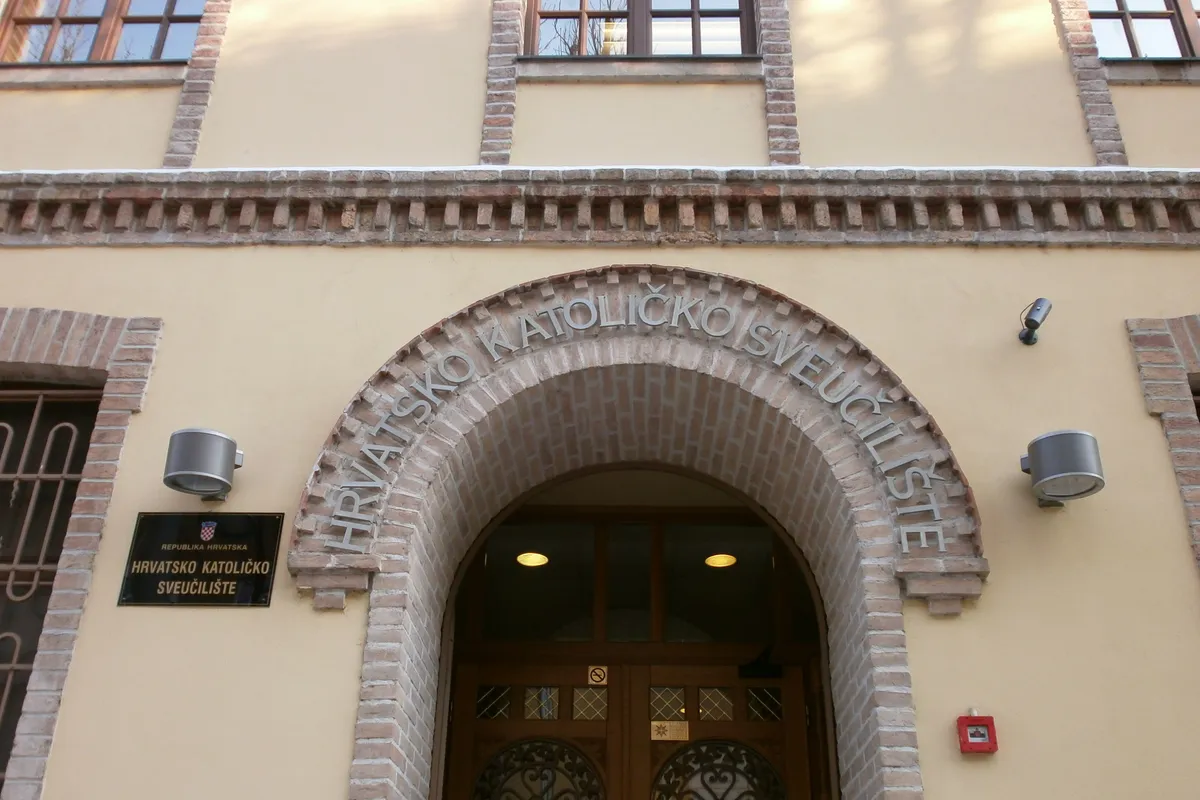
Jakov Žižić, an assistant professor at the Catholic University of Croatia, is a man who has channeled his intellectual curiosity, sparked by his native Sinj, into scientific research on the Sinjska Alka. Nearly two decades after his first research steps, he not only teaches a course on the Alka but will also sit by the Alka racetrack this Saturday, August 8, 2026, as co-commentator for the live broadcast of Čoja, the final trial competition for the Alka.
The broadcast begins at 5:30 PM, and viewers can follow it on Hajduk Digital TV and on the Facebook and YouTube pages of the Dalmacija News portal. For Žižić, this is an opportunity to tell a wider audience the rich story of a competition whose roots go deeper than is often thought.
Debunking Myths: Čoja Does Not Date Back to 1715
One of the key stories Žižić wants to share with viewers concerns the very beginnings of Čoja. Contrary to popular belief, it does not originate from the famous year 1715.
"It does not date back to 1715; we will discuss all this during the broadcast. It was only at the beginning of the 20th century that the general rehearsal first gained a clear place and role in the Alka regulations. Initially, this general rehearsal was not called Čoja. It was also a form of qualifying race because it was stipulated that a young alkar who did not participate in the general rehearsal could not participate in the Alka. In the main rehearsal, the alkars competed among themselves for a piece of red cloth (čoja) that they procured themselves, and the winner would receive that cloth. That is the beginning of Čoja as the final trial competition for the Alka. We are talking about 1901, when it all started," Žižić said for Dalmacija News.
It is the fabric, it is assumed, that gave the competition its later name. Žižić also places this tradition in a broader European context, linking it to other knightly games.
"When we put everything in a broader context, we realize that the competition for the čoja is a link between the Alka and the European tradition of knightly games and competitions. For example, there is the famous 'Palio di Siena' in Italy, which is a traditional horse race. There, riders compete for a piece of fine fabric."
From Student Research to University Lectureship
Žižić's research journey began in 2009 when, as a student, he got involved in creating a guide about the Alka for the media. Even then, he noticed that serious study of this knightly game, with the exception of Šime Jurić's seminal work from 1988, was largely left to amateur researchers.
"I realized that research on the Alka up to that point, if we exclude Šime Jurić, who published a seminal work on the history of the Sinjska Alka in 1988, was mostly left to amateur researchers. Even today, there are historical narratives about the Alka shaped by amateur researchers. Even then, I aspired to a strictly scientific approach, and that is how I directed my research on the Alka," he recalls.
His work led him to the Catholic University of Croatia, where he got a job in 2018, the same year the Sinjska Alka course was launched. The course was first taught by don Josip Dukić, a university professor of church history, and Žižić joined in 2021. In the meantime, he became an assistant professor, and today it is one of the courses he regularly teaches.
The Alka in English: The Challenge of Translating Tradition
Since this academic year, the course has made a new step forward and is now taught in English as "The Alka of Sinj." The reason is foreign students coming to Zagreb through Erasmus+ programs, but domestic students have also shown interest. This year, the course was attended by two students from France and one from Slovakia, who were extremely motivated.
A particular challenge was translating the Alka terminology into English.
"For example, you cannot translate 'alkarski vojvoda' as 'Alka Duke' but as 'Alka Master.' Exactly how to convey the entire Alka terminology into English was one of the challenges," explains Žižić.
Unbroken Tradition Since 1901
What makes Čoja special is also its continuity. Unlike the competition for the Bara, which dates back to 1962 and has sometimes not been held, Čoja has been held regularly since its beginnings in 1901.
"It has never happened that Čoja was not held. There have been cases where the competition for the Bara, which began in 1962 and is the penultimate competition for the Alka, was not held. So since 1901, every time a regular Alka has been held, we have had a winner of Čoja," emphasizes Žižić.