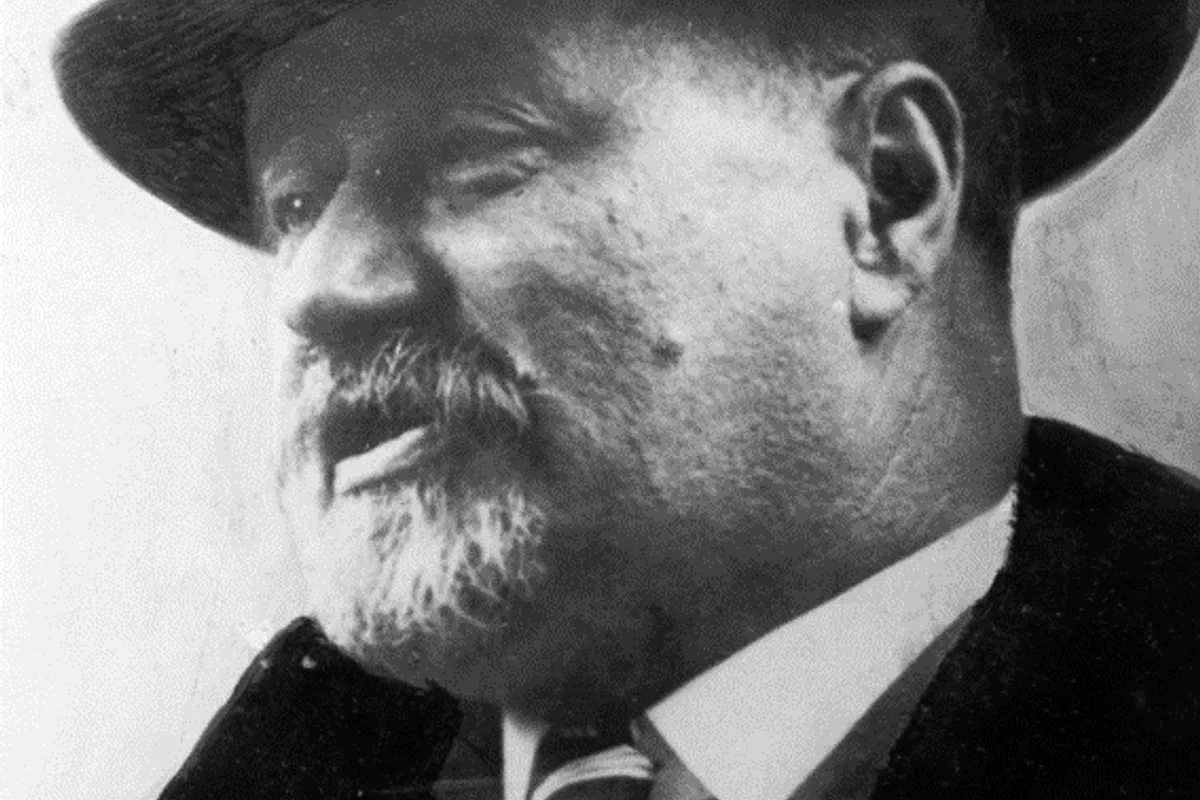
It has been exactly 98 years since Croatia lost one of its most influential political sons. Stjepan Radić, born in 1871 into a poor peasant family near Sisak, died on August 8, 1928, from wounds sustained in an assassination that shook the Kingdom of Serbs, Croats, and Slovenes and irreparably poisoned relations between the two nations.
Radić was far more than an ordinary politician. His distinctive rhetoric and charisma-qualities many would envy today-gave rise to a mass movement that united Croatia's peasantry and urban dwellers in resistance to Belgrade's centralist policies. History remembers him as one of the most prominent political figures in the Balkans during the 20th century.
From a Burned Flag to Founding a Party
His political journey did not begin in an armchair but on the streets. As a law student in Austria-Hungary, alongside his brother Antun, he openly defied the administration of Ban Khuen Hedervary. Their rebellion culminated in the burning of the Hungarian flag in the main square-an act that cost them their freedom and their place at the university. They continued their studies in Prague and Paris, and in 1904, they founded the Croatian People's Peasant Party (HPSS).
The party found its foundation in the fight for peasant rights, which resonated deeply in Croatia's predominantly rural society at the time. This popularity became crucial after the collapse of Austria-Hungary, when Radić faced a new struggle-this time against Serbian centralism. His famous warning, "Don't rush in like geese into the fog," referred precisely to the danger of entering a state union with the Kingdom of Serbia without clear guarantees of equality.
A United Croatia as a Bulwark Against Hegemony
The first Yugoslavia was marked by the Serbian royal family's efforts to centralize all power in Belgrade. However, after a hundred years of Hungarian nationalism, Croats had developed a strong sense of their own identity. Radić became the embodiment of that resistance, advocating for a federation of equal nations.
His struggle was not solitary. In the 1920 elections, the Croatian Peasant Party (as it was then called) won nearly 60% of the vote. The whole of Croatia stood behind him. The movement gained additional strength through an alliance with Svetozar Pribićević, the leader of the prečani Serbs who were also dissatisfied with being neglected by Serbia proper and the policies of Nikola Pašić.
Shots That Changed History
Nearly a decade of political tensions reached its peak in June 1928. During a session of the National Assembly in Belgrade, Puniša Račić, a deputy of the Radical Party, drew a revolver and fired at members of the Croatian Peasant Party. Stjepan Radić and Pavle Radić were seriously wounded.
News of the assassination sparked a wave of outrage in Croatia. The idea of Yugoslav unity was severely damaged, and the animosity that began then would mark the events leading up to World War II. Stjepan Radić succumbed to his wounds on August 8, 1928, but his death instantly created a legend that continues to inspire to this day.