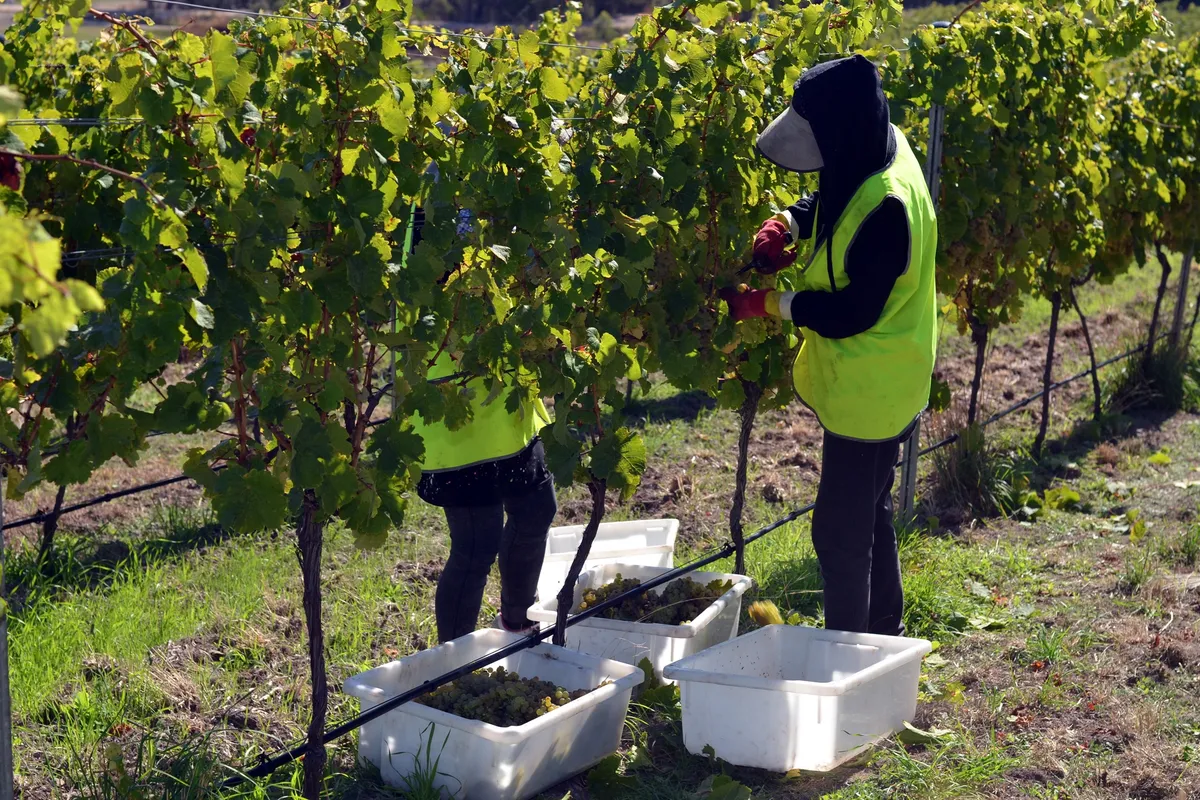
This year's unbearable heat has pushed the start of the grape harvest from September to August, nearly a month earlier than the recently usual timeframe. August harvests, once unimaginable, are now common, and forecasters predict even hotter summers, making it wise to pick the grapes before they 'cook' in the vineyards.
On Pelješac, early varieties have already been picked, and in Konavle, some will start harvesting pošip on Saturday, as our source reveals. "It has to be done this way because of the severe drought; the plant simply cannot withstand the lack of water," emphasizes Niko Karaman, a graduate agronomist and enologist from Konavle.
Drought Reduces Yield, but Grapes Are Healthy
Karaman explains that due to water scarcity, the vine begins to use water stored in leaves or berries, leading to shriveling and dehydration in the clusters. Without proper irrigation or rain, earlier harvests are the solution.
"This season, the grapes are otherwise completely healthy, with quite good sugar levels already achieved; it's just that yields will be much lower. You won't get 60 or 70 percent, but rather 55, depending on the variety," Karaman notes. For malvasia, given the drought and underdeveloped berries, the yield certainly won't exceed that percentage.
Esca Escalates with Heatwaves
Despite the drought, it's been a fantastic year for vine health. "There's no powdery mildew, downy mildew, or pests; the only issue is esca, a grapevine trunk disease, which has really taken hold this year," Karaman reveals. Malvasia has suffered the most because the extreme heat in July and August greatly favors this disease. "You could say esca has escalated with this year's heatwaves," he adds.
According to Karaman, the drought has caused more significant problems on Pelješac and in inland Croatia than in Konavle, where only smaller areas are affected by drought and lack access to irrigation. Konavle has the option to irrigate its vineyards because the Ljuta River flows through the region, but there aren't many vineyards, so the need for irrigation isn't excessive. In Donja banda, Radovčići, and Popovići, the vineyards are mostly under water, in the field.
Merlot and Pošip Earlier, Malvasia Within Last Year's Bounds
As for the start of harvest at Karaman's, he's currently checking sugar levels on malvasia, which are around 15, while merlot is slightly higher. "A friend of mine already has sugar levels of 18 on that variety," Karaman says. He predicts that merlot harvest will begin earlier, around September 1st, 5 to 6 days before the usual time, in areas with lower yields and no additional irrigation. The same applies to pošip, while malvasia remains within last year's harvest timeframe.
"It's a slightly later variety; typically, it should be picked from September 15th onward. However, since these climate changes have disrupted everything, harvest dates have been hovering around September 1st for the past few years due to these heatwaves," the enologist explains.
Vineyard Recovery After Fires Takes Years
Karaman also commented on the fire disaster that ravaged the Omiš area last week. "The vine can recover; it all depends on how severely it was affected by the fire," he says. If only leaves and grapes are scorched, the vine will certainly regenerate next year, but the question is how fruitful it will be and how much the buds have suffered. The most important thing is that the vine stock didn't burn completely.
"This year's harvest there is, of course, lost. If the fire destroyed everything, it will take years to recover. First, you need to clear the old burned vines and plant new ones; five to six years will pass before the vineyard is back in 'full operation'," Karaman explains. He adds that there have been previous fire cases where the outer rows of vines along the forest edges were damaged, while the inner vineyard remained healthy, but even that can be restored.
Night Harvests: Good for Grapes, Bad for Workers
Karaman also comments on the new trend of night grape harvesting. "In the past, harvests started after September 15th, when it had already cooled down enough and days weren't as scorching; the climate was different. Today, night harvesting is preferred, also for the labor force, who find it easier to pick at night, of course, if you have suitable floodlights to illuminate the vineyard and you wear headlamps, like a miner," he says.
He himself tried night harvesting but found it thankless. "It's good in terms of the 'coolness' of the grapes. When you pick at night, the grapes are cool, so they oxidize much less and are less prone to spoilage," he explains. There's a big difference if the grape temperature is 12 degrees when you crush it, compared to 30 degrees Celsius during daytime harvest. Before fermentation, or clarification, you need to lower the temperature to 10 degrees, which is easier to achieve if the grapes are at 12 rather than 30.
"However, workers aren't exactly thrilled about night harvests; you start at midnight and finish at 5 or 6 in the morning. It's not the same; everyone prefers the night for sleeping; it's natural for humans to work during the day and sleep at night," concludes the Konavle expert. Karaman expects an average and relatively good yield, with excellent grape quality, and he's still checking acid and sugar levels to determine the exact start of the harvest.