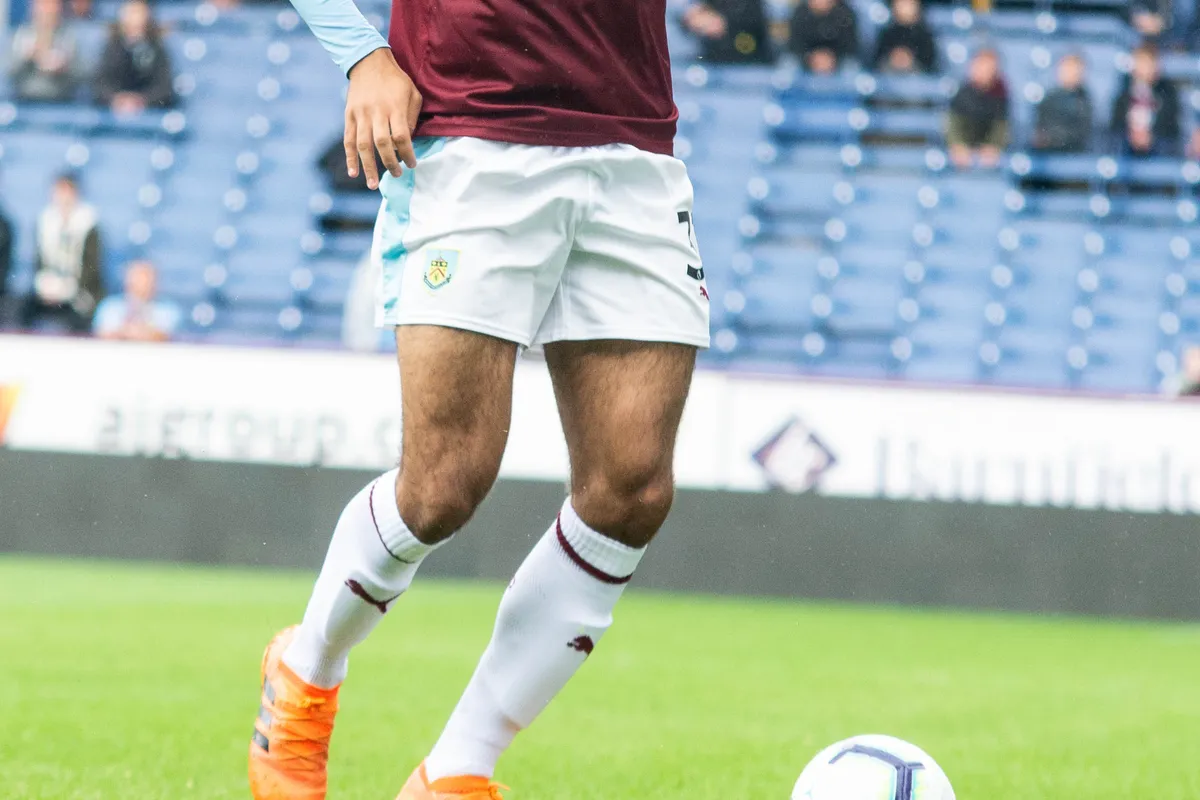
It was the 95th minute of the match at Poljud when Istra executed a move that perfectly exposed all of Hajduk's problems. Mohamed Nasraoui received the ball in his own half and, without any pressure, moved forward. No one closed him down; he didn't have to speed up or take risks. He lifted his head and, without any urgency, passed the ball to Emil Frederiksen on the right side of the pitch. No one attacked him either.
Frederiksen had all the time in the world to set himself and deliver the ball to Dukan Ahmeti about twenty meters from goal. Ahmeti's first touch was poor, but he was still completely unmarked. He controlled it and, with his third touch, sent the ball toward Hamza Jaganjac in the penalty area. Jaganjac received the ball with his back to goal, turned, and played it back to Ahmeti, who had made a run into the box and remained completely unmarked just five meters from the goal.
Marešić Is a Symbol, but Not the Only One to Blame
It's logical to point the finger at Dario Marešić. A professional center-back who fails to notice an opposing player slipping in behind him and standing seven meters out, while watching Jaganjac and Alec Van Hoorenbeeck battle for the ball, made a fatal error. However, Istra's entire move was marked by a series of situations where Hajduk's players simply didn't react.
Where were Marko Livaja and Dalisson, who came on in the second half and played in the front two of a 4-4-2, while Nasraoui had all the time in the world to launch the attack? Where were Šimun Hrgović and Dario Melnjak while Frederiksen stretched the defense with three touches on the flank? How did Adrion Pajaziti allow Ahmeti to touch the ball three times in the most dangerous area of the pitch? There were six Hajduk players in the penalty box, and none of them managed to win the ball.
Four Passes Without Resistance
Istra strung together four simple passes through key areas and went from their own half to a clear-cut chance in the final minute. Hajduk didn't collapse because of Istra's pace, individual skill, or a brilliant tactical move. They collapsed because no one took responsibility to stop the attack. Fatigue can explain an individual's mistake, but not the indifference with which the entire team watched the ball travel from one Istra player to another.
This isn't the first time this season that Hajduk has defended like a group of bystanders rather than an organized team. In the 95th minute, all players were in their own half, but there was no basic survival instinct: pressing the ball, closing passing lanes, tracking runners, or at least going full tilt into their own duels. Hajduk did none of that.
Investments in Defense That Don't Work
The problem is even greater because the club has systematically invested in the back line over the last two transfer windows. Last season, €1.5 million was spent on transfer fees, and all of that money went to defensive players. Ivica Ivušić cost €800,000, Ron Raçi €300,000, and Dario Marešić and Fran Karačić €200,000 each. Raçi sits on the bench, Ivušić and Karačić aren't in the plans, and Marešić leaves Ahmeti alone at five meters.
This summer, Alec Van Hoorenbeeck and Mathieu Acapandié also arrived, showing that the defense is not a part of the squad that the sporting sector has neglected. Quite the opposite-it's the line where the most real money has been invested, and yet Ahmeti was still left completely unmarked. Money doesn't buy a good defense because defense isn't the sum of a goalkeeper, center-backs, and full-backs-it's the way the entire team behaves without the ball.
The Coach's Responsibility for the Collective Collapse
When all the defensive errors happen within a few seconds, the problem is no longer just individual. It's a matter of system, habits, focus, and coaching approach. Hajduk has been falling apart for the past three or four seasons, which isn't solely Gonzalo García's problem, but he must prove he can be the solution. The team's solidity also depends on the coach.
In the 95th minute, a player often lacks the strength and time for complex decisions. All that remains is what the team has practiced and what the coach has managed to instill as a standard of behavior. As long as Hajduk looks like they're waiting for the final whistle by inertia in stoppage time, instead of showing character and fighting for the win, goals conceded in the final minutes won't be a coincidence-they'll be a clear indicator that the team is exhausted and indifferent.
The crowd booed García before the match, and the atmosphere at halftime was tense. The win against Istra wasn't just about the league table; it was a chance for the team to catch their breath and ease the pressure. When you have such a win in your hands, the final move must be defended as if the whole season depends on it. Hajduk didn't do that, and that's precisely García's biggest problem.