Končanica's Carnival Masks Celebrate 130 Years
The traditional procession featuring 13 masks, led by a bear whose symbolic toppling brings fertility, has been inscribed in the Register of Cultural Goods of the Republic of Croatia.
The traditional procession featuring 13 masks, led by a bear whose symbolic toppling brings fertility, has been inscribed in the Register of Cultural Goods of the Republic of Croatia.
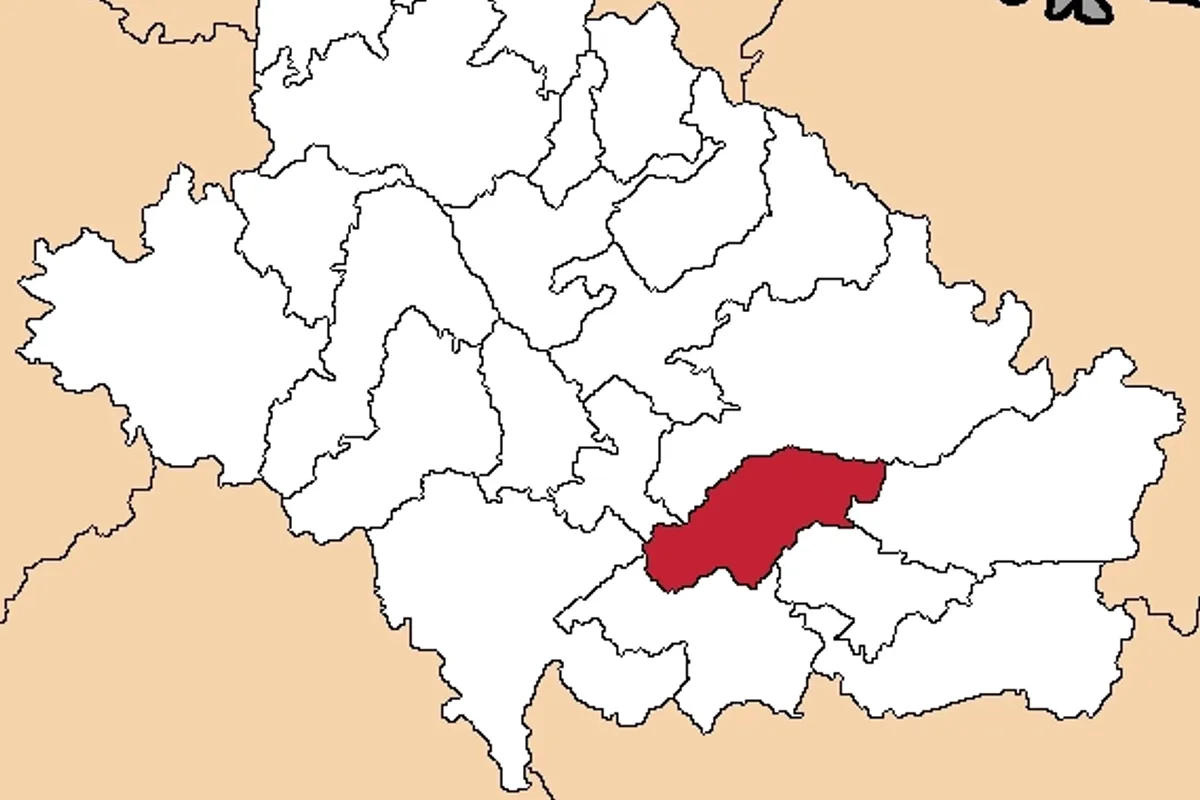
Končanica's carnival masks, also known as maškarádi, are now officially part of Croatia's intangible cultural heritage. This tradition, which has continued uninterrupted since 1890, has been inscribed in the Register of Cultural Goods of the Republic of Croatia, marking the beginning of a period of preventive protection that should culminate in permanent status as a national treasure.
The central event of this celebration is a boisterous procession of 13 traditional masks that visits every courtyard in Končanica and the nearby hamlet of Otkopi. The main role is played by the bear, whose task is clear and symbolic. "I need to knock down young girls and older ladies. My job is to bring a fertile year. And so it goes every year," explains Deni Ružička, who embodied the bear this year. His keeper, Ličan, is played by Andrej Ambroš, who admits that keeping the bear on a leash is not as simple as it seems. "When he sees a woman, he goes crazy, unclips himself from the chain, and runs off. I can't hold him back," says Ambroš.
Before the bear sets off on his quest, a chimney sweep wrestles with him in the courtyard. The outcome of this fight, according to belief, determines what weather lies ahead. "If we lose to the bear, it will be winter all year long. We shouldn't allow that, but unfortunately, this year it will be so," laments Vito Rohlik, this year's chimney sweep. The procession is led by the Laufer, another key mask, whose whip symbolically drives away the last traces of winter. "These are the guys from Končanica. We all grew up here... maybe we don't live here now, but this custom is kept alive here," emphasizes Dino Kubin, this year's Laufer.
Although the sight of a bear knocking down women might initially cause discomfort, in Končanica it is met with laughter and good wishes. "It's actually a symbol. The more girls, moms, and grandmas the bear knocks down-we say it's a symbol of new births in the coming year," explains Alenka Vanjiček, president of the Czech Beseda Končanica. The participants confirm this. "Is it shameful? No-I think all the girls will be knocked down at least twice today. That's just how it is," says Manuela Jelinek. For many, this is also a chance to socialize. "Every year we look forward to it because we all meet up... we see people we haven't run into all year," adds Danijela Šilobodec.
In times when young people are leaving rural areas in droves, this custom carries a deeper hope. The mayor of Končanica Municipality, Zlatko Bakunić, even cited specific figures that, he says, give faith in the bear's power. "Looking at 2019, twenty children were born, and in 2018, nine children were born, so the bear did have some influence in improving the birth rate," said Bakunić. Still, he is aware of reality, adding that the biggest problem is the lack of jobs, which causes young people to leave after their education and not return.
That this is an exceptionally valuable tradition passed down through generations is confirmed by Vencl Vrabec, who himself was the bear twice. "Not just anyone could be the bear. They had to be chosen," recalls Vrabec, whose sons have also been multiple participants in the carnival. "I think there isn't a house in the village that hasn't had a male member in the carnival."
It is precisely this longevity and community dedication that led to official recognition. "For now, it's only preventive protection. In the next four years, a decision will be made on whether it will be permanently included in the register or only for this four-year period," explained Tanja Novotni Golubić, deputy prefect of Bjelovar-Bilogora County, expressing confidence that, given its significance, Končanica's carnival masks will become a permanent national treasure of the Republic of Croatia. This year, the event carries special weight as it marks the 130th anniversary of its holding.