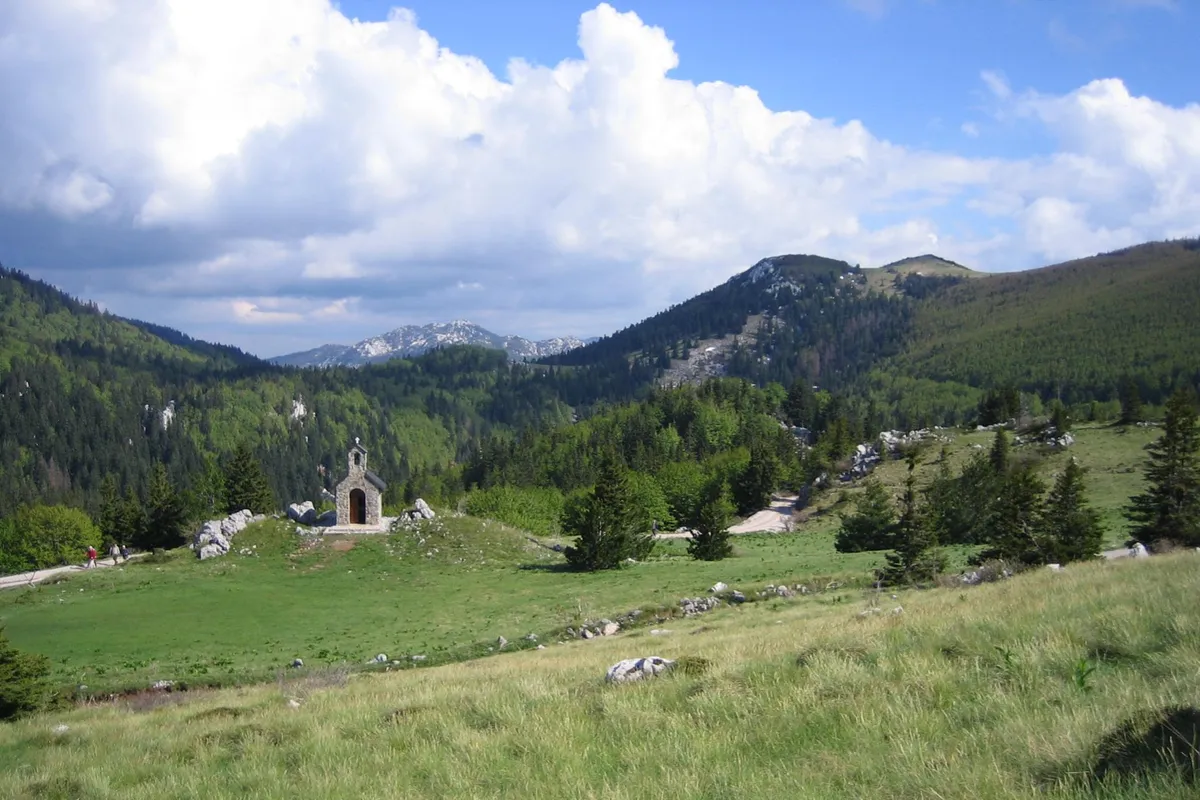
A two-week international speleological expedition on Northern Velebit, which has just concluded, brings alarming news: centuries-old ice in deep pits, aged between 400 and 3,000 years, is rapidly retreating, and at some sites it has completely vanished. These findings, released on Monday, August 10, 2026, by the Speleological Section of PDS Velebit and the Speleology Commission of the Croatian Mountaineering Association, shed new light on the deep incursions of climate change into the coldest parts of Croatia.
The expedition was led by Ema Buljan and Olga Jerković Perić, with logistical support from Northern Velebit National Park. Although this area remains among the coldest locations in the country during the summer, research shows that surface cold is no longer sufficient to protect underground ice formations.
Frozen Surface, Melting Depths
Data collected during the expedition reveal that winters on Northern Velebit have remained exceptionally harsh; last year, the lowest temperature at one of the studied sites dropped to about minus 22 degrees Celsius. The strength of these microclimatic conditions is so pronounced that cold air, which flows from certain pits during the summer, allows snow to persist at some locations on Hajdučki Kukovi even in August. "This shows how unique the microclimatic conditions of Northern Velebit are," emphasized the Speleological Section of PDS Velebit and the Speleology Commission of the Croatian Mountaineering Association. Yet, despite this, the underground sends alarming signals.
Key Finding: Declining Ice Levels and Complete Disappearance
Dalibor Paar, a scientist from the Faculty of Science at the University of Zagreb, presented the expedition's key finding: "In certain pits, we are recording a greater drop in the level of permanent ice, and in some places, its complete disappearance." This development suggests that heat is penetrating the underground karst system over the long term, despite favorable surface conditions.
The expedition covered 33 speleological features with a total depth of about 1,100 meters. The international team included 51 speleologists from ten associations from Croatia, Austria, the USA, Portugal, and Bosnia and Herzegovina. In addition to documenting the state of the ice, changes in microclimatic conditions and the connection between the deep underground and surface ecosystems were studied, as highlighted by co-leader Ema Buljan.
The organizers emphasize that the collected data will contribute to a better understanding of the impact of climate change on the park's underground and above-ground ecosystems and will be used to prepare educational content about Croatia's natural heritage. Ice that is three millennia old is irreversibly disappearing before the researchers' eyes, leaving us to wonder how many more such natural phenomena will survive.