In the historic home of the Bugatti brand in Molsheim, France, at the heart of the Alsace region, Croatian entrepreneur Mate Rimac has opened a new chapter. With the inauguration of the facility named "La Manufacture," the company Bugatti Rimac, under his leadership, symbolically began the era of the successor to the Chiron, the spectacular hybrid hypercar Tourbillon.
The opening ceremony brought together representatives of the French state, local institutions, and business partners. The event was not just a celebration of a new building but also a powerful demonstration of a vision that merges a century-old automotive heritage with future technology.
A Facility Worthy of Tradition: 3,245 Square Meters of Precision
The new La Manufacture building, completed in less than a year, spans 3,245 square meters. It is 135 meters long and 25 meters wide. Its architecture, with a low profile, discreet dark walls, and large glass surfaces, is designed to respect the surrounding landscape of the Château Saint Jean estate and bring natural light into the production space.
This facility is not a replacement for the existing Atelier but is intended to take over the most technically demanding phases of Tourbillon production. This includes pre-assembly of the exterior and interior, rigorous quality checks, and highly specialized processes such as polishing and painting. The intelligent layout allows for a logical production flow, where cars seamlessly transition from the new facility to the historic Atelier for final assembly.
Capacity Rises to 200 Vehicles per Year
This division of labor will enable a significant increase in production capacity. With the new facility, Bugatti Rimac will be able to produce up to 200 vehicles per year. This is a drastic jump compared to the seventy or so Chiron units produced at the peak of its production.
Also significant in the whole story is Mate Rimac's foundry, which employs more than 100 workers and plays a key role in the value chain of these exclusive cars.
Tourbillon: V16 Engine and 1,800 HP Without Digital Screens
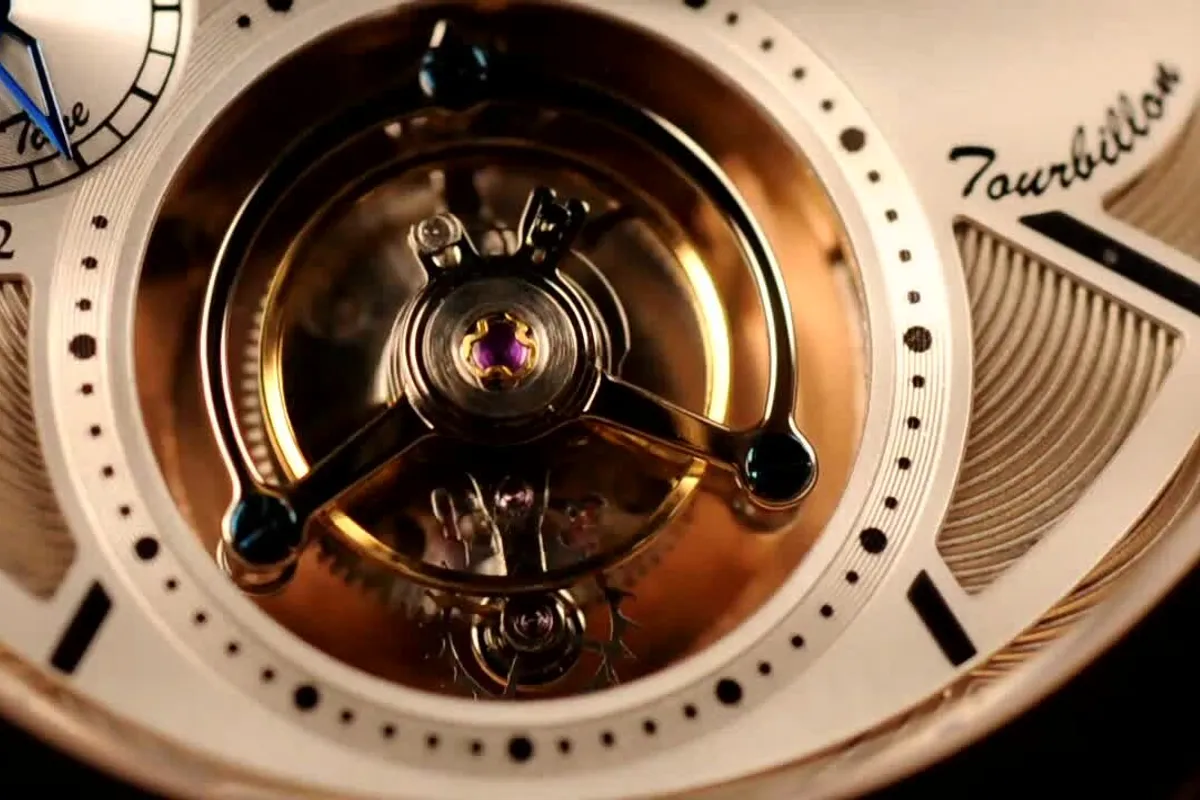
At the heart of the new manufactory is the Tourbillon, unveiled in June 2024. As the first Bugatti in over two decades not powered by a W16 engine, it also breaks the tradition of naming models after legendary drivers. The name is borrowed from the world of watchmaking, where a tourbillon represents a pinnacle mechanism for precision.
"Ettore Bugatti's sayings 'if it's comparable, it's no longer a Bugatti' and 'nothing is too beautiful' have been a guiding light for me personally, as well as for the design and engineering teams who wanted to create the next exciting era in the Bugatti hypercar story," emphasized Mate Rimac, founder and CEO of Bugatti Rimac.
The powertrain consists of a monumental, naturally aspirated 8.3-liter V16 engine, developed in collaboration with Cosworth. The engine alone produces 1,000 horsepower, revs up to 9,000 rpm, and weighs just 252 kg. It is paired with three electric motors that add another 800 horsepower, bringing the total system output to an impressive 1,800 horsepower. Despite the hybrid setup, the Tourbillon is lighter than its predecessor, the Chiron.
Performance matches the numbers: it reaches 100 km/h in 2.0 seconds, 200 km/h in under 5 seconds, and 300 km/h in under 10 seconds. The top speed is 445 km/h.
The interior is dedicated to timeless mechanics. Instead of digital screens, the driver is greeted by an analog jewel, an instrument cluster made of over 600 parts, crafted from titanium, sapphire, and ruby. The entire assembly weighs only 700 grams and is fixed in place, while the steering wheel rim rotates around it. A digital display is hidden and only extends when needed.
Sold Out Through the End of the Decade
The factory opening is the culmination of strategic moves since Rimac took operational control of Bugatti. The Rimac Group has taken full control of Bugatti Rimac by buying out Porsche's stake, confirming his key role in the future of luxury hypercars.
The market has enthusiastically embraced the new era. All 250 planned Tourbillons, with a starting price of €3.8 million before taxes, were sold out before production even began. The order book is full through the end of this decade.
A Shadow on Success: Robotaxi Project in Croatia Delayed
While Bugatti Rimac is enjoying global success, the robotaxi project in Croatia, worth tens of millions of euros, is facing problems. Due to development delays, €89 million received from European funds will need to be repaid, casting a shadow over an otherwise impressive technological leap by the Croatian entrepreneur.