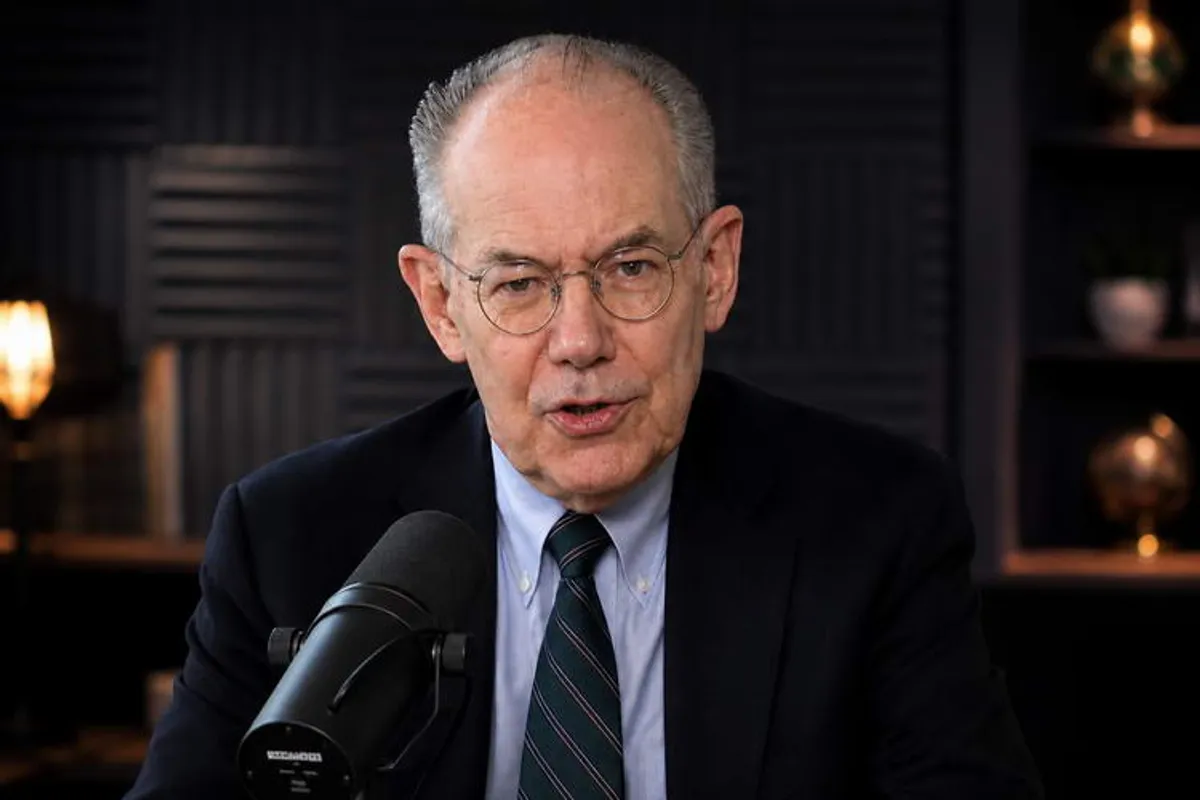
Ukrainian forces are facing an extremely difficult position on the battlefield, and the combination of numerical inferiority, mobilization problems, and increasingly intense Russian airstrikes threatens an economic and military blow of enormous proportions. This assessment was given by American political scientist John Mearsheimer in a conversation published on YouTube, analyzing the situation at the front together with host Denny.
Mearsheimer emphasizes that Ukraine's situation cannot be viewed solely through logistics, because in a war of attrition, the number and quality of soldiers, the casualty ratio, and the ability of the warring parties to replace those losses play a key role. He estimates that Russia has a population four to five times larger than Ukraine's, while on the front lines themselves, the manpower ratio could be roughly three to one in favor of Russian forces. He stressed that even a ratio of two to one would pose a serious problem for Kyiv.
Massive Draft Evasion and Desertion
As an additional indicator of manpower problems, Mearsheimer cited data he attributed to Ukraine's defense minister: about two million people are evading mobilization, while the number of Ukrainian forces who have voluntarily left their units is estimated at approximately 200,000. Mearsheimer believes that the combination of a shortage of soldiers, draft evasion, and desertion from units puts Ukrainian forces in a very difficult situation.
Another significant problem he sees is in the industrial infrastructure of the warring parties. Russia has a strong military-industrial base, while Ukraine lacks the capacity for mass production of the weapons it needs. In his view, neither European countries nor the United States currently have the industrial capacity to compete in quantity with what Russia and China can produce.
Casualty Ratio of Two to One Against Ukraine
A particularly contentious issue in the conversation was the casualty ratio. Mearsheimer offered an estimate that approximately 350,000 Russian soldiers have been killed and over a million Ukrainian soldiers, noting that the number of Ukrainian casualties could be even higher. He presented these figures as his own estimate, not confirmed data, adding that the casualty ratio is approximately two to one against Ukraine.
He dismissed claims that Russia is suffering significantly higher losses, citing the role of artillery as an argument. According to him, Russia has had between five and ten times greater artillery firepower for most of the war. As another argument, he mentioned the exchanges of bodies of fallen soldiers, claiming that in these exchanges, significantly more bodies are returned to Ukraine than to Russia.
Black Sea Ports Practically Closed
Mearsheimer specifically warned about the logistical situation. Russian forces are using various air assets to attack Ukraine's transportation infrastructure and gas stations in eastern Ukraine, while the Black Sea ports, especially the one in Odesa, have almost completely lost their previous function. Such a state, as he assesses, practically makes Ukraine a country without a functional sea outlet for key flows, which could have serious economic consequences.
At the same time, the import of weapons via the Black Sea and the ports in Odesa is hindered, while equipment arriving via other routes must be transported by rail and road, which Russian forces regularly target. Therefore, Mearsheimer assesses Ukraine's overall logistical situation as highly unfavorable.
They Called Syrskyi a "Butcher"
He also commented on the replacement of the commanding general of Ukrainian forces, Syrskyi, assessing that he did a good job despite extremely unfavorable circumstances. However, he reminded that some Ukrainian soldiers called Syrskyi a "butcher" because he was willing to accept heavy human losses to stop Russian forces. He noted that he has not heard of a Russian commander with such a nickname, which is an additional reason for his doubt about Western estimates of very large Russian losses.
Contradictory Messages from Kyiv and Washington
At the strategic level, Mearsheimer pointed to two seemingly opposing messages from Kyiv. According to a report from early August, Ukrainian President Zelensky wanted the war to end by the end of the year, specifically by Christmas, while another report spoke of the possibility of a ceasefire and freezing the front lines. Mearsheimer believes these contradictory messages stem from two different political imperatives: the need to maintain an optimistic image and simultaneous awareness of the difficult situation on the ground.
In his assessment, only about 25 percent of Ukraine's population wants the war to continue, while approximately three-quarters want it to end. Therefore, Zelensky must maintain a positive public message while simultaneously convincing Western countries that Ukraine remains worthy of their support, with retaining the United States in the conflict being particularly important to him.
Inconsistency of American Policy
Mearsheimer observed a similar inconsistency in American policy. He reminded that U.S. Secretary of State Marco Rubio stated before the Senate on June 3, 2026, that the United States had chosen a side in the war, namely Ukraine, that they were not a neutral mediator, and that they were trying to help Ukraine win. Around August 3, roughly two months later, Rubio spoke about the American effort to end the war and the possibility of finding a path to its conclusion.
Mearsheimer assessed that Rubio actually reflects the shifting positions of President Donald Trump. As a consequence of such messages, he mentioned the conclusion that, in his opinion, foreign leaders are drawing: that the United States cannot be trusted. An even more serious consequence, in his assessment, is the possibility that foreign leaders will begin to view the United States as a dangerous and unpredictable actor.