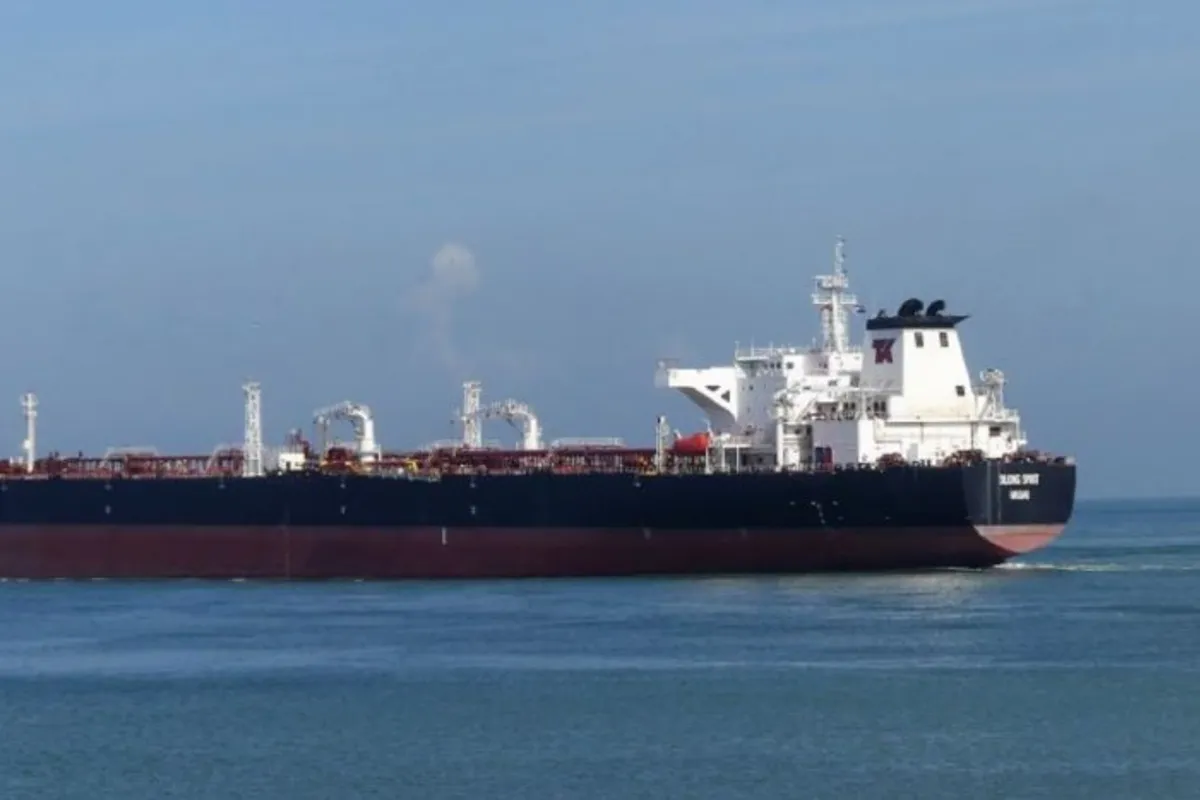
The oil tanker Skiros, sailing under the Liberian flag, was attacked on Monday, August 17, 2026, in the Black Sea near the Caspian Pipeline Consortium (CPC) terminal off the Russian port of Novorossiysk. According to the Telegram channel Voenkor Kotenok, the vessel belongs to a Greek company, and the strike hit the bridge, after which a fire broke out on the tanker.
According to the U.S. agency Bloomberg, the vessel is a Suezmax-class tanker carrying one million barrels of oil of Russian origin. There were no injuries or major material damage in the attack, as reported by N1 Serbia.
Resumption of Attacks After Three-Week Ceasefire
Bloomberg assesses that the attack signals a resumption of hostilities in the area after a three-week ceasefire. Although the CPC primarily transports Kazakh oil, which accounts for two percent of global supply, the targeted cargo was of Russian origin.
According to the British newspaper The Financial Times, Kyiv, in early August 2026, at the request of U.S. Vice President JD Vance, committed to not targeting CPC facilities or third-party vessels unless they were carrying Russian crude oil, which makes up five to ten percent of the terminal's throughput.
Security of a Shared Network
The attack has again heightened tensions over the security of a network jointly used by U.S. giants Chevron and ExxonMobil, Russia, and Kazakhstan. Additional concern is raised by the fact that the CPC had already in late July 2026 considered a temporary suspension of operations due to environmental risks.
Although there is no direct Croatian connection to this event, attacks on energy infrastructure in the Black Sea affect global energy flows and the safety of shipping lanes, which indirectly impacts the energy security of European countries, including Croatia.