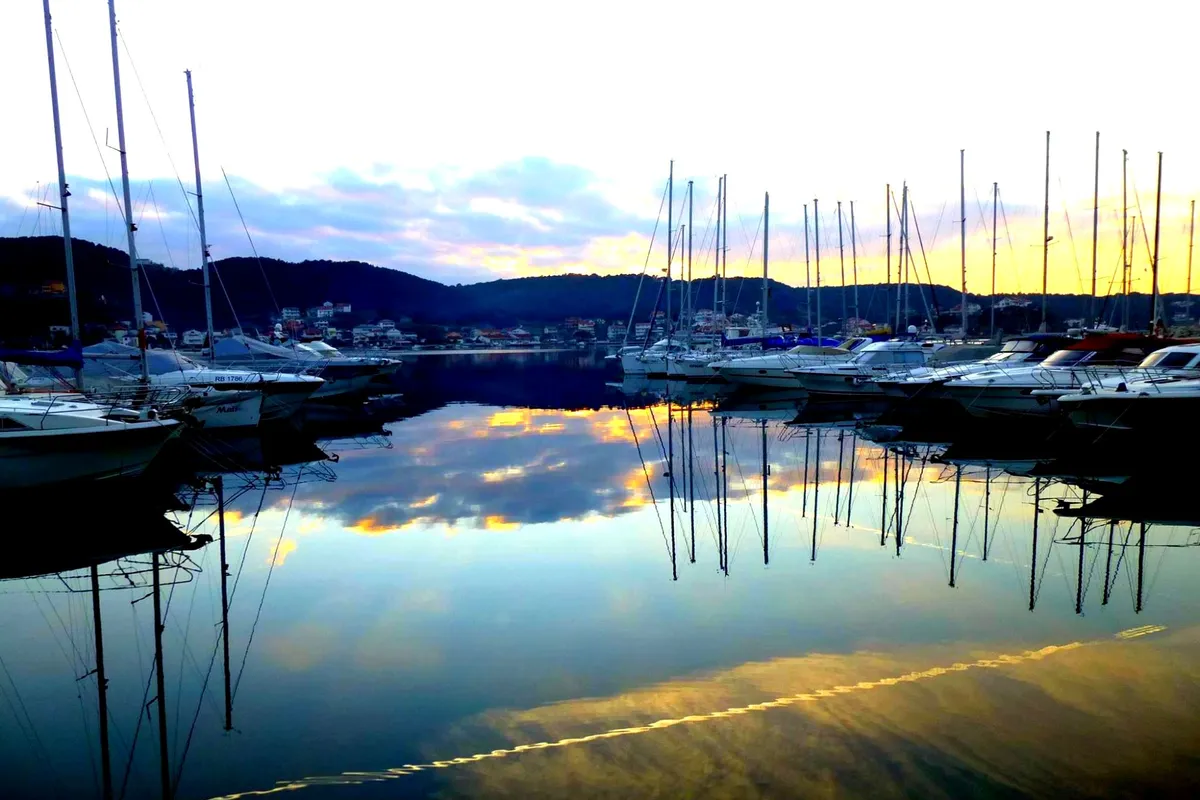
Croatia's 2026 nautical season presents a two-tier picture: marinas with a higher share of permanent berths are reporting stable results, while the charter segment is facing later bookings and increased competition from Mediterranean destinations. According to data from the eCrew system, which tracks tourist arrivals and departures in the nautical segment, 194,500 charter guests stayed by the end of June 2026, accounting for just over 1.1 million overnight stays. That is 3 and 1 percent less, respectively, than in the same period in 2025, and the number of vessel rentals is down by about 3 percent, Bernarda Renata Marević, president of the Nautical Tourism Association of the Croatian Chamber of Economy (HGK), told Hina.
eCrew data does not cover all boaters
Marević warned of an important methodological limitation when interpreting these figures. "This does not include the many foreign boaters arriving on their own vessels, nor domestic owners with vessels berthed in marinas and ports who sail regularly," she emphasized. The eCrew system refers exclusively to guests staying on charter vessels, so this data cannot be used as an indicator of total nautical traffic in Croatia. A broader picture is provided by the Ministry of the Sea, Transport and Infrastructure (MMPI), whose data on arrival registrations and extensions of stay for foreign yachts and boats shows an overall increase of about 1 percent compared to 2025, with a smaller number of first registrations and a larger number of stay extensions.
Central Dalmatia under greatest pressure, Dubrovnik sensitive to costs
The regional picture of the nautical season is highly uneven. Growth in first registrations of yachts and boats was recorded in the areas of Rijeka, Split, and Senj, while Pula, Šibenik, and Dubrovnik saw a decline. Marević outlined the specifics of each region: "The Northern Adriatic relies more on boaters arriving with their own vessels, as well as on permanent berths and markets accessible by car. Central Dalmatia has the highest concentration of the charter fleet, and consequently the most pronounced competition, with stronger pressure on prices. The Dubrovnik area, on the other hand, records a higher share of boaters from more distant markets and users of higher-category vessels, but with 'sensitivity' to air accessibility and overall travel costs."
Competition from Greece and Turkey strongest in the standard sailboat segment
Marević does not consider the decline in the charter segment dramatic, but rather a "slight deviation" from last year, noting that the main tourist season is still ongoing and final results can only be assessed after its conclusion. However, she warned that the charter segment is suffering from increased market pressures, particularly in the category of standard sailboats and boats, where supply is extremely large and guests easily compare conditions with Greece, Turkey, and other Mediterranean destinations. The most numerous charter guests continue to come from Germany, Austria, Croatia, Slovenia, the USA, the Czech Republic, Poland, and the United Kingdom. Marević especially highlighted the growth of the American market in the first half of 2026, in the higher-category yacht and vessel segment.
Boaters becoming more rational, but premium segment retains demand
Regarding prices, Marević explained that regular prices are mostly at last year's level or moderately higher due to rising business costs, but actual achieved prices are often lower due to discounts and last-minute offers. A trend of more rational behavior among boaters is also noticeable: "They are increasingly comparing prices, combining marina stays with anchoring, and more carefully selecting additional services. On the other hand, higher-spending guests are still willing to pay for quality, privacy, safety, top-tier gastronomy, and personalized experiences," she said. In the charter segment, demand is highest for sailboats and catamarans for weekly rentals, while the classic bareboat segment (vessel rental without a professional skipper and crew) is the most price-sensitive.
Shortage of experienced staff remains key challenge
As one of the key challenges this season, Marević highlights a chronic shortage of qualified and experienced personnel, especially skippers, technicians, service personnel, and marina employees who know the local area and speak foreign languages. "The situation is somewhat better than in previous years because employers are preparing earlier, but the challenge is not just to secure enough workers, but to find people with the necessary experience, responsibility, and work quality," she pointed out. She also warned that Croatia's competitiveness cannot be built solely on price, and that further investments are necessary in infrastructure, fleet renewal, green and digital transition, and preservation of the sea and coast, because "competing destinations are investing intensively in fleets, infrastructure, and various incentive measures, while guests are simultaneously becoming more demanding and price-sensitive."