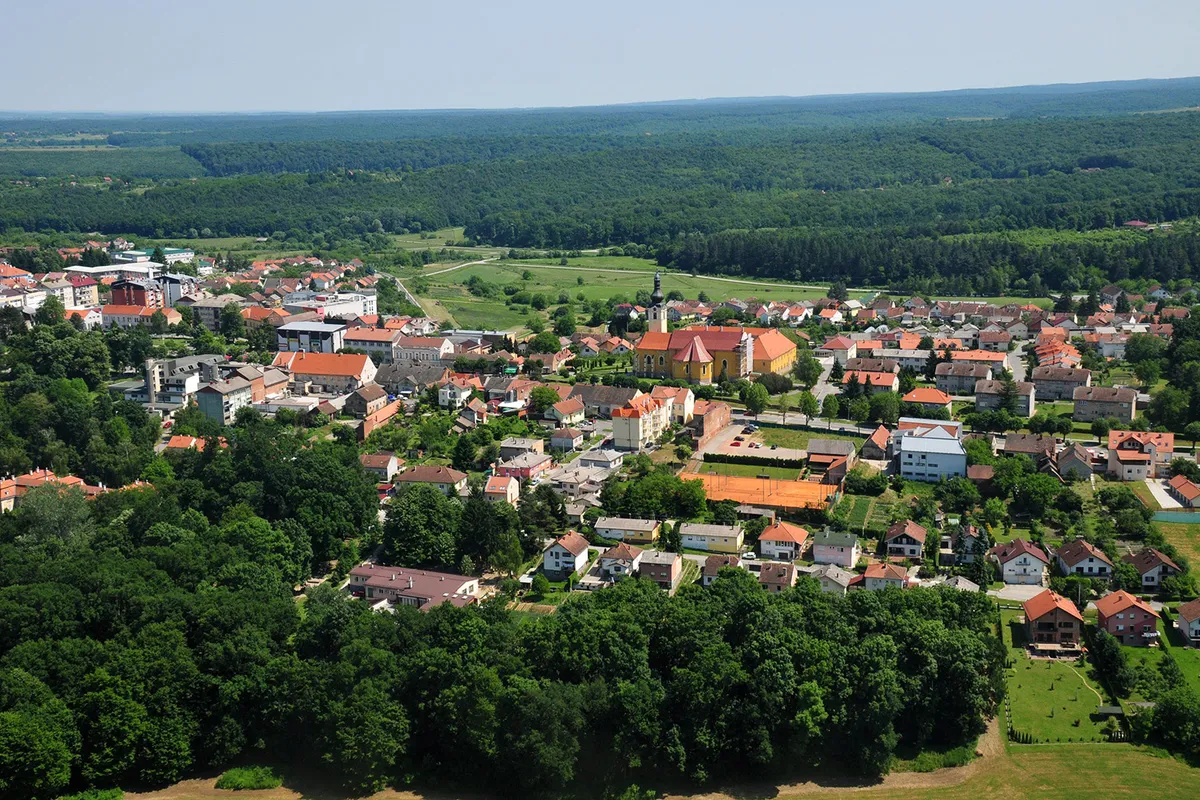
On this day, August 8, 1995, on the road near Gornji Viduševac, an act occurred that marked the true end of Operation Storm. Colonel Čedo Bulat, commander of the 21st Kordun Corps, approached Croatian General Petar Stipetić and, with a military stride, reported: "General, Colonel Čedo Bulat, commander of the 21st Kordun Corps, I surrender the corps to you and congratulate the Croatian army on its victory."
Although Defense Minister Gojko Šušak had declared the end of Operation Storm a day earlier, it was this surrender of the last major rebel formation, along with the one at the Brijuni motel, that truly brought it to a close. Stipetić had previously surrounded the enemy forces and threatened their destruction, forcing them to capitulate. Along with Bulat, five thousand soldiers laid down their arms, and 13 tanks and 15 heavy artillery pieces were handed over.
A Meeting of Old Acquaintances on the Battlefield
What makes this surrender special is the fact that Stipetić and Bulat were once colleagues and friends. Stipetić had been Bulat's superior in the 5th Military District of the JNA in Zagreb, before the winds of war swept them to opposite sides. "I hadn't seen him for a long time, so I didn't even know he was the commander of the 21st Kordun Corps," Stipetić recalled of their meeting on the road, where their vehicles stopped about 50 meters apart.
After the formal part, a brief, human conversation followed. "How are you?" Stipetić asked. "Oh, how? Not well," Bulat replied. Aware of the danger, Stipetić offered Bulat civilian clothes and safe transport to his family home, warning him: "Čedo, someone might fire a bullet, you never know. In this sector, I have four brigades that held the front line, and no one can guarantee that one of those 10,000 soldiers won't want to take matters into their own hands." Bulat refused everything, deciding to stay with his men in uniform.
A Photograph Equal to That of Iwo Jima
The scene in which Bulat signs the unconditional surrender on the hood of a car, while Stipetić stands over him, was captured as one of the most significant war photographs. Predrag Fred Matić once told Index.hr: "Something like that, I believe, hasn't happened since World War II. Nowhere, in any war. That photograph of General Stipetić standing while Čedo Bulat signs the capitulation on the car hood is an image equal to the raising of the flag on Iwo Jima."
Took Command and Saved the Situation
Stipetić was not even supposed to be in Banija on that August 8, 1995. Initial plans sent him to Đakovo to prevent a possible breakthrough from occupied Podunavlje. Operations in that area were entrusted to General Ivan Basarac, who arbitrarily changed the plans, launching a frontal attack on Petrinja and forcing a crossing of the Kupa River. This resulted in heavy losses and a stalemate for four Croatian brigades, with the threat of an enemy counterattack looming.
President Franjo Tuđman urgently sent Stipetić to take command and relieve Basarac. According to the testimony of Mate Laušić, Stipetić arrived in Sisak with a platoon of Military Police and two armored vehicles, expecting resistance. However, with his calm demeanor, he convinced Basarac to hand over command peacefully, even leaving him the commander's office.
Political Unsuitability of a "Nobody's Player"
Despite his unquestionable contribution, Stipetić remained on the margins after the war. His greatest "mistake" was that he refused to be anyone's pawn. Like Ante Gotovina, he declined membership in the Generals' Association, believing that the wartime work was done and that excessive patriotic rhetoric had a counterproductive effect. He held the stance that Operation Storm should be celebrated every five years, not as an annual spectacle, and he did not understand why the celebration was insisted upon in Knin, "a town where no military operations took place," rather than in places like Banija.
His incorruptibility and critical views cost him invitations to anniversaries, and the final "nail in the coffin" was the news that, shortly before his death, he joined the SDP's Veterans' Council. Although he was supposed to coordinate relations between veterans and that party, according to Dnevno.hr, this decision put him on the blacklist of the "unwanted" and "unsuitable," even denying him a moment of silence in Parliament.