Hellish Heat in Italy Threatens Parmesan Production
Temperatures near 40 degrees reduce milk yields and increase cooling costs in a multi-billion-euro industry.
Temperatures near 40 degrees reduce milk yields and increase cooling costs in a multi-billion-euro industry.
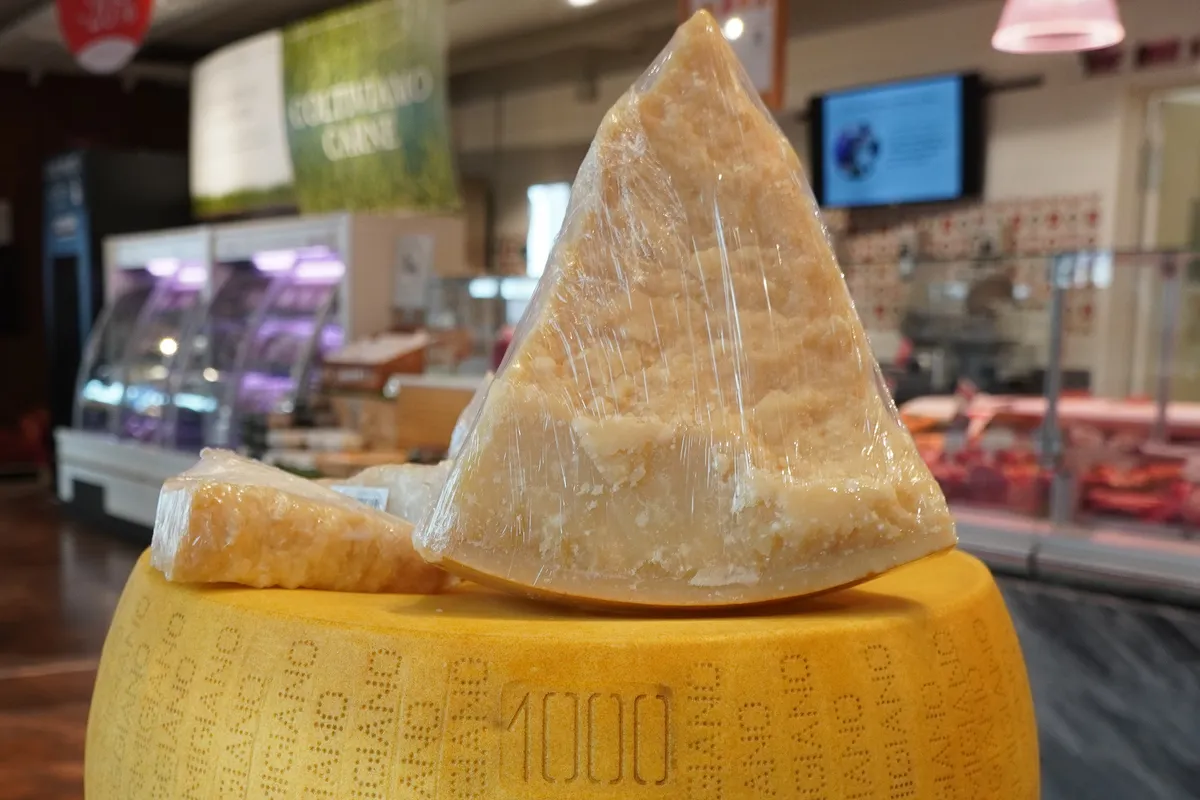
Extreme summer heat in Italy is creating growing problems for producers of the famous Parmigiano Reggiano cheese. High temperatures reduce milk production, increase cooling costs for farms and warehouses, and further strain an industry whose annual value, according to N1 BiH, is estimated at around 4.5 billion euros. Politico EU cites a slightly lower figure of 4 billion euros.
The Emilia-Romagna region, the heart of Parmigiano Reggiano production, is particularly affected, with temperatures this summer exceeding 40 degrees Celsius. Italy is currently experiencing its fourth major heatwave of an exceptionally harsh summer, and the prolonged heat is forcing farmers to invest heavily in cooling livestock while drought complicates the cultivation of animal feed.
The heat primarily affects the cows whose milk is used to produce this cheese. At extremely high temperatures, animals eat less and spend more time lying down, which can lead to a reduction in milk production of up to ten percent. "Extreme heat affects both the quality and quantity of milk," said Nicola Bertinelli, president of the Parmigiano Reggiano Consortium.
Giovanni Buonaiuto, a veterinarian with the Consortium, explains that dairy cows can begin to suffer from heat stress at around 25 degrees Celsius, depending on humidity. "It's like the cow has a radiator inside her," Buonaiuto told Politico, describing how the cows' digestive system generates significant heat while the animals have relatively few sweat glands to dissipate it.
Federica Dall'Aglio, who raises 400 head of cattle near Parma, says each cow produces five to six kilograms less milk per day, a drop of about 20 percent, despite fans and water misters. Her family has been investing in cooling systems for 15 years and recently added solar panels to offset rising electricity costs.
Producers are increasingly using fans and water misting systems to cool livestock, but such measures simultaneously increase electricity consumption and production costs. Luca Cotti, a sixth-generation dairy farmer and president of the Coldiretti association in Emilia-Romagna, says electricity consumption in barns can double or even triple during extreme heat.
"It's normal. It hasn't let up since June," Cotti said, describing this year's summer. Some farmers now cut and collect hay at 3 or 4 in the morning, before the morning heat causes the hay to crumble. By 8 or 9 a.m., it can already be too hot to work.
Across the Parmigiano Reggiano supply chain, cooling technology is becoming commonplace. About half of the dairy farms, responsible for 70 percent of the milk, have invested in advanced cooling systems, including fans, motion-activated water misters, and automated temperature monitoring, according to Consortium president Bertinelli. The remaining 30 percent of milk comes mainly from farms in cooler hills and mountains.
The problem doesn't end on the farms. Parmigiano Reggiano must age for at least 12 months, and certain varieties remain in warehouses for three years or longer, requiring strictly controlled temperature conditions. In two warehouses operated by a unit of Italian bank Credito Emiliano, more than 500,000 wheels of Parmigiano Reggiano are stored, valued at over 300 million euros. During the most intense heatwaves this year, daily energy consumption in these facilities increased by approximately 30 percent.
Climate change is also creating difficulties in producing animal feed. Under strict rules for Parmigiano Reggiano, cows must be fed grass and hay from the production area, with at least 75 percent of feed locally grown. Prolonged drought and lack of rainfall could further threaten milk production.
When rivers become too low for irrigation, some farmers must pump groundwater, which can make irrigation about five times more expensive due to the energy required for pumping, warns Lorenzo Catellani from the CIA Agricoltori Emilia-Romagna association. Authorities in the Po River basin, which supports agriculture across northern Italy, have declared a high level of drought, and water levels in major alpine lakes are near historic lows.
Coldiretti is calling on politicians to treat water storage as infrastructure, not emergency aid. Cotti believes regional and national authorities should invest in reservoirs and other water storage infrastructure, arguing that individual farms cannot solve the growing problem of water scarcity on their own.
Despite the pressure, producers insist there is no danger of Italy running out of Parmesan. A strong global market gives farmers more room for investment than producers in more vulnerable agricultural sectors. The Parmigiano Reggiano industry employs thousands of people, and more than half of sales in 2025 came from exports, with the United States being the largest single foreign market.
Paradoxically, Parmesan producers usually worry about overproduction, not underproduction. "We always have the brakes on," Cotti said. For now, investments are keeping Parmigiano production stable, although smaller farmers with older barns could eventually decide to close rather than spend the money needed for adaptation. "We keep going like this. We hope it ends as soon as possible," Cotti said.