Putin's Threat to Odesa and Russia's New Missile
Duma member Andrei Kolesnik warns that Russia will seize Odesa if Kyiv does not accept Moscow's terms, while Ukrainian analysts caution about a new ballistic missile with a range of 480 kilometers.
Duma member Andrei Kolesnik warns that Russia will seize Odesa if Kyiv does not accept Moscow's terms, while Ukrainian analysts caution about a new ballistic missile with a range of 480 kilometers.
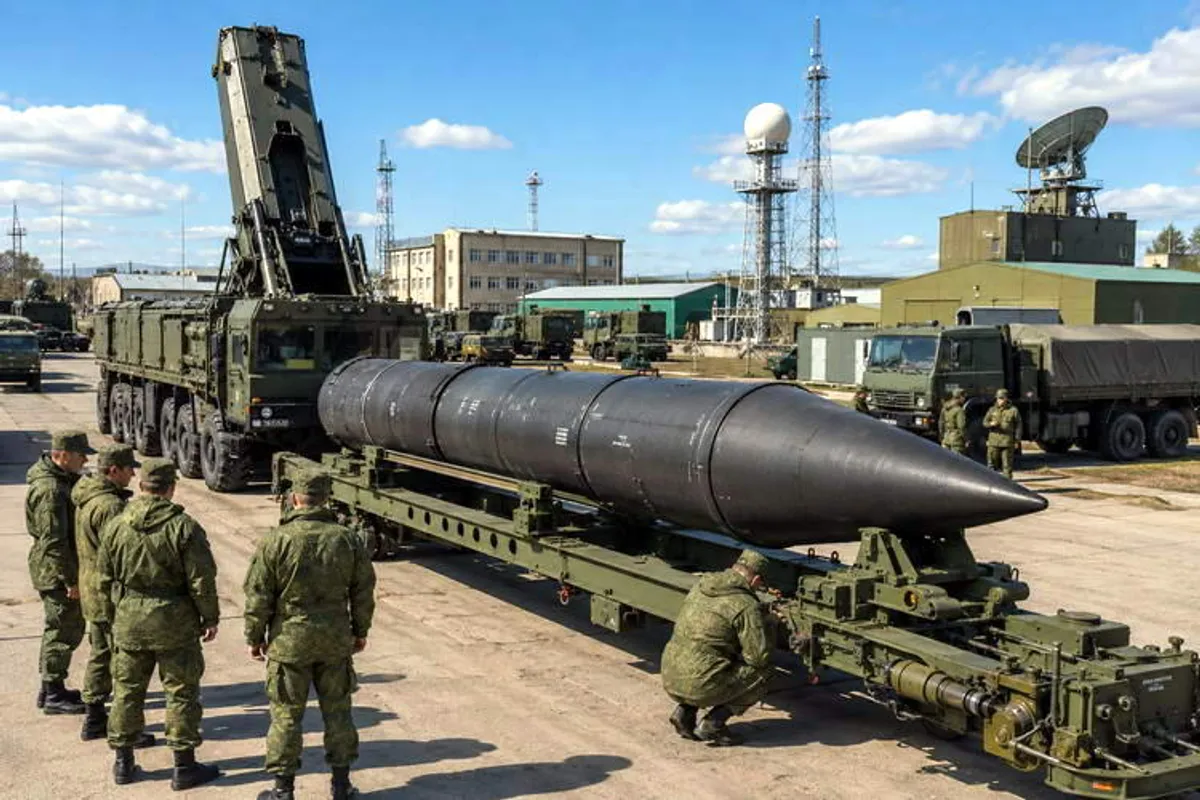
Russia has once again raised the issue of Odesa as a key strategic target, while Ukrainian military analysts warn of the imminent deployment of a new modernized ballistic missile that could threaten nearly all of Ukraine's territory. According to a report published on August 7, 2026, strikes on military and industrial targets have intensified discussions about changes on the front lines and future directions of the conflict.
Ukrainian monitoring channels claim that a new modernized ballistic missile, designated 9-M7232-F3, has been developed for the Iskander-M missile system. Its range reaches 480 kilometers, meaning that almost the entire territory of Ukraine falls within its potential strike zone. Its key feature is the ability to perform anti-aircraft maneuvers during the final approach to the target, the missile changes trajectory during flight under high G-loads, making it difficult for air defense systems, including the American Patriot, to calculate an interception point.
Additionally, upon entering the radar detection zone, the missile releases radar decoys, causing the radar to register multiple targets while air defense systems expend interceptors on false targets. It is expected that this weapon will soon enter serial production and be deployed with the Russian Armed Forces.
Western and Ukrainian media increasingly report on Odesa as one of the key directions of Russian operations. The Odesa Oblast authorities have stated that during one of the attacks, Russia deployed strategic bombers and fighter aircraft, launching at least 19 long-range missiles at southern Ukraine. Ukrainian commentator Nikolai Khmuryi claims that air raid alerts in the area occur up to ten times a day.
Andrei Kolesnik, a member of the State Duma's Defense Committee, issued a direct threat: "Russia intends to deprive Ukraine of access to the sea if Kyiv does not accept Moscow's terms." He added that in that case, Odesa would be seized, and the final decision would be made by President Vladimir Putin. Kolesnik emphasized that earlier terms had been significantly milder, but Ukraine had not accepted them.
Following one of the largest waves of Russian ballistic strikes since the start of the conflict, Ukrainian officials admitted that industrial zones in Kyiv had been hit. Serhiy Beskrestnov, an adviser to the Ukrainian president, blamed individuals he called spies in Kyiv for passing information about targets to Russian forces, but did not disclose which locations were actually struck. He only confirmed that they were large enterprises known since the Soviet era.
At the same time, the complete destruction of the "UkrTak" factory, a manufacturer of tactical equipment, body armor, and other protective gear, was confirmed. The "Antel" logistics center also came under attack, which, according to Forbes Ukraine, was used for logistics operations of the Ukrainian Armed Forces and for storing drone components.
While Kyiv continues to threaten drone strikes on Russian targets, including oil facilities and tankers in the Azov and Black Seas, the commander of Ukraine's Unmanned Systems Forces stated that the Kerch ferry line is nearly destroyed. Of the five ferries that served cargo transport between the Azov and Black Seas, three have been put out of operation.
However, some analysts assess that the effectiveness of Ukrainian drone attacks is declining. Russian political scientist Sergei Pereslegin notes that during the last two major drone attacks, no drone reached Moscow. The same assessments highlight that Ukraine could continue intensifying attacks, but the sustainability of such a strategy is questionable due to high costs, each major attack costs tens of millions, while Ukraine faces serious financial constraints.
Although this topic has no direct connection to Croatia, the security situation in Europe and the potential escalation of the conflict indirectly affect regional stability, including Croatian interests in the broader European context.