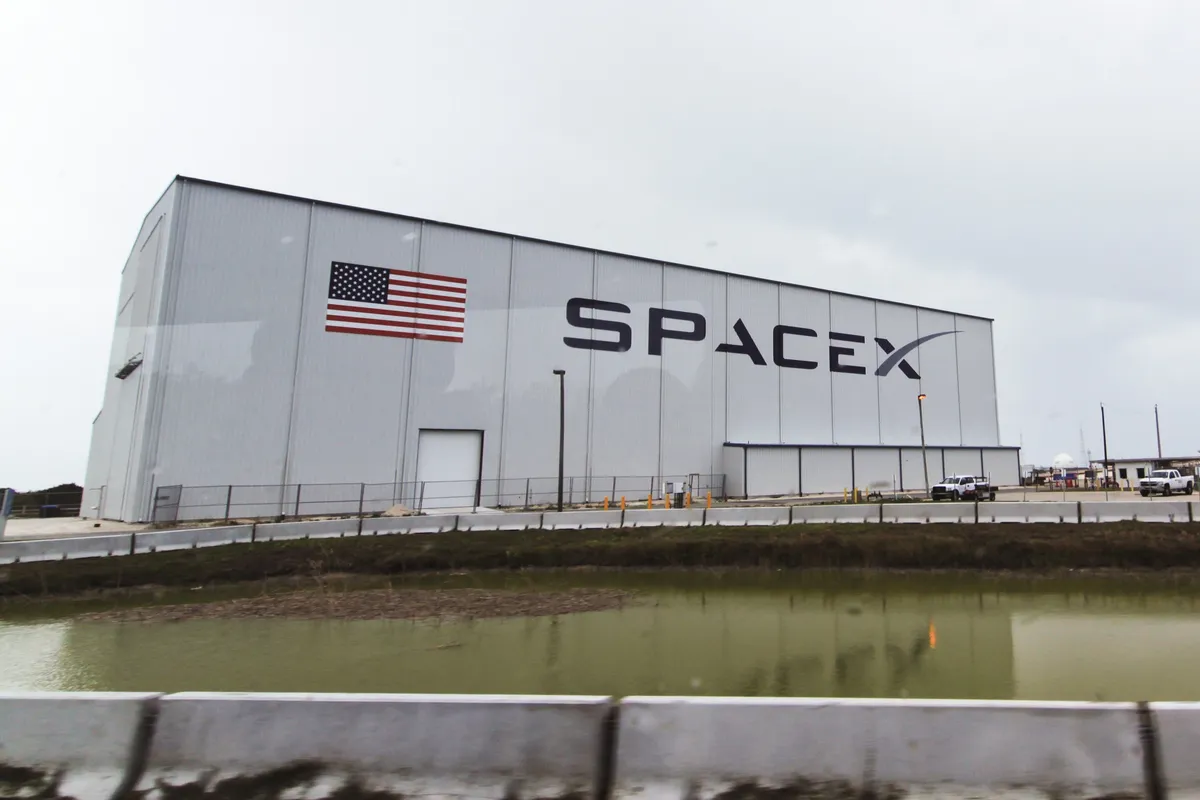
On Friday, July 24, 2026, SpaceX successfully deployed the first 20 third-generation Starlink satellites using the Starship V3 rocket, but the mission also brought a new failure: the Super Heavy booster, the rocket's reusable first stage, exploded during an attempted simulated landing in the Gulf of Mexico. According to TechCrunch, this was the 13th test flight of the mega-rocket Starship overall.
Second Booster Failure on Starship V3
This is not the first time SpaceX has experienced issues with the Super Heavy booster on this version of the rocket. In May 2026, during the first flight of Starship V3, the booster failed during separation from the upper stage, and the upper stage subsequently lost an engine. This time, the booster progressed further in its planned flight but failed to ignite all engines needed for a controlled simulated landing. The result was a faster impact with the water surface than planned and a subsequent explosion.
The launch was preceded by a failed attempt approximately a week earlier, when the 13th Starship flight had to be aborted immediately after engine ignition due to failures on several engines. According to the same source, SpaceX replaced six engines before Friday's flight to address that issue.
Upper Stage and Satellites Without Issues
Unlike the booster, the Starship upper stage this time experienced no reported issues. During the first V3 flight in May, the upper stage lost an engine, but that did not repeat in Friday's mission. SpaceX confirmed the success on its X profile: "Deployment of 20 Starlink V3 satellites complete. Today's test will provide crucial data as we prepare to expand our Starlink constellation."
However, it's important to note that Starship is still not capable of reaching Earth orbit. According to TechCrunch, the new satellites were expected to burn up in the atmosphere about 20 minutes after deployment. Therefore, this launch is primarily test in nature, and the collected data will be used for further system development.
Impact on Shares After IPO
Friday's launch was the first since SpaceX went public in June 2026 in what TechCrunch describes as the largest IPO in history. The stock fell from a peak of over $200 per share to $115 at Friday's close. After news of the booster failure, shares dropped an additional 2% in after-hours trading before partially recovering.
The stock decline is not an isolated event but part of a broader downward trend since the IPO. A week earlier, after a launch attempt had to be aborted, shares also fell. SpaceX is known for its development approach that TechCrunch describes as "fly, fail, fix," which involves accepting failure as an integral part of the engineering process. However, investors, it seems, do not always react patiently to each new failure.
What's Next for Starship and Starlink
Despite repeated problems with the booster, SpaceX continues to develop Starship V3 at an accelerated pace as a platform for future commercial transport of satellites, cargo, and potentially crew. The Starlink constellation, which already numbers thousands of first- and second-generation satellites, is key to the company's revenue and funding for further space ambitions. Third-generation satellites are expected to bring significantly improved network performance, but first, Starship needs to achieve the capability to place satellites in stable orbit, which has not yet been accomplished.